



Riffin on Foods that Need No Fridge
You might be surprised how well you can eat fresh without a fridge, even in the tropics. Onions and potatoes will keep for weeks (but not together, please). Lemons, limes, and oranges-especially those with thick skins-will survive for weeks. Fresh green tomatoes shrug off lumpy seas and still ripen nicely. Bananas don't like cold to begin with. Hang a green bunch from the backstay, and theyre happy. Be ready, though. They ripen fast . . . banana bread for breakfast! Rice and beans offer simple sustenance. Wrap them in a homemade tortilla, add a little hot sauce, and its Mexican Night. Wax balls of cheese, Parmesan wheels, and long sausage links turn the galley into a deli. Breadfruit is a born voyager, but taste best cooked over an open fire. (Baking is the safer choice while underway.) Coconuts last ages, but husk them ashore, where a long stake and machete can be wielded without harm. Big purple mangoes are hardier than the yellow varieties. Pick them when they bear a tinge of purple. Theres a secret to ripening a green papaya. (Tell me if you know what it is!) Or you can and shave a green one into a fiery Thai curry.

Marine Refrigeration: Traditional Thermostats vs. Digital Thermostats
Modern galley refrigeration moved far beyond simple holding-plate refrigeration systems, and now competes with the more easily installed evaporative refrigeration systems. One key to efficiency in any refrigeration system is an accurate thermostat. Practical Sailor compares a more expensive digital thermostat to a traditional, less expensive mechanical capillary thermostat. Refrigerator and freezer tests pitted the Grunert Marine Air Systems mechanical capillary refrigeration thermostats against the Scad Technologies SensiStat digital thermostat. Mechanical thermostats are valued for their simplicity and reliability, but a digital thermostat may outperform mechanical thermostats when it comes to maximizing marine refrigeration performance.
Next Best Thing
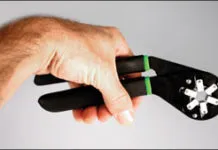
While world leaders and presumed financial wizards set to work trying to right the global economy with some very expensive bailers and sponges, Practical Sailor has taken the time this month to dig through our recent collection of Chandlery submissions to see if we can find anything more useful. Given sailors capacities for innovation (aka "jury rigging"), were holding out hope that the next great invention-the ultimate stimulus package-lies somewhere in our growing stockpile of Chandlery items.

Practical Sailor Puts Monster-Sized Coolers Through a Melt Down
Ice chests come in all shapes and sizes. And often times, sailors and fishermen will prefer keeping a large cooler aboard to installing a marine refrigeration system. So for this test, we narrowed the field to portable 65-quart coolers and a 70-quart cooler from Yeti, Engel, and Coleman. The three test products were the Engel ENG65, Yeti Tundra, and the Coleman Ultimate Extreme Marine. Testers compared the effectiveness of each cooler at keeping ice during a meltdown test: A six-pack of soda was covered with 16 pounds of ice and checked at 12-hour intervals. The top performer was the Engel, but testers deemed the Coleman a bargain as it was less than half the cost of the others.
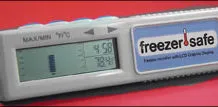
Freezer Safe Tracks Fridge Temps
No bigger than a pack of gum, Freezer Safe is a digital recording thermometer that collects temperature data and displays it graphically. The battery-operated (two AAA cells) unit can optimize boat refrigeration systems by storing high and low temps for 100 minutes, 100 hours, or 100 days (though the batteries might not last that long). The data lets you adjust thermostat settings in order to reduce power use. The thermometer can also track warm and cold spots and help you find the best trade-off between food longevity and temperature. Freezer Safe can warn you if food may have thawed and refrozen, helps reduce the risk of accidentally freezing refrigerated foods. For holding-plate refrigeration systems to operate efficiently, the temperature cutoff on the compressor must be carefully set. Freezer Safe can help identify the ideal eutectic point for this system.

Two Marine Toilets go Head to Head in Practical Sailors Test of Simple, Manual-Flush...
Practical Sailor contributor Mike Slinn installed two heads, the Raritan PHII and the Jabsco Compact Marine manual head, on his Beneteau First 435 and tested them during the summer cruising season in British Columbia. Two other brands of marine toilet were considered but for various reasons (fit in the head, et.), they werent chosen. The test looks at how both heads performed during the all-too-short Canadian summer and whether or not an expensive marine head does better in a long-term, real life test of marine heads. Our previous tests have shown that if you are looking for long-term reliable service from your head, you have to pay for it. Is the Raritan, at twice the price of the Jabsco, worth the investment? We also looked at fighting head odor and how it can be controlled and eliminated by the use of proper hose and proper hose connections.

Portable Marine Refrigeration Test
One of the advantages of a compressor-driven portable refrigerator is that it can also serve as a freezer. And compared to thermo-electric coolers, they require fewer amps to do the job. Cruising boats need to be energy efficient, so amp consumption with a 12-volt power supply was one of the key factors Practical Sailor looked at in this test. As in any marine refrigeration test, insulation is a key factor in efficiency, so our comparison also tried to single out the best insulated units. Ultimately, the linear compressor system used in the Engel and Norcold refrigerator/freezers proved to be more efficient.

Marine refrigeration: Thermoelectric Cooler Test
The main drawback of thermoelectric coolers is power usage. This will likely be an issue during extended use or for boats with small battery banks and anemic charging systems. The 106-130 amp load, over a 24-hour period, is about twice as much demand as a built-in evaporative sytem and about three times the demand of the most efficient-and most expensive-installed systems. Also, thermoelectric units are limited in their ability to cool internal temperatures, usually to a maximum of about 40 degrees below the ambient temperature.
PS Finds Out Whos Keeping It Cool
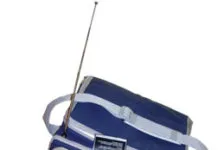
Zero Degrees is a bargain at $20; CIs Music Cooler delivers tunes to boot.
Coleman Wins Cooler Cool-Off
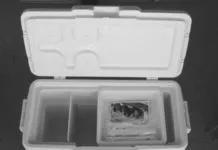
The Ultimate Extreme Marine from Coleman and the expensive Frigid Rigid hold ice longer than comparably sized portable coolers from Igloo, Rubbermaid and Icey-Tek.
Latest Logbook

Practical Sailor Logbook – September 2026
In September we tour the Hans Christian 48T — the offshore cruiser many sailors call the holy grail — walk the custom Antigua 60...

Video: The BEST Sailboat You Can Buy for $35,000 – Catalina...
If you’re searching for a mid-30-foot sailboat, affordable cruising sailboat, liveaboard sailboat, first sailboat, or a capable used sailboat for coastal cruising, the Catalina...



Latest Sailboat Reviews

Learning by Doing on a $5,000 Catalina 30 Mk II
When Davis’s mother started talking about wanting to do something “big” for retirement, Davis and Gloria half-jokingly threw out an idea that seemed suitably...