

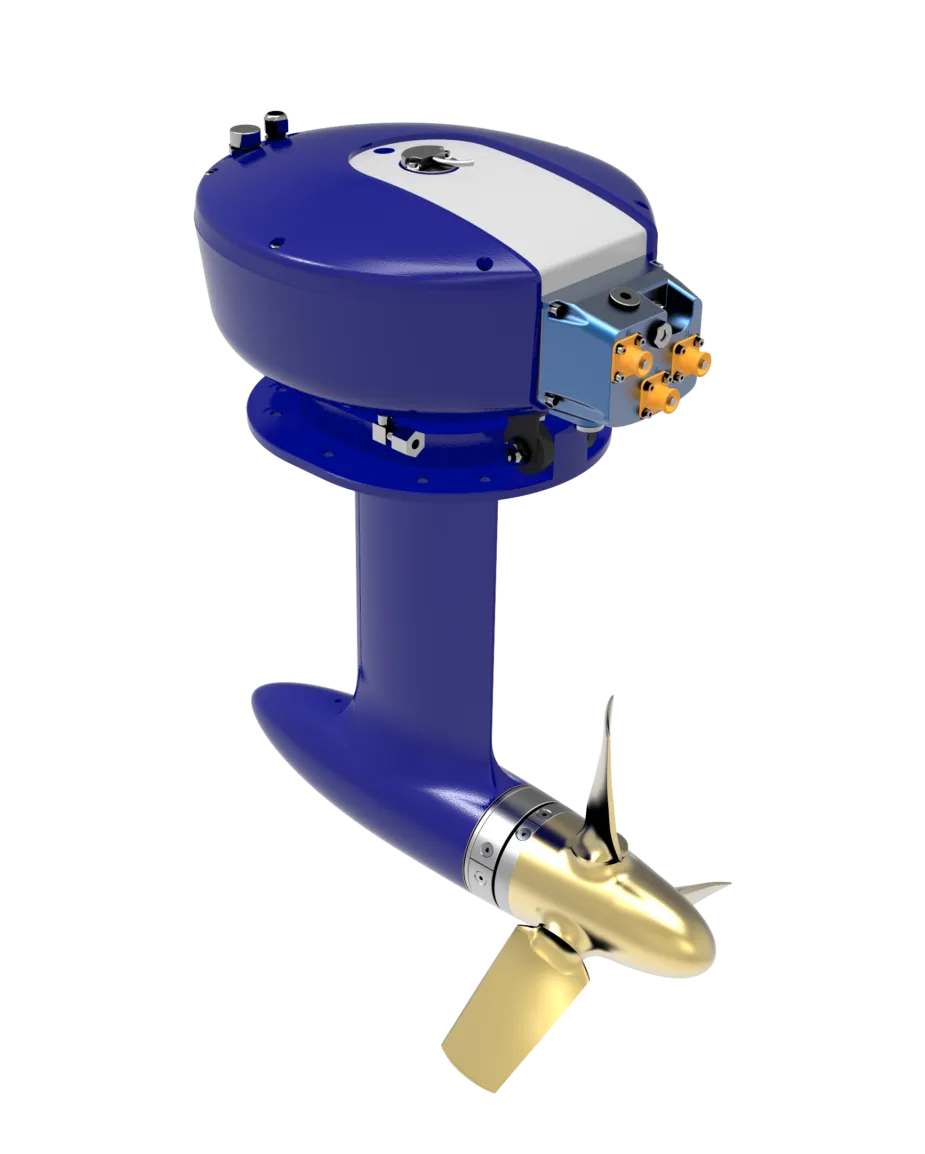
The 18th century was the age of sail. The 19th century saw the introduction of steam propulsion and the 20th century witnessed the introduction of diesel (and gasoline) propulsion. Will the 21st century witness a new maritime age, of either all-electric or hybrid propulsion, in much the same way as road vehicles seem to be evolving? This article explores the potential for all electric propulsion, in cruising sailboats, and a follow-up article will explore hybrid electric propulsion in cruising sailboats.
Propulsion and Safety at Sea
In the 18th century, there were 35 major maritime disasters (defined as more than 30 souls lost), of which over 90 percent were caused by heavy weather, a lee shore and reefs (and in some cases icebergs). During the 19th century, despite an estimated tenfold increase in maritime activity, there were 130 such incidents, with only 60 percent of those attributable to comparable factors. During the 20th century, despite further comparable expansion, there were 162 such incidents, with only 30 percent attributable to such factors. [Note: This excludes wartime events and are based on the number of incidents. Secondary factors were fire & explosion (15% in the 19C and 22% in the 20C) and collision with another vessel (12% in the 19C and 19% in the 20C)].
Over this 300-year period, therefore, there was a relative reduction in the risk of such tragic events. While some of that was undoubtedly due to improved navigation, the evidence suggests that a significant factor was the introduction of reliable powered propulsion. As we consider replacing diesel engines, therefore, we also need to recognize that having reliable propulsion is a significant component to keeping us safe at sea.
Alternative Fuels and Energy Density
When the British navy, in 1911, announced the switch from coal fired steam to diesel propulsion, it explained that this freed up storage space for personnel, munitions, other cargo and especially fuel reserves, doubling the range of the typical vessel. What they were explaining is that diesel fuel has superior energy density, as compared to coal (both in weight and volume terms). Energy density is therefore a key factor.
The fuel with the highest energy density is, of course, uranium, but its use is limited to a handful of military vessels. Hydrogen is another possibility, as it has good energy density on a weight basis (hence its use with local bus fleets) but is significantly inferior to diesel or gasoline on a volume basis (hence little incentive to consider its deployment at sea).
As to the choice between gasoline and diesel, diesel is superior, as it has volumetric energy density of around 36MJ/liter, against gasoline at around 32MJ/liter (although both are similar on weight basis, at around 43MJ/Kg), plus it is less volatile. Diesel engines are more expensive to construct, however, which leaves us at the present position, where diesel is the most often used fuel when range is a consideration, and gasoline is more often used for shorter or occasional use, such as with outboard motors.
Energy Density of Electric Battery Systems
We discussed in the article “Lithium Batteries for Small Boats” the differences between Lithium Iron Phosphate (LFP or LiFePO4) and other types of lithium-Ion battery, some of which have better energy density (such as used in smart phones). For the time being, however, the only battery type considered safe enough for large marine use remains LiFePO4. On a volume basis, a LiFePO4 battery has an energy density of 300 to 700 Wh/liter (1 to 2.5 MJ/liter) and 90 to160 Wh/Kg (0.3 to 0.5 MJ/Kg) on a weight basis.
Consequently, you would require an impossibly large battery to achieve the same range as a conventional diesel or gasoline fuel tank, notwithstanding the fact converting stored electricity into mechanical movement is very efficient (say 90%+), whereas converting hydrocarbon energy into mechanical movement has an efficiency of only 35 – 45% or less.
Why EV’s Are Different From Boats
EV’s, such as a Tesla, can achieve a range well beyond an electric propelled boat, primarily because of two key factors: Firstly, road vehicles achieve momentum, with comparatively little energy expended in maintaining a given speed (the energy is mostly expended in acceleration), whereas a boat requires constant energy to push the water aside, especially at higher speeds or in rough conditions. Secondly, much of an EV’s energy is recovered with regenerative braking, a process that cannot occur with a slow-moving vessel.
Hull Shape and Fuel Efficiency
At low speeds, displacement hulls are comparatively efficient, as they are designed to slice through the water, rather than disrupt it. At the same speed, a planning hull is highly inefficient. Even when on the plane, their energy requirement (per mile) is significantly inferior and accelerating to a planning speed also consumes considerable energy. Moreover, battery packs are heavy, which works against the need to lift a planning hull out of the water. Consequently, of the two, displacement hulled vessels are likely better suited for adopting electric propulsion. [Note, hydrofoils are another story, outside the scope of this article, but they have an efficient hull design and may be an even better candidate].
Pioneers of Battery Electric Propulsion in Boats
There are multiple factors encouraging a move to all electric propulsion, including local regulations and a focus on emissions. Other considerations are silent operation or cost (depending upon the local cost of electricity).
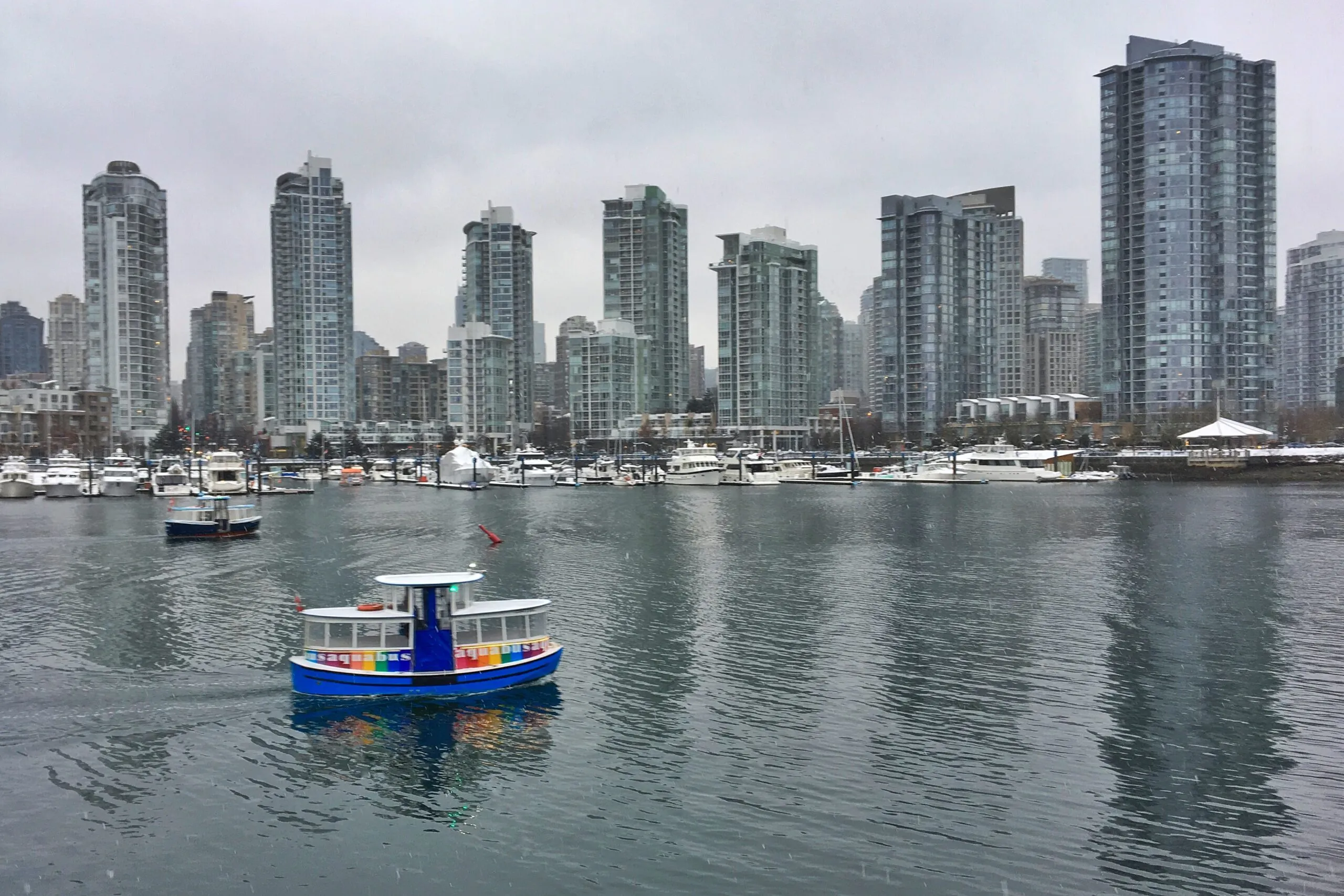
The City of Vancouver, Canada, has had, since the 1980’s, an all-electric ferry service consisting of 14 “aquabuses” serving the downtown area. The distances are short and the service only runs in daylight hours (enabling overnight charging), but it now has a 40-year history of proving electrical propulsion. Similar examples are canal vessels in the Cities of Amsterdam and Venice. Outside a metropolitan environment, electric propulsion has become popular on the English inland waterway system, where environmental considerations are paramount, distances are short and recharging a possibility.
In 2021, a Californian tech start-up, ARC, was founded by a group of Space-X and Tesla alums, with a mission to revolutionize the marine industry. Their focus is on planning hulled sports boats, and while their website is full of the inevitable claims of superiority to hydrocarbons, they avoid discussing range. Others have commented, however, that these boats achieve less than one hour’s operation at full power, which is a severe limitation.
Good progress has been made by Oceanvolt, a Finnish manufacturer of electric (and hybrid) propulsion systems for sailboats, founded in 2004. Their products include various forms of sail drive with hydrogeneration capabilities, allowing the propeller to generate electricity while sailing. Oceanvolt has partnered with several yacht manufacturers and individuals, with the most relevant to us, being Sailing Uma, a popular YouTube channel.
Sailing Uma
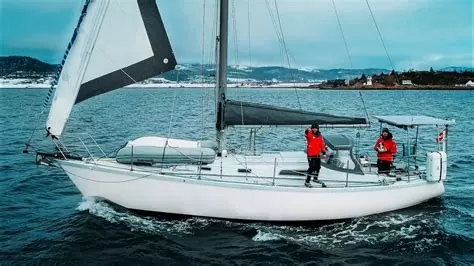
Uma is a 50-year-old Pearson 36 and the pioneers of long-distance sailboat cruising using an all-electric propulsion system. Their very first system was a very simple set of lead acid golf cart batteries, powering a motor repurposed from a forklift truck, which gave a maximum 15-minute range. Their next iteration was installing twelve 12V Battleborn LiFeP04 batteries, in three banks of four (48V per bank), which they said extended their range to an hour or so.
The next iteration was to add an Oceanvolt saildrive, which was an improvement, but they found the boat too slow to harness its hydrogeneration capabilities. Next, they switched switch over to a programable Oceanvolt servoprop, with variable pitch capability, which they found greatly increased hydrogeneration. After that, they added a second servoprop, doubling the hydrogeneration capability.
An issue with this system was that each battery had its own individual BMS, which was not capable of managing imbalances between batteries. That led to several full BMS shutdowns e.g. a total loss of both propulsion and house loads. Under this condition, their only remedy was to sail to port and connect to shore power and reboot the system [Note: There should have been a way to “wake up” a BMS in shutdown mode at sea, using solar power, but this was either not explored or not achieved].
Latest Electric Setup
The next iteration, which they are currently installing, will be an all Victron system, including much greater capacity using Victron batteries (ten 48V, in two banks of five, with a separate 12V system for house loads) and a Victron management system. Generation will be provided by a new 3.6kW bank of solar power and the two Oceanvolt saildrives. It will be interesting to learn what range they achieve with this significantly improved installation.
Range and Generation Underway
Sailing Uma has therefore been progressively adding battery capacity and exploring generation underway, to extend an inherently limited range. At a theoretical level, what would the numbers look like, if I were to convert my 34 ft sailboat, with its 25hp diesel?
Keeping it very high-level simple (ignoring other loads and losses, efficiencies etc.): If we assume that I use 8hp (6kw) of my diesel engines performance to maintain a cruising speed of 5 Kts, I would draw something like 500 Amps (6,000/12) from a 12V battery system. If we assume that I have a 1,200ah, 12v system, that would give me 2.1/2 hours (1,200/500) of use, which is close to what Sailing Uma indicated.
I presently have 500W of solar and on a good day that puts a charge of 15 Amps into my battery bank, over 8 hours, which would add a further 120ah, adding only ¼ hour to my range. If I could find the space to add 3,000W of solar, however, that would add 1.1/2 hours to my range. Cruisers often complain that wind generators add very little on passage but, conversely, hydrogeneration can.
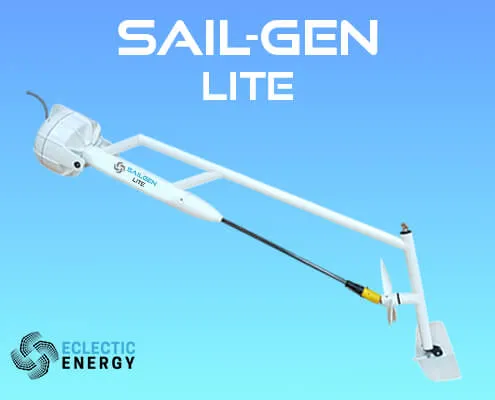
The key thing to understand with hydrogeneration, however, is that kinetic energy increases with the cube of the speed. As an example, a UK based company, Eclectic Energy, which manufacturers the “Sail-Gen Lite”, states that it gives 125kW at 6 Kts but 280W at 8 Kts. They advise that at 7Kts, the unit can deliver 350ah over a 24 period. Thus hydrogenation, in this example, might add ¾ hours to our range.
If we assume the most favorable conditions, therefore, solar and hydro generation, underway, could potentially add 2.1/4 hours (12 NM) to my original 2.1/2-hour range (15 NM), giving a total of 4 to 5 hours (20 to 25 NM). The next day, however, if I have not had access to shore power overnight, my daily range would be limited to those 2.1/4 hours. Worse, if i experience cloudless or windlass days, I may end up drifting, out of control.
Given that reality, some pioneers have ended up concluding that their all-electric solution is not viable, and added a gasoline gen set, with multiple gasoline cans. A 2kw gen set, ran for a full 24 hours, might add 4,000ah (24*(2,000/12)), or 8 hours of running time (again, high level numbers, ignoring losses etc.). By way of comparison, my diesel engine can run continuously for days, with a daily range of ~ 120 NM (and, with tanks on deck), multiple days, providing a ~ 300 to 500 NM range. Swapping that diesel engine for a gasoline gen set, with the capability of propelling me for only 8 hours a day, would not be a step forward.
"Ball Park" Range Calculator
Step 1 What is your engine size in HP? 25
Step 2 How much of that, in HP, is used at cruising speed? 8
Step 3 Convert to W (746W to 1HP) 5968
Step 4 Current to maintain cruising speed (Watts/12V) in Amps* 497.33333333333
Step 5 Available space for propulsion batteries, in ah * 1,200
Step 6 Hours of Operation, from dock, (ah/Amps) at cruising speed 2.4128686327078
Supplemental Generation
Step 7 Assumed max solar daily generation (amps (at 12V) X hours)** 720
Step 8 Assumed max daily hydrogeneration (amps (at 12V) X hours) 350
Supplemental ah generated 1070
Potential additional hours of operation from renewables (ah/Amps) 2.1514745308311
Note 1: In this simple calculation, assume a 12V system. 48V will offer improved efficiency but will not have a material impact on space requirements or range.
Note 2. Use real life experience for your area - not manufacturers claimed solar output
Note 3. This is a very simplified "best case" range estimator. It assumes best case renewable generation and calm water (no fighting counter-currents), ignores additional loads, system inefficiencies etc.
Conclusions
The world is changing, and there are a number of companies and individuals pushing the technology boundaries. The energy density of suitable batteries, however, remains a major limiting factor. So much depends on the size of your boat and how you intend to use it. If your plans are limited to local weekending club racing out of a marina with shore power, and you consistently have reliable winds when out, with your sole need for propulsion in and out of harbor, an all-electric propulsion solution might work for you.
Similarly, if you have a large catamaran or a 60 ft + sailboat, with lots of deck space for solar panels and high cruising speeds for hydrogeneration, maybe island hopping the short distances between the Greek Islands, an all-electric solution might possibly work for you.
Long distance cruisers are at the other end of the spectrum. Yes, long-distance racers do just fine, with no engine at all, but we should remember that they are mostly far offshore. They are not looking to anchor in cozy coves, surrounded by rocks and countercurrents.
So, as you consider your own propulsion, much depends on your sailing plans. If you regularly cruise on multi-day trips, where the wind or sun is unreliable, or, your plans might potentially include facing a lee-shore in days of bad weather, you would be justified in concluding that all-electric propulsion is not yet sufficiently developed for you.


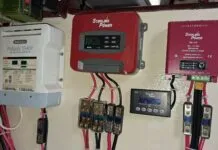



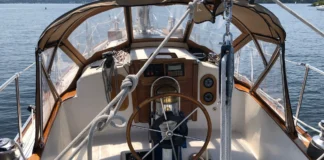




I went electric drive with my Nor’West 33 about a year ago. The single most important factor is that the sails are the primary drive for your vessel. If so, it’s lovely!
That’s interesting, thanks. How much ah capacity did you install and what sort of range is that giving you?
I used 2x135ah (48v). One thing that is under appreciated is how much more efficient electric motors are at low rpm. I usually tool around at 40 amps or less, which gives about 3-4 knots/ 6.5 hours. 5 kn would take about 80 A, so a little patience goes a long way.
I haven’t yet charged the 48 V batteries off anything but my 390 W of bifacial solar and the bank has never been below 50% yet.
Electric motor efficiency curves are something we explore in the next article, as that is central to hybrid operation. In summary, however, electric motors are most efficient at mid RPM, although the range is quite broad (say 1,000 to 3,000 RPM).
I look forward to reading it. Of course, the biggest factor is that with a displacement hull power requirements increase with the cube of speed. Motoring at 3 kn makes your battery bank feel a whole lot bigger!
Yes, precisely.
Hello Stephen. I’ve had a 30 ft sailboat, fin keel, for coastal cruising for over 30 years. I’ve looked at converting to electric but the boat simply does not have the carrying capacity for the battery pack I would need. And I’m under sail a lot. My sailing buddies point out that I am under sail far more than they. Even so, my log book shows 70% under sail if I subtract 1 hour of engine time per day for getting into and out of harbour. Considering that, and it’s a pretty favorable percentage, no battery pack will get me to Desolation Sound or out to Barkley Sound on the west coast of Vancouver Island in a day or two. Batteries will have to come a very long way before they become practical for coastal sailing. Nicely written article.
I love the idea. But when the wind dies (common in Chesapeake Bay summers), and you have somewhere to be, we’re all power boats. Or perhaps the wind is light, on the nose, and you have somewhere to be.
It depends on the cruiser you ask, but nearly all will admit to long days under power. They may wish it weren’t so, but it is so.
It all depends on your realistic plans.
Most people who contemplate this do not fully understand that there are competing uses for the same energy. You can either move the boat with electric power or live comfortably onboard, but doing both at the same time is difficult.
On a cruising boat electrical energy is essentially comfort. It powers refrigeration, watermakers, lighting, electronics, and everything that makes life aboard sustainable.
We have 2.9 kWp of solar on a 12 m production catamaran, and even with that capacity our production varies enormously. On poor days we might make less than 2 kWh, while the best days exceed 18 kWh. Over time we average around 10 to 15 kWh per day.
With that variability I cannot imagine diverting a significant portion of that energy to propulsion. For us every kilowatt hour is far more valuable for running the boat and maintaining onboard comfort than for pushing the boat through the water.