

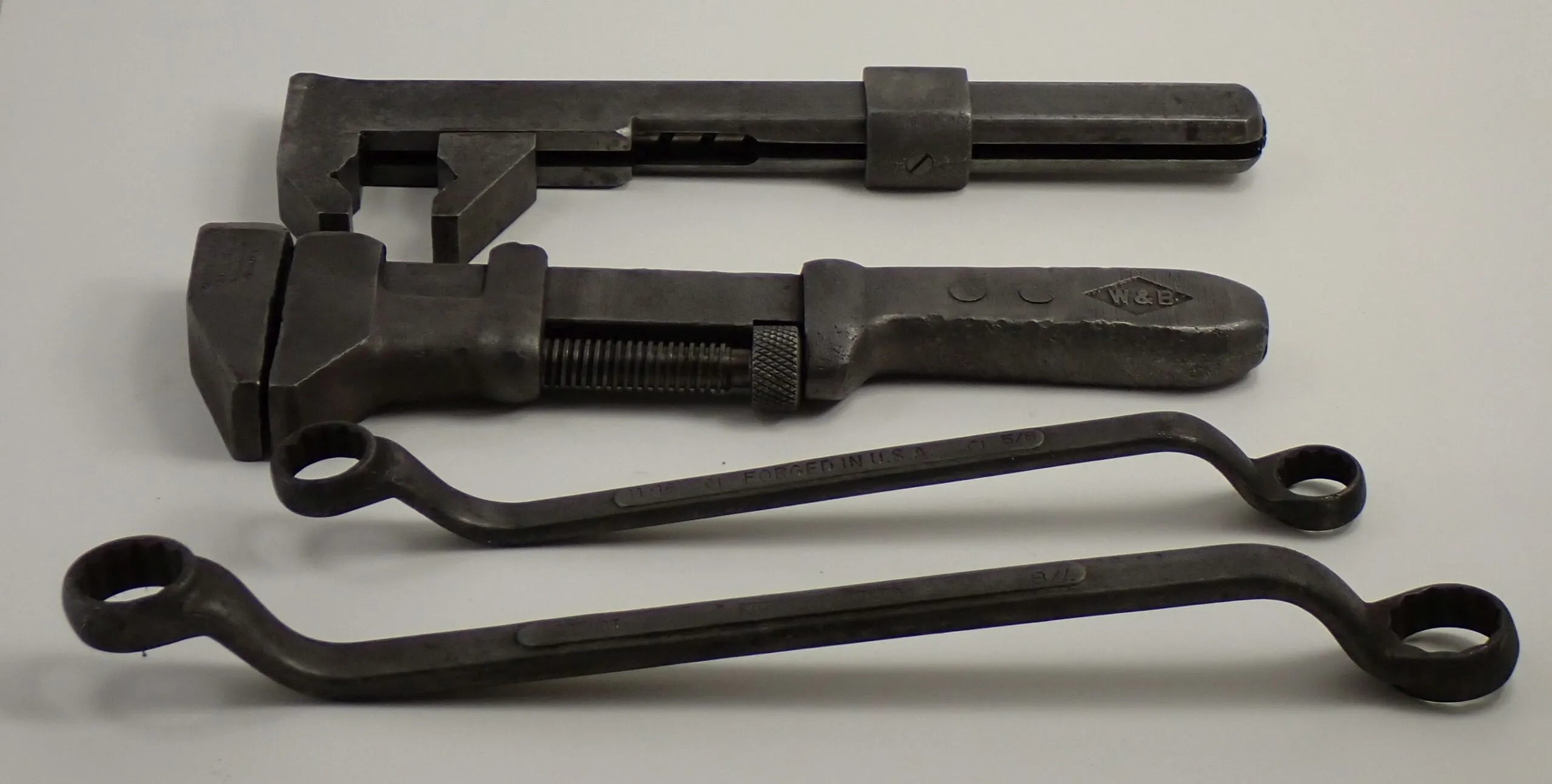
In the process of rediscovering my machining hobby, I dug out my long-ignored collection of machinist tools from a great uncle who worked in torpedo development at the Washington, DC Navy Yard as a machinist. Taps, dies, and some more obscure tools specific to metal lathes and milling machines. In the process of recovering these tools, I explored de-rusting chemistry (they were mostly well-stored, but many were 80-100 years old, so some light corrosion was universal) and common surface treatments. I am a chemical engineer, after all.
To continue reading this article or issue you must be a paid member. Sign in

Join Practical Sailor
Get full access to Practical-Sailor.com – more than 4,000 articles – for just $34.
Join today and save 42% off our full price.









How about publishing actual recipes for the recommended processes for us dummies?
Greg: I treated some parts just a few days ago, and this is the short version. It is a little different every time, because the amount of rust and reaction with the steel alloy varies. Test first on a few bolts or scrap, and always monitor. You do NOT want to leave it soaking overnight, for example, because there will be excessive etching.
* 15% Barnacle Buster. 85% DI, distilled, or RO water, if available. High levels of calcium can interfere. I stick fairly constant on the concentration, varying the time and temperature. However, if you have large parts that would either take a lot of solution or cannot be dunked, either lower the concentration to 5-10 % and soak longer, or use the 15% solution, but apply it with a brush every 10 minutes or so, often enough that it never dries. I was treating an anchor before painting, so this is what I did. I this case I did not want to blacken the surface, only prepare if for paint and convert any corrosion I did not sand off, so I brushed it on, every 10 minutes, for about an hour cold. That was sufficient.
* Put an old zinc anode in the bath for 10 minutes to add some zinc. This darkens the color and is optional. If any of the parts have old, worn-out galvanizing, that will add enough zinc.
* 120F for an hour. If not heated I would have gone 3 hours. You can go longer if you want darker. More zinc, up to a point, makes it darker. Observe occasionally to monitor the degree of rust removal.
* If corroded, it is good to wire brush the rust every 15 minutes or so to better remove the rust and even up the result. Scrub with a bristle brush at the end, when rinsing, to remove any excess.
Save the dregs. I use them over and over, boosting as needed. It’s handy to have available, for when I have just a few small parts.
Hi another question related to the recipes. Barnacle Buster comes in concentrated and regular. I’m assuming the 15% is based on the regular formula? Thank you, great article BTW.
I used 15% based on the concentrate package, which itself is 50% phosphoric acid. This results in a 7.5% solution.The article said:
” … We stuck with 7-10% phosphoric acid and no additives, which is simply a 15-20% solution of Barnacle Buster, a descaling formulation we have tested before (see Descaling Solutions for Boats,” August 2017)….”
If you used the regular concentration Barnacle Buster (~20% acid) a 20-30% solution would be appropriate.
I like to stay on the low side and let it soak longer. The result is more even, with less risk of excessive etching.