
Exploring beaches, marshes, shorelines—and yes, small towns—is one of sailing’s greatest joys. The challenge is getting in and out of a dinghy or kayak, and light chop can make it even more fun when the boat and the tender move to different rhythms.
The Boarding Problem
On my cruising cat, boarding the dinghy was easy. The dinghy was on davits and the boat has swim platforms, so you could either climb down the transom, or pull the boat over to one hull and secure it to the swim platform using cleats. The lifting tackle served as a handhold—however kayaks were more challenging. The swim platform was about level with the kayak, but with any chop the usual paddle-across-the-cockpit brace trick didn’t work. I should have added some manner of handle, but I was young and agile. We relied on balance and commitment.
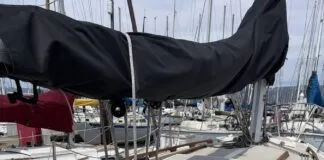
Boarding a kayak from my trimaran is a challenge—most people won’t try. The transom is skinny, moves up and down, and is unusable because of the rudder and outboard. The only practical way is to pull the kayak under the rear beam and step down. Of course, the kayak is moving about in waves, is free to shoot in the other three directions, and there is little to hold on to. Reboarding is even harder, a bit too hard now when there is chop, as I pass the 65-year mark and my bad knee gets worse.
Enter the Assist Arm
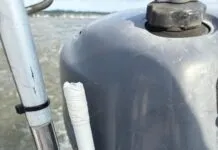
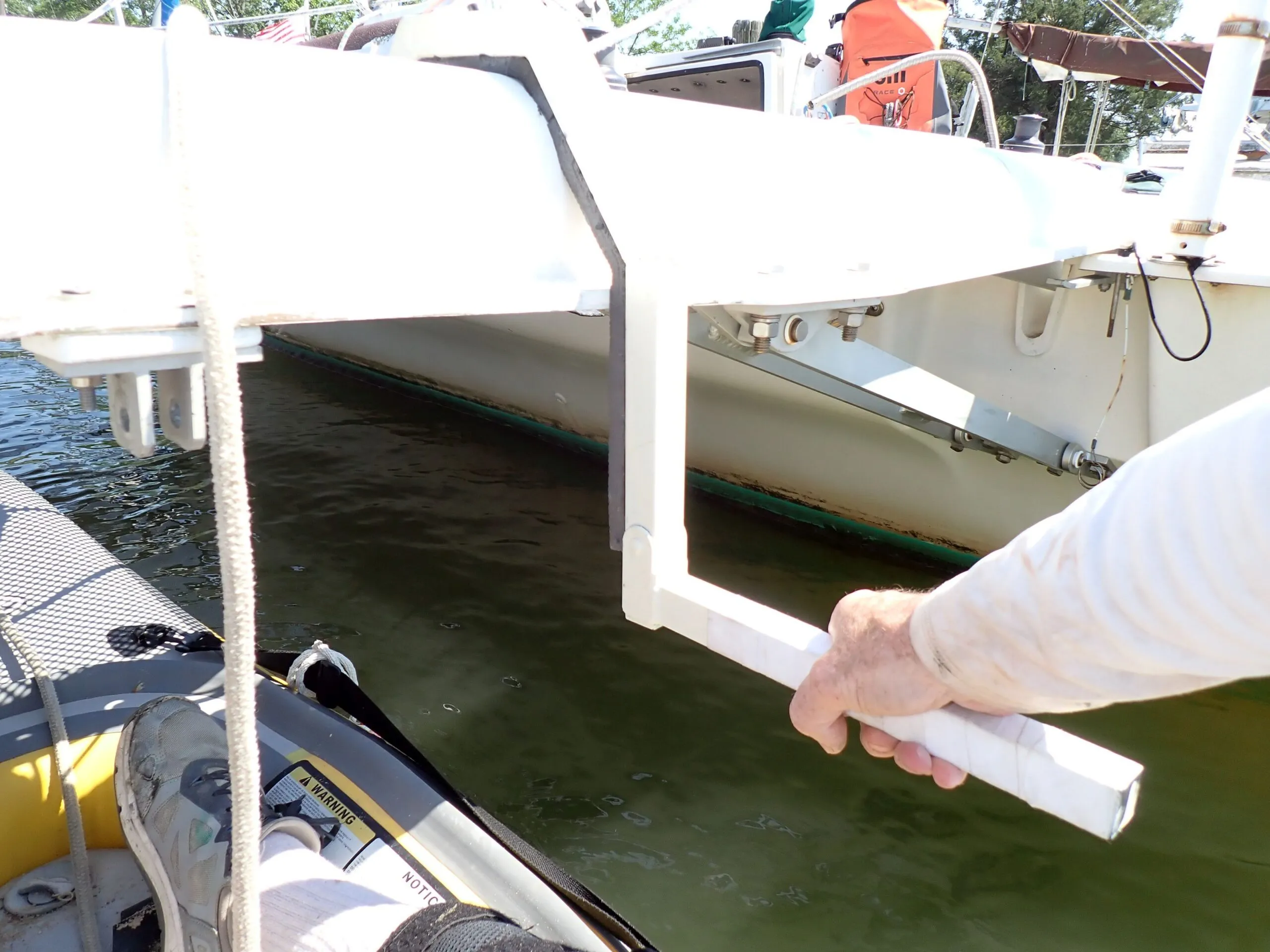
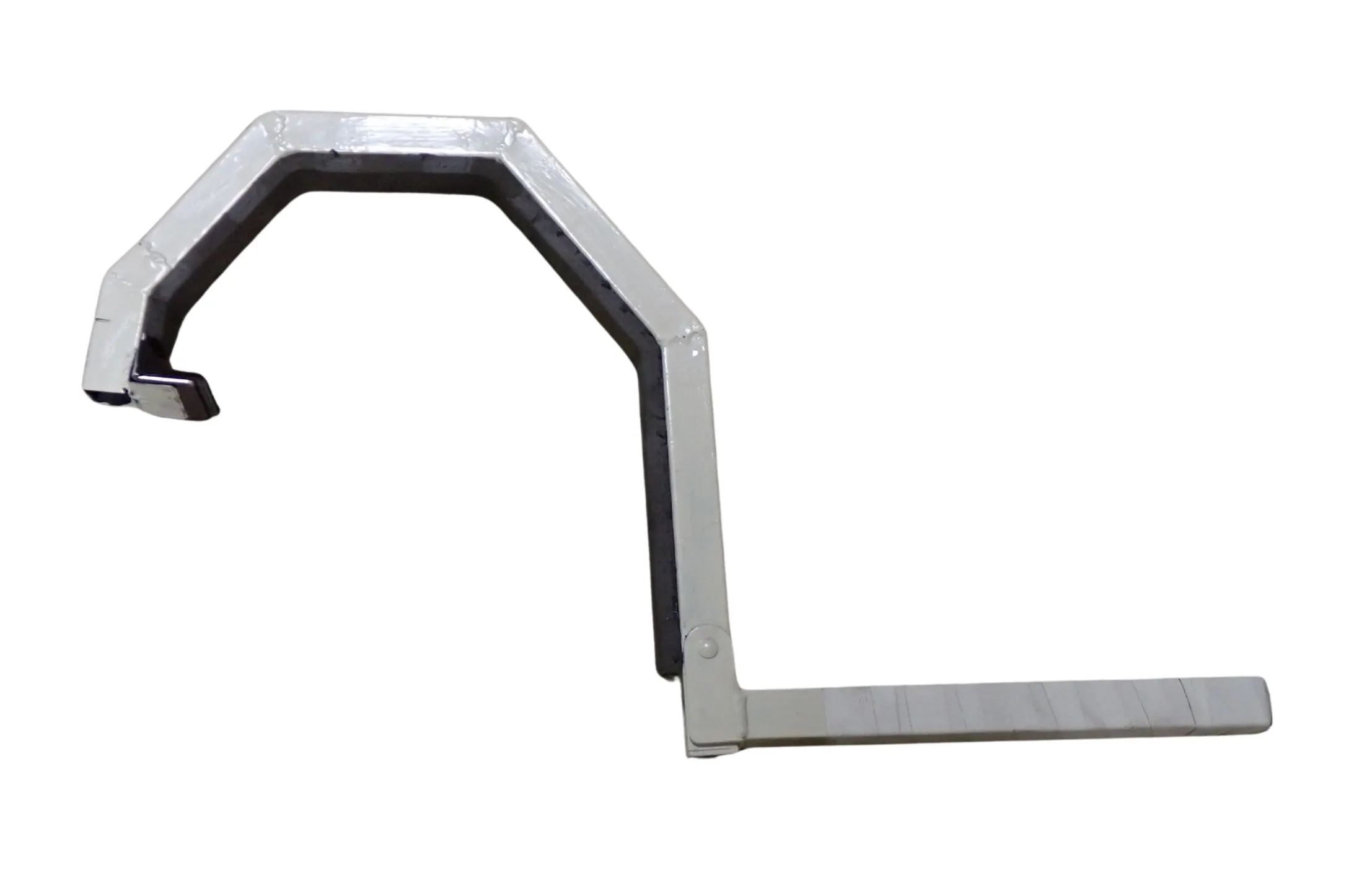
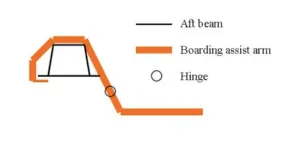
The solution was an assist arm, sort of like a dip bar. It hooks over the rear beam, like a door jamb pull-up bar, and is removed when not in use. Boarding is now simple; with a hand on the port ama and the other on the assist arm, you just turn around and lower yourself down. To reboard, scoot your fanny up onto the rear kayak deck to gain enough elevation to draw your feet up under you. Then you place one hand on the bar, the other on the port ama, and just stand up—well-supported. From there, with two handholds, it’s an easy, stable step-up.
I welded it from a salvaged bed frame (1/16 x 1-inch square tube), but it could be bolted together, using connector plates and a few inches of 1 1/4-inch angle. The contact points are padded with closed cell foam. The grip is wrapped with athletic tape.
On flat water it reduces the boarding effort by 80 percent—in chop it’s a miracle.
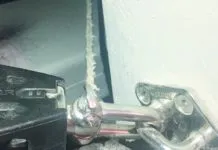
Kayak goes in the water parallel to the port ama, touching the ama, with the cockpit just aft of the aft beam. The assist arm latches over the aft beam between the laces, about 22 inches inboard. To board you step down and use the port ama and assist arm to do a “dip” into the kayak. To reboard I scoot my fanny up onto the rear deck of the kayak to gain a few inches, pull my feet back under me, and push up with both the handles and my feet. Reasonable even in chop. Then step up onto the boat. Welded from 1/16×1-inch square tube. Padded where it contacts the boat with 1/2-inch closed cell foam. Two inches of 1 1/4-in. angle forms the “grab” under the beam. Handle wrapped with athletic tape for improved grip.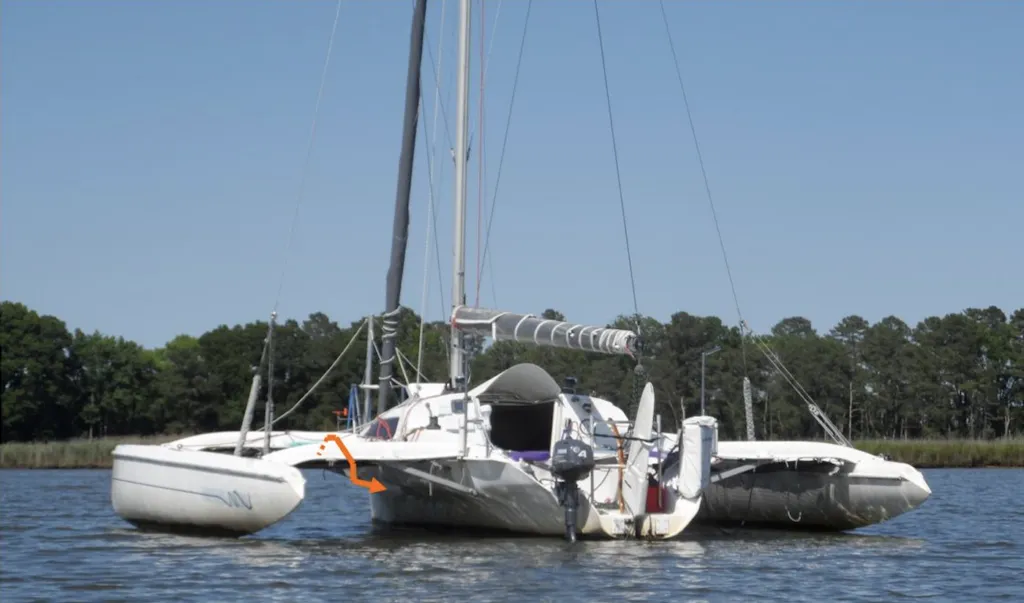
 I’m getting older, have a surgical knee, and getting my heels under me to stand up is impossible. My arms are still good. I can still do dips. My balance is good.
Adapt It to Your Boat
-
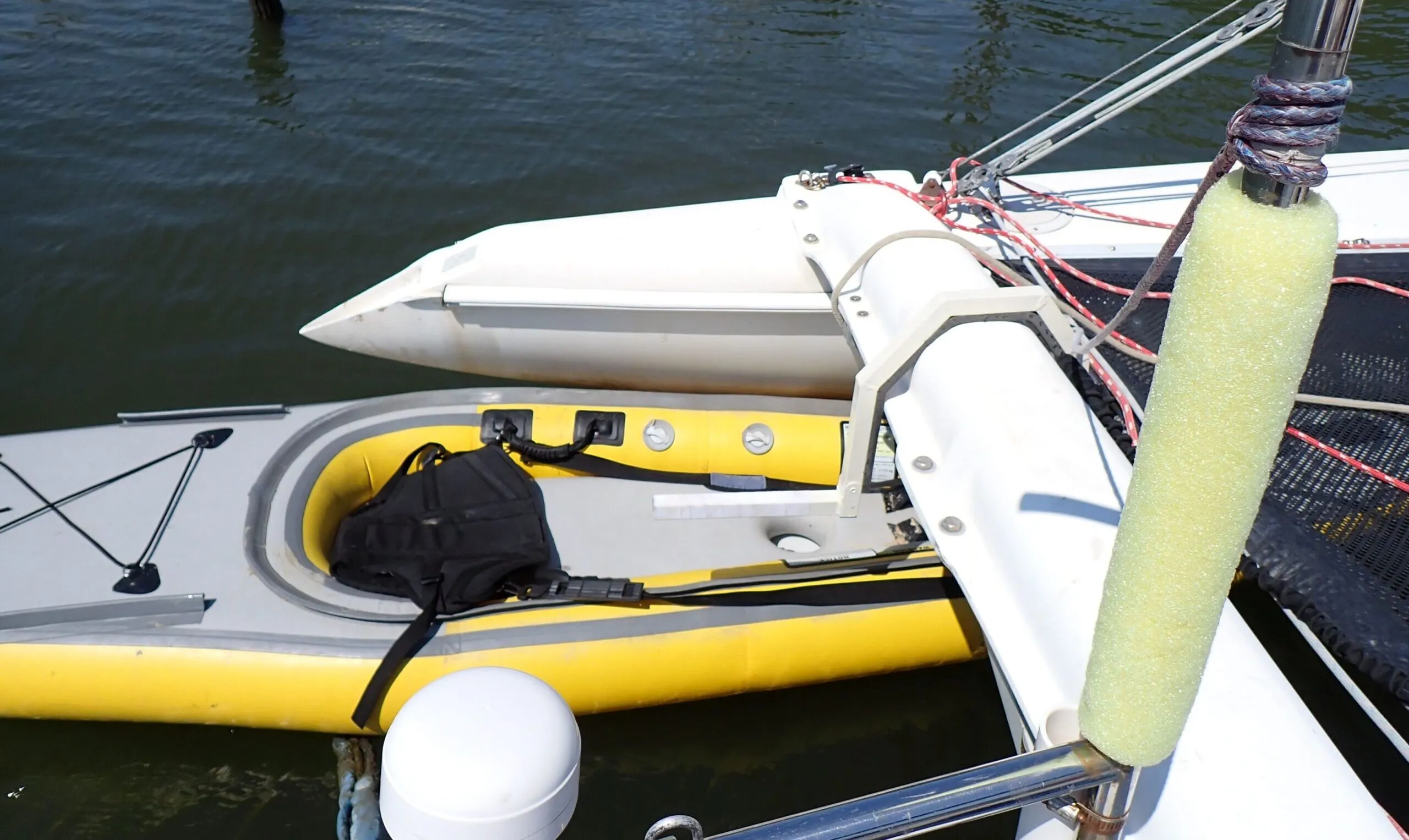
Kayak and assist arm aligned alongside the ama. (Photo/ Drew Frye)
This is a completely boat-specific solution, but my hope is that it will inspire you to consider your boat’s boarding challenges. Ask your family and crew for suggestions about where they could use a hand. Then figure out how to hang it in space.
Can you hang a handle from the toe rail? Could your boarding ladder be upgraded? A pair of mini-docklines to hold it in place? Something that works, for you. As nearly as I can tell, boat designers think all owners are under 40 and sail from floating docks.