

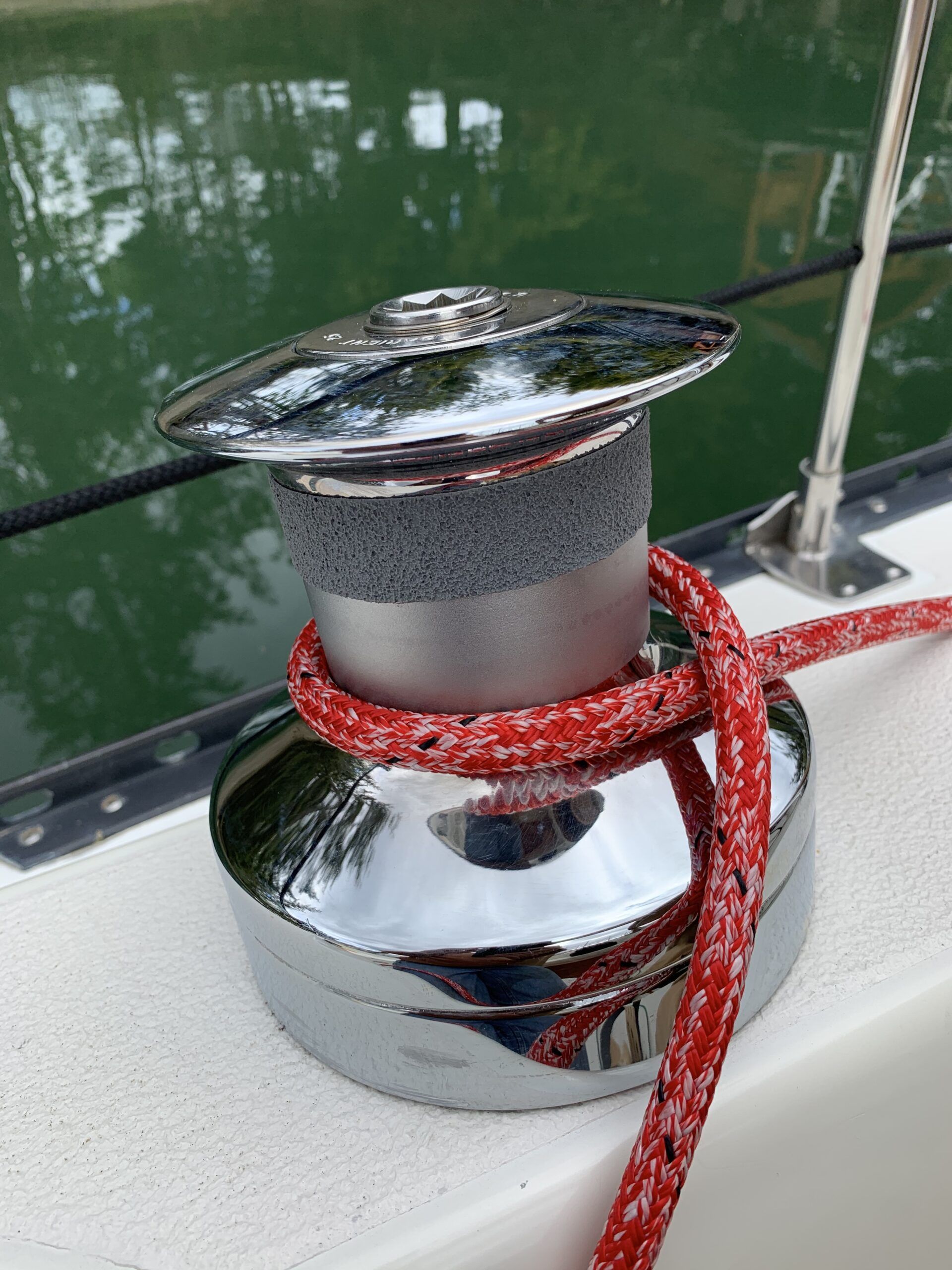
On Natasha, our 1978 Islander Bahama 30, the Barient two speed sheet winches were showing their age—a dull chrome surface and the drum were worn quite smooth. It was getting difficult to get a good grip on the genoa sheet when the winds picked up. I decided to re-chrome them—the process included etching the drum to provide the necessary grip. However, the etching turned out too fine and didn’t really solve the line-slip problem.
The genoa sheet still needed four or five wraps (full drum) with excessive tension on the tail to keep from slipping in stronger winds. Replacing the aging sheets had no effect. Wetting the sheets provided some improvement—the moisture created more friction in the rope, but that wasn’t really a long-term solution. Replacing the aging Barients with new self-tailing winches would be a solution, but that was not in the boat budget—there had to be another way.
A New Use for 3M Safety Walk Tape
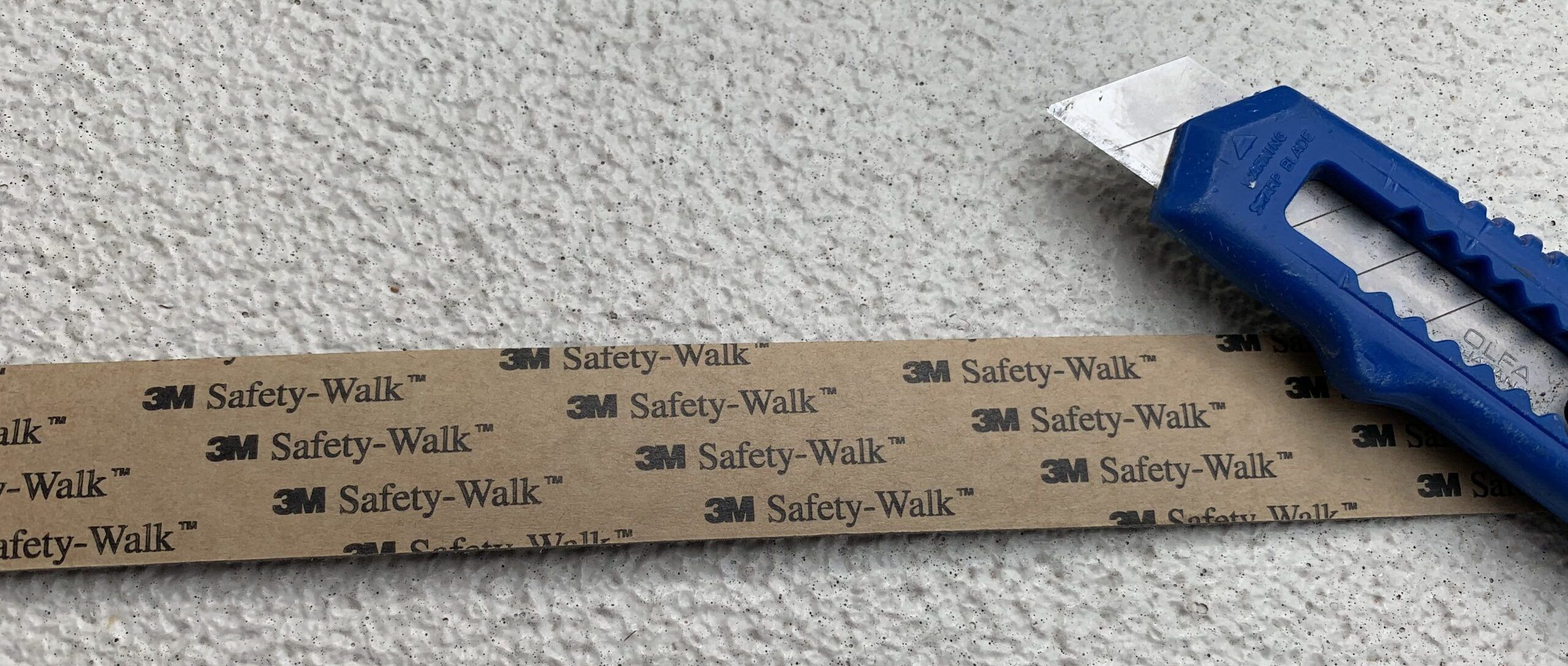
After a bit of experimentation, I came up with a far less expensive solution that works for me. The 3M company produces a non-skid tape called Safety-Walk. This self-adhesive product, available in roll lengths with various widths, is designed to be used on steps and other potentially slippery surfaces. I’ve installed it earlier on the steps leading into the cabin aboard Natasha, and I found it highly effective with incredible grip. Why not wrap it around the winch drum?
Too Much Grip
The first try was using a 3-in. wide strip wrapped around the drum where the textured surface would normally be. Sailing trials proved the texture had too much grip, the sheet would not release smoothly no matter how much or how little tension was applied. The sheet would not slide on the non-skid surface and had to be lifted off to be released. This was a bit dangerous for fingers when the tension was high.
Reducing Tape Width
On the second try I reduced the width of the tape to the top inch of the drum, thinking that four or five wraps of the sheet would be required in rising winds anyway, since the top two wraps reached the tape. That worked like a charm. In lighter airs, with only two or three wraps around the drum, the 3M tape is not a factor. The line rides the drum just below the edge of the tape. However, when the wind picks up and a fourth or fifth wrap is needed the non-skid comes into play—the grip is amazing. Very little tension is required on the tail to keep the line from slipping. To release I simply remove the wraps resting on the tape and then feed the line out smoothly on the bottom portion of the drum.
Tape Endurance
The 3M product has withstood a year of sailing abuse on the two sheet winches with no sign of failing. Tension on the line applies compression pressure to the material on the drum, the more tension, the more pressure. The self-adhesive feature on the tape has proven its worth. Before applying the tape, make sure to pre-wash the drum surface with acetone to remove any contamination. The material is effective and inexpensive. Carrying an extra length or two in case of failure has proven unnecessary.
Bottom Line
Saving 30-plus year old winches wasn’t really my goal; sailing without becoming Superman on the winches was. This economical solution has exceeded my expectations—until the boat budget can afford replacement self-tailers; we can always dream. Bring on the wind!










And it looks good, too!
I’ve had mine reknurled (?) by a machine shop. For a few hundred bucks they work like new.
Thanks for the comment Ralph. Did you have them re-chromed after the knurling? I may have approached this the wrong way around. I assumed that the re-chroming wouldn’t affect the original knurling as much as it did.
Where, how do you find a competent shop to rechrome and reknurl? I am in Chicago.
Unfortunately, I have no knowledge of the Chicago area, being a Pacific NW sailor. I simply approached the chroming shop (primarily a business for automotive restoration) and told them what I wanted to happen to the winches. They came back chromed with a light knurling. It ends up that the light knurling was not enough to hold the lines under tension and I found this solution.