

Treating Vinyl for Long Life
Vinyl protection is about the long run. In the Practical Sailor January 2014 issue, we reported on the performance of a host of clear-vinyl waxes and cleaners, as well as several different clear-vinyl window materials, after testing them for four months on panels. This report is the two-year update on the long-term test of those products, and already the first failures have appeared.
Long-term Testing Clear Vinyl
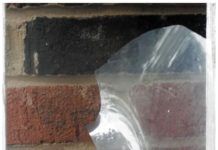
Our long-term test of clear vinyl and clear-vinyl treatments includes environmental outdoor tests with controls, as well as some real-world testing on one of our test boats.
Bringing an Old Boat Trailer Back to Life
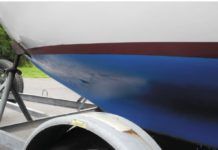
Over the years, weve stressed the importance of keeping a close eye on stainless-steel sailboat hardware and why pitting, crevice-corrosion, and galvanic action are the enemies. But we may have downplayed the need to be aware of how plain old ferrous-metal oxidation comes into the picture. Mild steel and high-carbon steel are even more prone to corrosion, and despite the fact that the oxidation is far easier to spot on these metals, this ticking timebomb somehow gets ignored.
Do-It-Yourself: Seeing Neon Blue
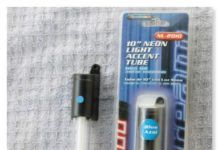
There are simply too many white lights in and around a municipal anchorage. A required white anchor light must have 360-degree visibility. But a white light at the tip of a mast can get lost in the stars or a background of city lights, making it a poor marker for a sailboat 60 feet below. Also, a light in the sky is not in the normal plane of view of other small vessels maneuvering in an anchorage. An additional white light on a stern arch is a better marker, but it also can become camouflaged by city lights onshore and will be obscured, by a small degree, by the mast. But Inland and International Rules state in part no other lights shall be exhibited, except such lights as cannot be mistaken for the lights specified in the Rules, which makes the growing use of LED flashing blue or white lights and non-flashing red, green, and pink lights illegal to use as anchor or on-deck lights. Such lights are easily confused for lighted buoys, channel markers, lighthouses, or police boats.
Do-It-Yourself: Salted Surfaces
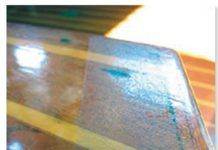
While new finishes-paint, epoxy, or varnish-may be beautiful to look at, they are also as slick as can be when a little seawater hits the surface. You can cover your handiwork with nonskid tape; slather on a coat of bland nonskid paint; try one of the nonskid paint additives like crushed walnut shells (favored by PS Technical Editor Ralph Naranjo); or you can try an easy, age-old method that PS tester Drew Frye favors: salted varnish (or paint).

Synthetic Decks vs. PS Testers
For this comparison of synthetic teak options, our first concern was ease of installation. The manufacturer typically carries out the hardest part-welding the panels together to achieve the correct dimensions. The ease of gluing our test panels to a simulated fiberglass deck was similar for all five test products. The difficulty of your own project will depend on how much work the manufacturer does in terms of measuring, assembling, and fitting the panels.
Taking the Spill Out of Fill-ups
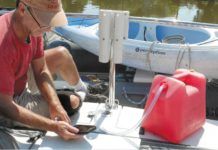
Fueling a boat has never been as easy as fueling a car. Spills-exacerbated by poorly designed fill pipes and vents-are common. The U.S. Environmental Protection Agency (EPA) has updated the fill and vent requirements on boats to prevent these spills, but they only apply to new gasoline-powered boats. New jerry cans designed to prevent spills and comply with new emission standards arent making things easier. Most are hard to control and slow during filling, spill prone, and break after limited use.
Fighting Mildew, Mold, and Lichen
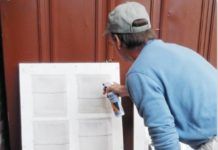
Most boat owners regard their boat as a living, breathing thing, but when real living things-especially the microscopic variety-move aboard and start occupying large swaths of damp real estate, its time to draw the line. Weve done a series of reports on mildew in past articles, but those black spots on the deck, lines, and canvas probably arent mildew. Mildew and mold require darkness, and even the shaded areas on deck are too well lit. Those spots are more likely black algae and lichens, the latter a symbiotic combination of algae and fungus.
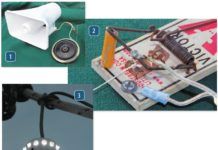
Do-It-Yourself: Onboard Security
Some ports and anchorages are safer than others, but it never hurts to be cautious when it comes to boat security. When youre away from the boat, blasting a loud stereo down below can give the appearance that someone is onboard and may slow a prospective thief. (Doesnt everyone turn radios and TVs off when they leave?) Trailing a spare dinghy or kayak off the stern is also a good deterrent, as is on-deck illumination.
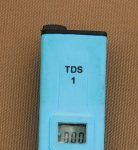
Water Testing Tools
Leave water from any source in a storage tank for a while, and interesting things will start to grow. Only the purest water in an airtight bottle will have a long shelf life. But not all bottled water is what the label says it is. For a cruiser, there are two water-testing tools that are important, and a third tool that is helpful in determining what is going into a tank and managing the quality of fresh water on a long-range cruising boat.

Morgan 382 – The $30K Boat Nobody Talks About
The Morgan 382 might be one of the most overlooked cruising sailboats ever built. Designed by legendary naval architect Ted Brewer and produced between...



Latest Sailboat Review
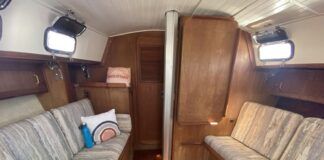
Caliber 33 Used Boat Review
The Caliber is a peculiar blend of tradition and innovation, of security and performance, of practicality and pizzazz. All of the owners we heard from were "satisfied." One called the 33 his favorite boat over six decades of sailing.