

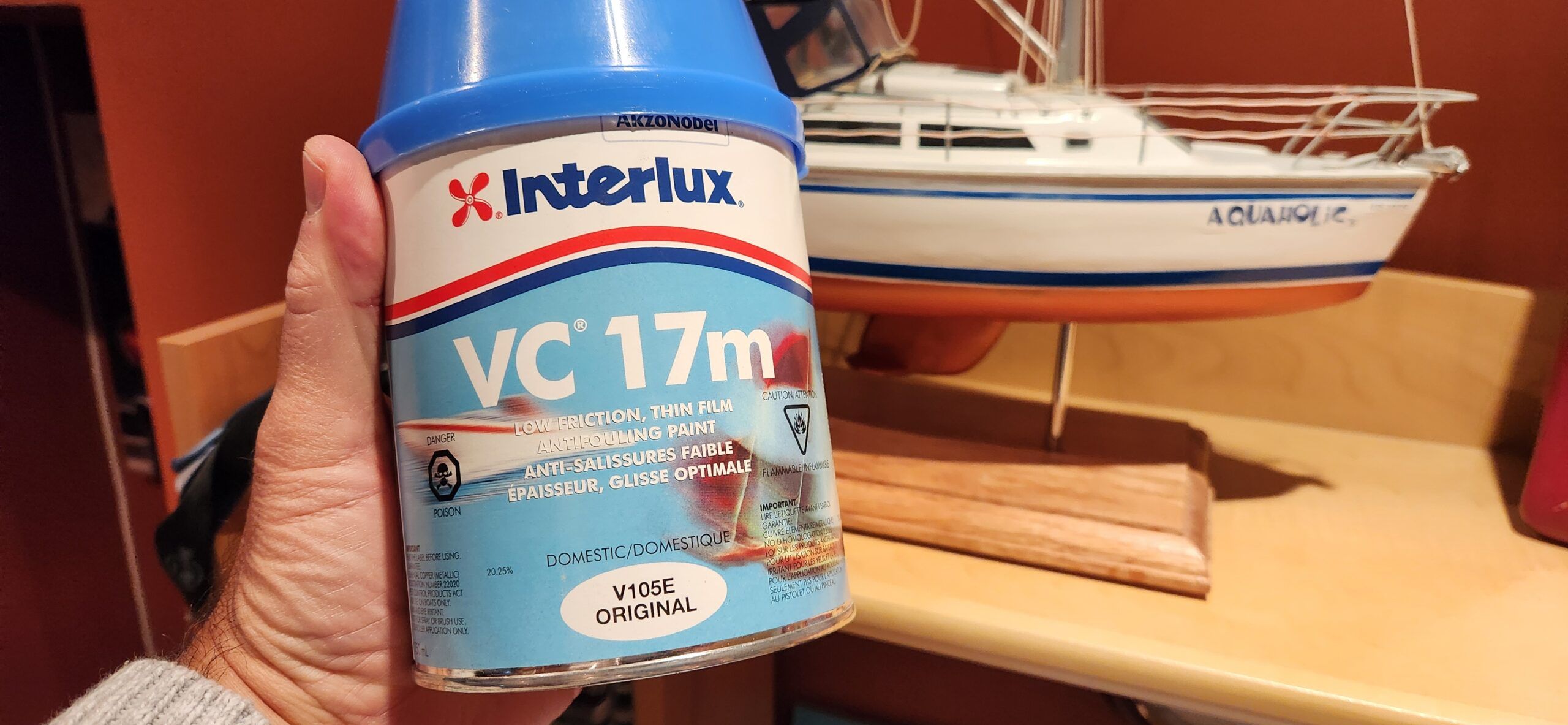
It’s been a few years since Interlux (Akzo Nobel) discontinued the popular VC17 and VC17m antifouling due to environmental and safety concerns. However, it is a favorite among many racers and cruisers, so there was a scramble to buy up whatever VC17 chandleries still had in stock—I bought four years’ worth. But now that I’m down to my last quart, like many other sailors, I’m feeling a bit of pressure to decide which product can replace VC17. The replacement product needs to provide the same performance and at the same time offer the easiest application—it shouldn’t require extensive time to prep the surface to ensure compatibility and adhesion.
VC17 OFFSHORE as a Direct Replacement
Interlux also offers a product called VC17 OFFSHORE, which is indeed compatible and relatively easy to switch to. However, a few years ago it was only available in gallons and at a high cost. As many of us do not own mega yachts, purchasing a whole gallon is overkill. At my club, some sailors got together and purchased a gallon to share. Come haul-out time in the fall, power washing the hull was easy and any build-up washed off with ease. They also agreed the ease of surface prep and application, combined with sailing performance, makes VC17 OFFSHORE an ideal replacement.
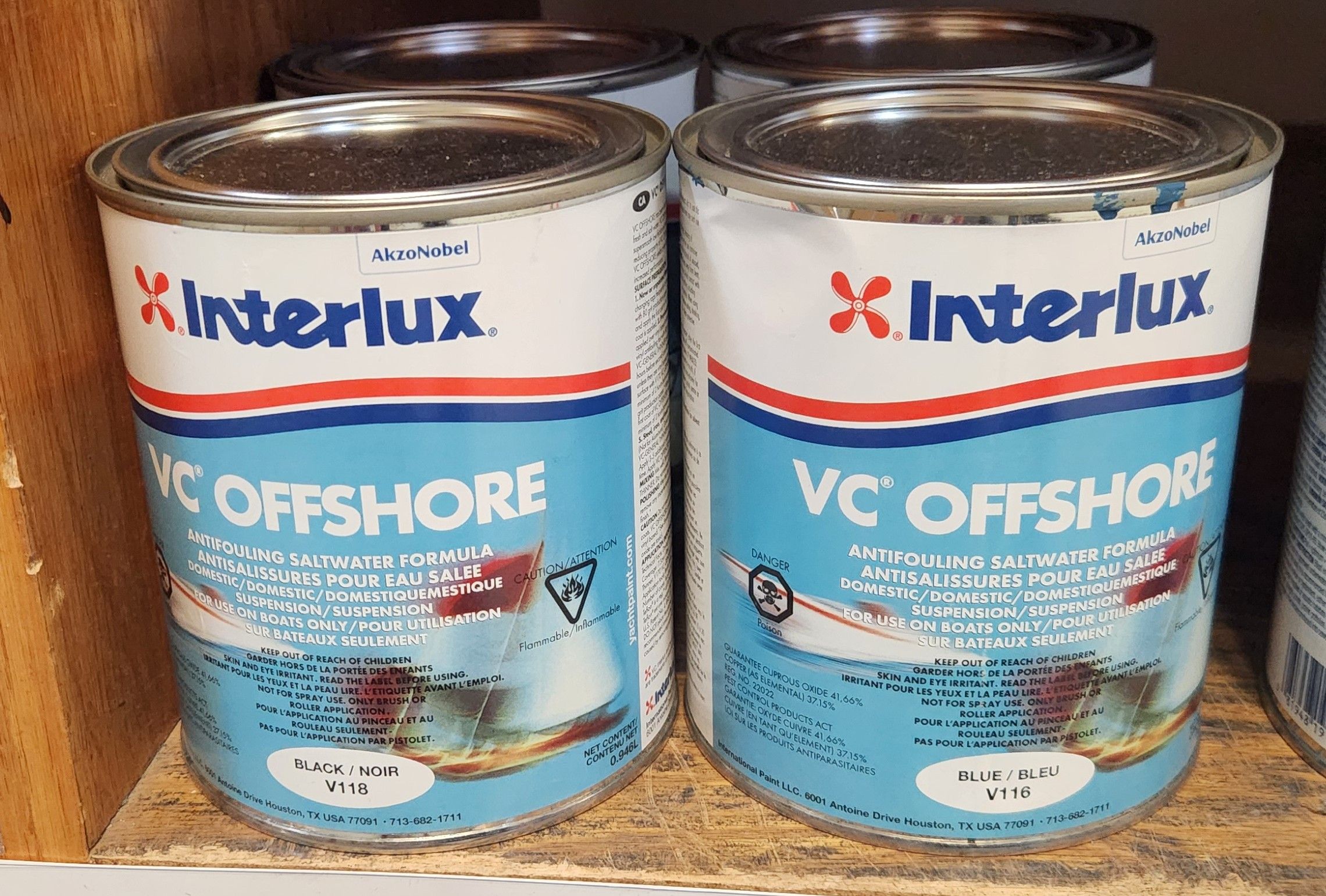
New Packaging and Color Options
The good news is that Interlux VC17 OFFSHORE is now available in quarts, in both black and blue. There’s no word yet from Interlux if more colors are planned. However, if black or blue doesn’t appeal to you, boat repair experts at Montreal Shipwright say that some boat owners have mixed both colors together to make a beautiful, almost cobalt, blue—I’m thinking of doing that.
A Safer, Simpler One‑Part Formula
Converting to VC17 OFFSHORE is relatively simple, safer and definitely an easy DIY project. Unlike its discontinued cousin, VC17 OFFSHORE is a one-part product. This means there is no copper-based health and environmentally risky volatile organic compound (VOC)-loaded part to add and mix prior to use. Also, there is no time crunch between coating and dropping in the drink. You can take your time and complete the job days or weeks ahead.
Prep Work Matters More Than the Paint
So now that we have tried-and-true direct and compatible replacement to VC17, there is still the question of surface prep. The changeover is simple and does not require days and weeks or specialized equipment. However, since this is a product switch, the first application will require a little more elbow grease. But subsequent recoating will be super simple and, if in fresh water, may not be required every year.
As with any painting or coating job, proper prep is 90 percent of the work and 100 percent responsible for the end results. Every season, fellow sailors ask me why they have so many patches where the antifouling has flaked off. Every time, after inquiring about their application process, the cause is the same – little or no surface prep.
The following steps apply to VC17 OFFSHORE, and to any time you reapply or recoat your bottom paint, regardless of brand. Follow these simple and easy steps, and you will get better results from your bottom coat, and you’ll save money with longer lasting performance.
Tools and Materials
Before beginning, here is a short list of what you will need:
- VC17 OFFSHORE, or whatever bottom coat product you are using
- 120-grit sandpaper
- Painter’s pole (expandable if required)
- Sandpaper adapter for the painter’s pole
- Soft car wash-style brush
- Access to fresh water, such as from a garden hose
- Paint roller (adaptable to fit your painter’s pole)
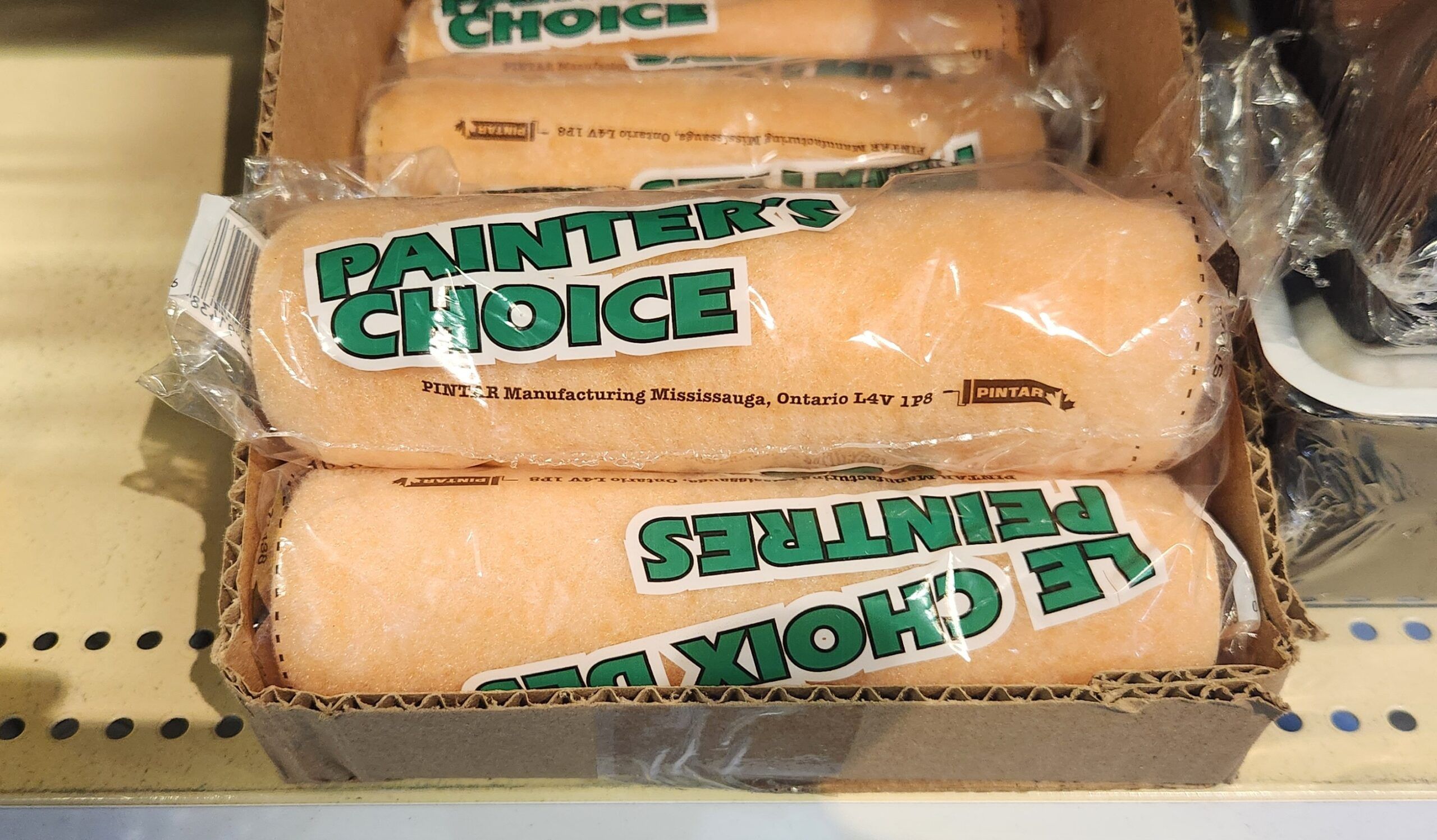
- Short-hair synthetic roller with a plastic inside tube, not paper
- Good-quality painter’s tape
- Disposable gloves
- Recommended: A painter’s disposable suit, mask and goggles to use while sanding
- Rags or paper towels
First‑Time Application: Step‑by‑Step
The following steps are for the first-time application:
Step 1: Suit Up for Safety
Put on disposable suit, mask, gloves and goggles. Since the original VC17 is rich in copper and VOC, please do not skip this all-important safety step.
Step 2: Sand and Fair the Bottom
Start by sanding the entire surface below the waterline, making sure to remove any loose or flaky antifouling – go over the entire surface. You can use a palm sander, but be careful not to stay in one spot too long and pierce down past and through the Interprotect barrier coat or gelcoat. The Interprotect is the product used to coat to the bare gelcoat when the boat comes out of the mold. It is designed to help seal and protect the gelcoat. Antifouling coats are applied on top of the Interprotect coating.
Step 3: Rinse Thoroughly and Repeat
Using the garden hose and a soft-bristle brush, rinse the entire surface from top to bottom. Use plenty of fresh water and repeat the process two or three times to make sure no sanding dust or debris remains.
Step 4: Allow for Full Drying Time
Let the surface dry for a day or two.
Step 5: Degrease Any Contaminated Areas
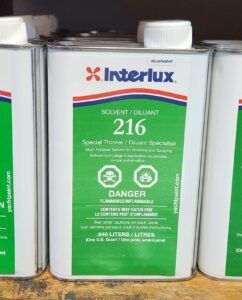
Inspect the entire surface. If any kind of oily or solvent-based dirt is present, use Interlux Special Thinner 216 to wipe and decontaminate those areas. Make sure to do this before applying the first coat of VC17 OFFSHORE.
Step 6: Tape the Waterline
Tape to protect the waterline. I like to make sure I have at least two or three inches of tape in case the roller goes too far up.
Step 7: Mix the Paint and Apply
Mix the VC17 OFFSHORE properly. Using the roller, paint the entire surface. A short-hair synthetic roller is best, but make sure it has a plastic core tube and not cardboard. Cardboard will easily saturate and soften up or fall apart, which wastes time and product, and creates a big mess to clean up.
How Many Coats and When to Recoat
Important: It is recommended that the first time you use VC17 OFFSHORE, you apply three coats. This may sound excessive and costly, but come the fall and next pre-launch season, if the prep was done right, you may not even need to apply more antifouling. In fresh water, you may need to reapply only every two or three years, or perhaps only in some areas, like the leading edges of the bow, keel and rudder. This is why Steps 2 and 3 are the most important steps and where most of your time should be invested.
Share Your Bottom‑Paint Experiences
Once again, thanks for reading! What experience have you had with antifouling paint? Have you had to switch away from VC17 and if so, what product works for you? Don’t forget to mention if you’re in fresh or salt water.
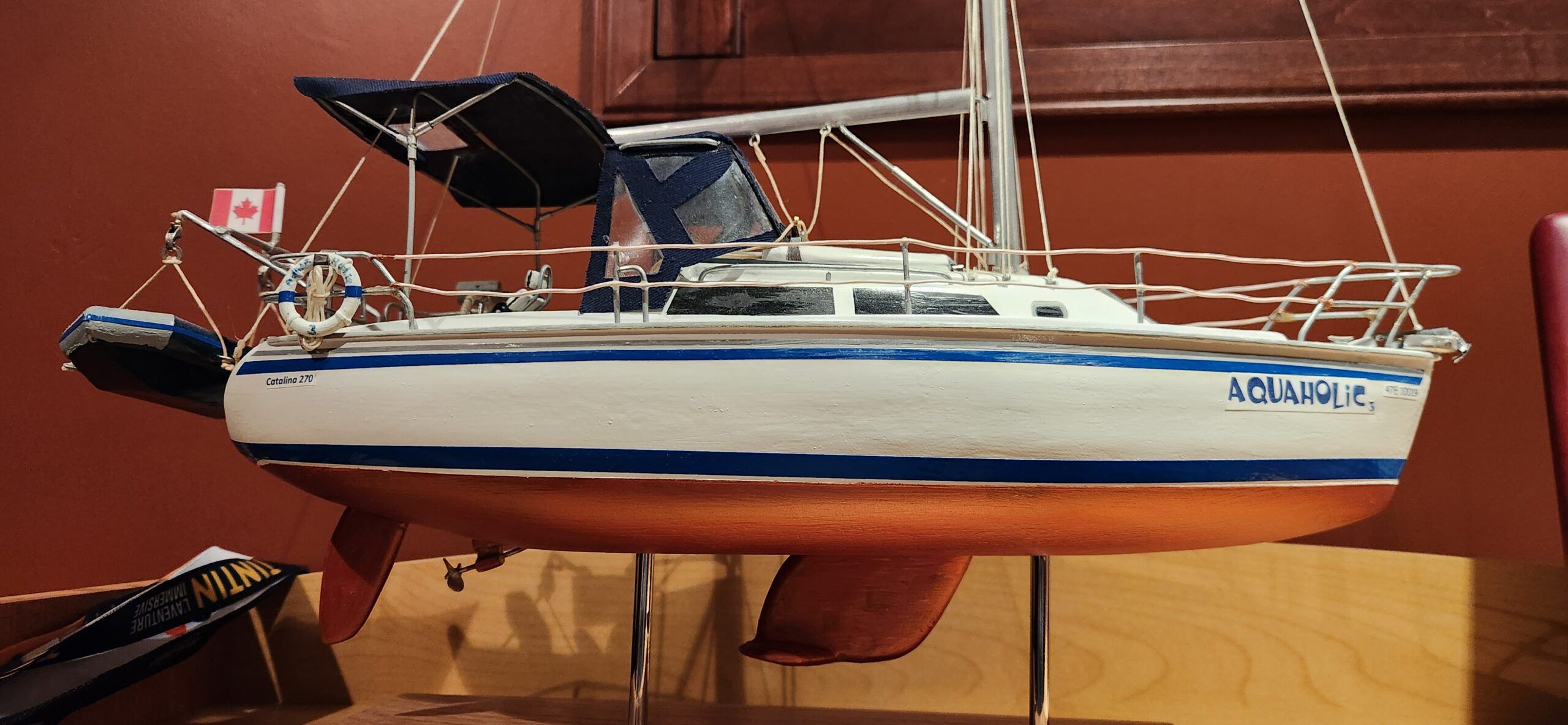
Now, I guess I will also need to repaint the bottom coat on my scale model of Aquaholic 3!
Full disclosure: I do not receive products for free or get paid by any product company or vendor to write any of my articles. Any products I mention, I paid for myself without any influence. When a company asks me evaluate a product, I will always make sure to disclose this. But regardless, you can rest assured my articles and reporting will always be true and unbiased.










Like many Lake Erie sailors, I have VC17 on my Sabre. How does this new formulation perform compared to the old?
Also a clarification in your procedure: Step 1 warns of VOCs yet only recommends PPE for dust protection. Volitile Organic Compounds (VOCs) can only be stopped by an appropriately rated respirator. Fortunately, there’s no VOCs in the old paint. Being volitile, they have gassed off long ago and an N95 dust mask to protect from the copper dust would be sufficient. The 216 solvent recommended, however, is nothing but VOCs and a respirator should be worn.
Thanks for your informative comment Ben.
As for the difference between VC17 and VC17 Offshore, it is the smoothness of the surface. Which compares to VC17. And VC17 Offshore lasts longer as well, especially in fresh water. Many sailors report only minor touch ups on leading edges with full surface reapplicaction needed only every 3 years.
My search of the internet and local sources (Detroit) still show availability of VC 17m and no availability of quart size cans of VC 17 Offshore. Is it just a Canadian issue with availability?
Hi Ralph, I am told many retailers still have inventory of VC17m they are hoping to liquidate before bringing in VC17 Offshore in quarts. Thus may be the case. I know many retailers in Canada are doing the same thing.