




Internet of Things Goes to Sea
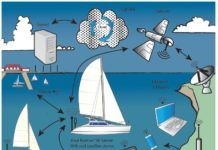
Version 1.0.0 of Signal K, the Open Marine Data Standard has now been released, giving developers a stable platform to test and develop new open-source hardware and software for sailors.
Testing the B&G Zeus3 Nav System
Multifunction display manufacturers have pushed their products through a dramatic evolution in the last five years as they try to keep pace with technology that we take for granted in our other electronics. Better interfaces, screen resolution, and the ability to download useful software apps (beyond navigation) are just some of the improvements. Most of the major vendors are on their third generation of touchscreen interfaces, higher resolution displays, downloadable software, remote music control, and other functions far afield of what MFDs performed five years ago.

Mailport: EPIRB Battery Shocker
We have an ACR Global Fix EPIRB and an ACR Aqualink PLB. We had the EPIRB battery replaced 5 years ago in the USA, and it is time again to do so. We are currently in New Zealand and have been given a quote of close to $350 to replace the EPIRB battery and $120 for the PLB.
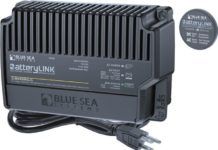
Blue Seas New Smart Charger
Keeping batteries fully charged is a science that cruisers have to master sooner or later. If todays high-capacity AGM batteries arent managed properly, valuable amp hours in can permanently trickle away through sulfation, as we saw in our test of AGM batteries (See Fighting Sulfation in AGMs, PS May 2015). Good battery management means complete re-charging that matches the charging profile of your battery, and this means an accurate sensing of battery voltage. As we saw in our recent report on battery monitors (see Best Battery Monitor Test Update, PS October 2017) a good monitor will also keep track of temperature, as this can be a limiting factor in charge acceptance rate.
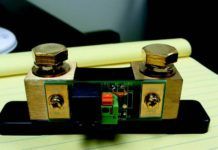
Best Battery Monitor Test Update
Back in our October 2016 issue we looked at eight battery monitors and compared features, installation needs and overall usability. Unfortunately, we overlooked the Smartgauge made by Balmar. Thanks to our readers input we got our hands on one of these recently and ran it through the same test regimen we applied to the other eight monitors.
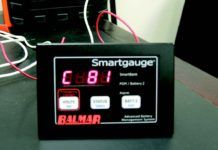
12-volt Battery Gauge Testing
Our test gear comprised a ProMariner ProNautic 12-40P battery charger; West Marine-branded, flooded-cell, deep-cycle battery with a 75-amp hour rating; and two 120-volt, 70-watt incandescent light bulbs powered through a Heart 140-watt DC to AC inverter. This setup created a 12-amp DC load on the battery. We confirmed voltage and current draw using a Fluke Model 867B graphical meter and a Blue Sea Systems Model 8110-amp clamp/multimeter.
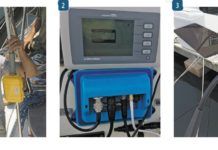
Riding the Wireless Technology Wave
A number of the electronic devices that we tested this year are wireless products that interface with smart phones and tablet computers. Many of these products will also connect with the ships existing marine networks (NMEA) and hardware, and we encourage using these more robust connections for long-term cruising.
Angies List for Boaters
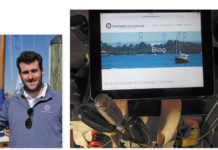
Finding good help in a far flung port may be easier as the Mariner Exchange app takes hold. The boating app sources marine services, separates them by type, and rates the vendor via consumer feedback.

Printing Your Own Charts While on Board
I am a novice sailor, but after taking a few more courses, I plan to buy a 30- to 50-sailboat with a few other aficionados. Two questions:

Marine Weather Forecasting
Over the last few decades, theres been exponential growth in the availability of accurate weather forecasts and the net result is safer voyaging. Government spending on weather data gathering and forecast development has soared. Satellites and data buoys have filled in some of the oceanic gaps caused by an absence of weather balloon sampling at sea. State of the art, algorithm-driven, model data and ensemble-based forecasting have turned electronic guesswork into a better understanding of atmospheric volatility. The net result is an increase in the validity and reliability of marine forecasts and a trend that has stretched 24-hour forecast accuracy into 48- and 96-hour time frames. So, if anything deserves the label don't leave homeport without it, it is todays, better than ever, marine weather forecast.

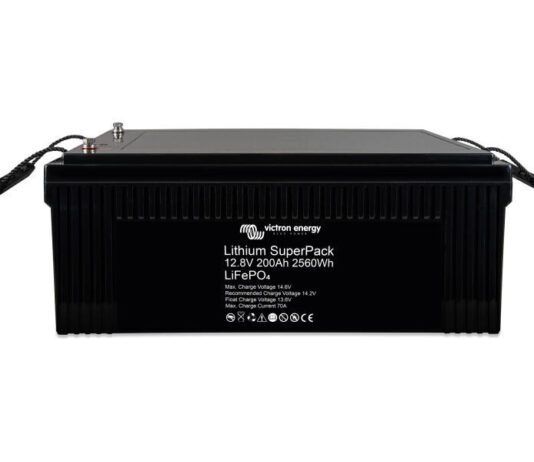
Lithium Batteries on Sailboats: The 3 Mistakes Everyone Makes
Lithium batteries are one of the most popular sailboat upgrades today—but they’re also one of the most misunderstood. In this Practical Sailor Saturday episode,...



Latest Sailboat Review
Island Packet Estero Used Boat Review
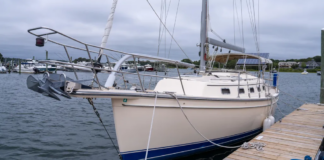
Florida-based Island Packet targets a relatively narrow niche, so the toughest competitors to its new boats are often older Island Packets. Introduced in 2010, the 36-foot, shoal-draft Estero is the company’s latest attempt to introduce a distinctive model that doesn’t stray too far from the company’s proven formula for success: moderate displacement, full-keel cruisers designed to be lived on, sailed far and in comfort, and endure the bumps, scrapes, and storms that cruising boats inevitably encounter. After sailing the Estero on Florida’s Sarasota Bay and inspecting its interior, construction, and systems, Practical Sailor testers noted that the shoal-water cruiser will appeal strongest to Island Packet fans who’ve been waiting for a shoal-draft, easy-to-sail boat that compares to the IP37 in terms of interior space. These strengths will be most apparent on intracoastal or riverine adventures like the Great Loop.