





In Search of Stability
Good stability for a racing sailor may be the ability to carry a #1genoa upwind in 20 knots of breeze. Stability for the cruising sailor involves a different and more serious set of questions. What happens when a boat is knocked down so far that it doesn't come back up? What if it comes back up, but is full of water and is at risk of sinking? From what degree of capsize should a boat be able to right itself?
Fenders and Lines for Seawalls
To the lubber, tying-up to a bulkhead seems like the simplest of all docking situations. Perhaps with floating docks this is true. You just throw in a few fenders and tie a few lines. Simple. But in the world of tidal bulkheads with pilings or rough concrete facings, it is often a hammer and anvil situation, with the wind and waves hammer incessantly as the anvil moves up and down with the tide, causing fenders to slip out of position.
Dodging a Bullet When Caught on Bulkhead
The following is aimed primarily at boats that are unable to leave an alongside dock or bulkhead before wind and seas become dangerous. Any fetch beyond 200 yards is dangerous, and there may be nothing you can do to protect the boat. However, if you are in a protected marina, well up a creek, and the storm is moderate, these actions can help. Just remember that low breakwaters will be overtopped, wooden breakwaters fall apart, other boats will come loose, and there will be lumber in the water from broken docks.
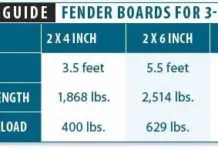
Make Your Own Rugged Fender Boards
We described a simple home-built version several years ago (Practical Sailor, December 2011); here we present a few simple upgrades on the same basic design, allowing for simpler deployment, better fender retention, and more stable positioning. Pressure treated lumber provides inexpensive durability.

Sailing Camps for Kids
This summer tens of thousands of children will take their first sail, with a friend or alone in their own little boat. They will sail away from the WiFi connection, the YouTube videos, and the remote control. Its an experience that can change a life.
Chest High Jacklines
Jacklines (also called jackstays) are rigged along the deck on either side or down the centerline. This is where you are supposed to clip your safety tether.
The Pros and Cons of Chest-high Jacklines
World sailing offers fairly explicit expectations regarding jackstays. And PS offer its own additional advice, including one that recommends jacklines ideally be installed so that a sailor who is clipped in can't go over the side (see Jackline Installation Advice, November 2015). This is not always possible, especially on monohulls. In most cases, he chest-high lifeline on Mahina Tiare will keep above water the head of the person who is overboard.

Safety Gear Recalls
As you gear up for another summer of sailing, it is also a good time to double check that none of your essential safety equipment is subject to a recall. Two helpful websites track recalls that can impact sailors. the Consumer Protection Safety Commission (www.cpsc.gov) focuses primarily on mainstream consumer goods like the Kidde fire-extinguisher (see below). There is also a U.S. Coast Guard site (www.uscgboating.org/content/recalls.php). Here are a couple recalls you should be aware of.

When is it Time to Retire a Safety Tether?
Rules of thumb are rather useless when it comes to equipment that is stored in a locker and then used roughly. Weve broken lots of new and old equipment during testing and learned a lot about what to look for, but even so we are often surprised when good looking equipment fails and scratched up stuff works fine. Inspect closely and often, regardless of age.
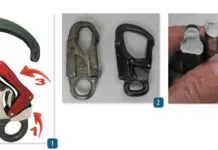
Safety Tethers Under Scrutiny
On November 18, 2017, Simon Speirs, an experienced sailor, went overboard while at the bow assisting with a headsail change on a Clipper Round the World Boat CV30. It was blustery, with sustained winds of 20 knots, gusting to 40 knots. Shortly after he went overboard, his safety tether detached and he was separated from his boat. His body was recovered 34 minutes later. The cause of death has not been determined but drowning is the suspected cause. While such accidents are tragic, they offer a chance to re-evaluate equipment standards within a real-world context.
How Long Do Sails Last?
How long do sails actually last? Sailmakers often say cruising sails last around 10–15 years, but what happens when you discover a sail that’s...



Latest Sailboat Review

Jeanneau 55 Boat Review
This recent sailboat from Jeanneau may as well be a spaceship. They’ve taken all the time-honored designs of a monohull aft cockpit and turned...