




Budget Binnacle Pod
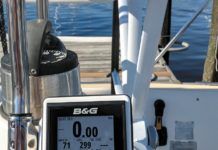
Many sailors want to tuck an additional instrument display or autopilot control at the binnacle, but just don't have the space. Seaview offers a very compact enclosure just right for this purpose. The Seaview SPOD is designed for adding a modern low-profile instrument display, autopilot, or other accessory to your sailboat helm. The SPOD is designed to be mounted either to the side of an existing chartplotter-sized enclosure or directly onto stainless rail.

Educating the Sailor: Start Small
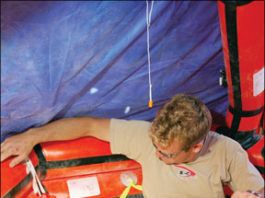
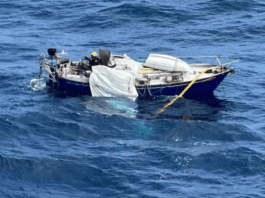
Learning to sail is simple. Thousands of youngsters perfect the essential small-boat skills over the course of a summer. Mastering the art of crossing an ocean in small boat is a different story. Sure, we read about clueless individuals setting out in ramshackle boats making 1,000-mile crossings. The ocean, especially in tropical seas, is not nearly as foreboding as it might seem to the average landlubber.
Preventing Emergency Flare Fizzle
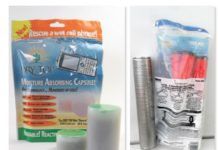
Weve been enjoying desert-dry gasoline for five years, courtesy of silica gel vent driers from H2OUT (see EPA Mandate Sparks Fuel-Vent Filter Test, Practical Sailor, January 2013). As a result, carburetor corrosion and jet plugging have been eliminated. PS diesel testers have report reduced condensate water and corrosion. We tested H2Out space driers against desiccan'ts and dehumidifiers (Dehumidifier Field Tests, Practical Sailor, June 2017) and concluded they had insufficient capacity for cabin drying. However, we quietly put one to work, protecting our flares. Although marine signal flares are waterproof, are packaged in plastic bags, and include deliquescent ingredients in the formulation, it is well known that by the expiration date, as many as half will not function. When we cleaned out our new-to-us boat 10 years ago, we discovered a package of four Orion Hand Held Signal Flares stored in a damp transom locker. They looked shaky, so we tested them, still a year short of expiration. Three of the four flares lit, but only one burned properly. The others sputtered, one going out and the other burning long and dull. This time, with fresh flares, we included an H2OUT SD109 space drier inside the bag and stored them in a dry cabin locker.
Tether Failure Cited in Fatality
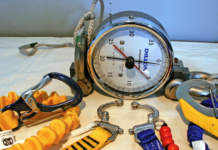
Just as we were wrapping up the report in our December issue describing how to make your own safety tether, 60-year-old British sailor Simon Speirs went overboard and died during the Clipper Around the World Race in an accident linked to tether failure. The race, which charges non-professional sailors to race with pro skippers, was already under scrutiny after two deaths in the previous running.

Building a Custom Safety Tether
A safety tether keeps you safely on board, but it also comes with its own risks. Previously, we investigated jackline materials (Jackline Materials Evaluation, Practical Sailor, November 2016), testing both common materials and commercial products. When redesigning a new tether, tester Drew Frye wanted something that fit his boat-very short for the side decks, but long for the broad decks and cockpit of his catamaran.

Revisiting the Two-Legged Tether
Driven by World Sailing standards, the sailing tether market is dominated by single 6-foot tethers and two-leg 3-foot/6-foot tethers. In fact, if you intend to race your boat in a World Sailing event, you will have to choose one of these tethers to be compliant with race rules.

Sailing Safety Tethers Are No Guarantee, Say Pro Sailors
Recent fatal accidents in the Clipper Around the World Race inspired a closer look at sailing safety tethers. Seeking a racer's view of gear that racing rules engendered, we spoke with Sailing Hall of Fame navigator Stan Honey (a past PS contributor) and Casey Smith, skipper of Comanche, the 100-foot racing yacht that crushed the trans-Atlantic record in 2016. We were not surprised to hear that these racers made their own tethers, although their low-stretch Dyneema tethers are very different from the climbing ropes we advocate.
Simple Steps Will Keep Salt Out of the System
Depending on the collection area and the sailing, salt can be a primary problem. Spray falls and dries, layer after layer, until the decks hold enough salt to foul a considerable flow of water. The solution? Wash the deck with seawater before the rain comes. Squeegee off as much as practical or towel dry, and common sense dictates this is best done when at sea and must be done away from red tides. We tested the run-off from the top after scrubbing with seawater, allowing to dry, and then spraying with tap water equivalent to 1/10-inch of rain (see results in table below). In addition to taste, seawater contains significant sulfate levels, which combined with bacteria in the tank under anaerobic conditions, can lead to sulfurous water; sailors notice this when a seawater flush is used for the head, but allowed to become stagnant for a few days; the first flush will smell.
Winterizing Wisdom from the Chemistry Lab
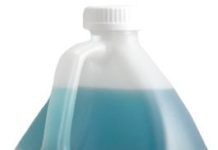
Each winter sailors must tackle the project of winterizing their potable water system. Our preferred method is to dry the system completely (see PS September 2014, Step-by-Step Winterizing tips. If thats not possible we completely empty the tank and then treat the plumbing with the correct concentration of anti-freeze. The online version of this article provides all the details you need to carry out this process, as does the recent Inside Practical Sailor blog post, The (Cold) Case of the Frozen Anti-freeze.

Lessons from the Storms
Every storm is a learning experience, but sometimes it takes time to deconstruct the events and recognize what worked and what didnt-and what can be done to prepare for the next storm. Two lessons, in particular, stand out from this years hurricane season.

Video: Beneteau 361 – Full Review
Should you buy an older Beneteau sailboat? In this Practical Sailor boat review and yacht tour, we examine the Beneteau Oceanis 361 to see...



Latest Sailboat Reviews

Jeanneau Sun Odyssey 42 DS Used Boat Review
This boat is dangerous for one simple reason—it looks like the answer. It’s big enough, pretty enough, modern enough, and suddenly, somehow, almost affordable...