



Sailing Fatality Studies Shine Light on Tethers
The capsize of WingNuts is not the first fatal accident that has put the spotlight on the harness-to-tether connection. Since 1986, several widely publicized fatal sailing accidents have prompted inquiries into the harnesses and safety tethers used by sailors.
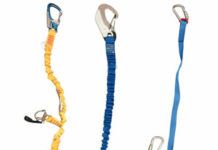
The Sailor’s Leash: Single or Double? With Elastic or Without?
Once you’ve settled on the types of clips you want on your tether, the next choice is the webbing construction. Currently, there are two main types of tethers: single tethers with one hook at each end; or double tethers, with two legs and three hooks. Double tethers have an extra clip, usually attached to a short leg at the mid-point of the tether, that shortens the length to about 3 feet.

Bugs Be Gone
Keeping bugs at bay has always been a conundrum for boaters, particularly when that calm, idyllic anchorage becomes a refuge for black flies, mosquitoes, and other flying bloodsuckers when the sun goes down. No one wants to slather on smelly chemical creams or sprays to enjoy happy hour in the cockpit, but bug repellent options have been rather limited until recently.
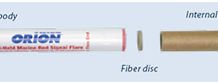
Orion Reports on Defective Flare Investigation
In the July 2011 Mailport, Practical Sailor reported that a new Orion handheld flare had malfunctioned during an emergency training course at the Annapolis School of Seamanship. The defective flare had melted through its end cap, allowing hot, melted slag to drip out.
The Sailors Leash: Single or Double? With Elastic or Without?
Once you’ve settled on the types of clips you want on your tether, the next choice is the webbing construction. Currently, there are two main types of tethers: single tethers with one hook at each end; or double tethers, with two legs and three hooks. Double tethers have an extra clip, usually attached to a short leg at the mid-point of the tether, that shortens the length to about 3 feet.
A Second Look at Safety Tethers
Sailing harnesses and safety tethers were put to the ultimate test in July when a storm packing winds of more than 50 knots swept through the fleet of sailboats racing in the annual Chicago-to-Mackinac Race. One of the boats, the Kiwi 35 WingNuts, capsized in a powerful gust. It stayed inverted, forcing the crew of eight into the water. At the time of capsize, the crew were wearing safety harnesses and tethers, and most were clipped in to jacklines on the boat. All but two of the sailors, skipper Mark Morley and his girlfriend, Suzanne Bickel, were able to unclip themselves and survived.
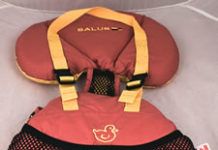
Youth Safety Gear Top Picks
It’s summertime, which means the kids are out of school and flocking to youth sailing camps, heading out on family cruises, and cooling off in the pool. Over the years, we reviewed dozens of safety products to keep wee crew safe around the water, including PFDs (personal flotation devices) for children, toddlers, and infants. Here are some of our top picks.
Re-examining Youth Sailing Safety
Fourteen-year-old Olivia Constants was participating in the Severn Sailing Associations junior race training program on Chesapeake Bay in late June when she and her partners Club 420 capsized sharply to leeward and inverted. While her partner emerged from the inverted hull, Constants did not. By the time the support boat reached her and staff pulled her out of the water, she was unconscious. Attempts to revive her failed.
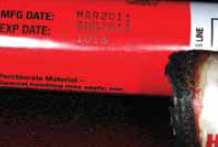
Flare Mishap Highlights Need for Caution When Firing
In a recent emergency procedures training course at the Annapolis School of Seamanship (www.annapolisschoolofseamanship.com) a handheld Orion flare melted through its handle and began dripping hot slag. Course coordinator Matt Benhoff said, “The trainee operating the flare was wearing heavy leather gloves and goggles and dropped the malfunctioning pyrotechnic flare in a disposal bucket before the problem led to an injury.” If a similar scenario played out in a life raft, hot slag could injure a sailor already in trouble, or result in raft damage if the molten slag landed on an inflated buoyancy tube.
Life Raft Stowage: The Overlooked Necessity
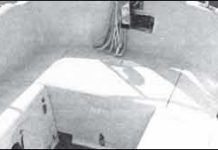
Sometimes, it seems that safety is a dirty word in the boat- building industry. A favorite marketing catchword is "bluewater cruiser." We assume this means a boat capable of going to sea, rather than a boat designed to tiptoe along the shore. But when you go aboard the "bluewater cruiser", more often than not you find a boat most suited for blue water when it is secured to the deck of a ship enroute to the dealer. Nowhere is this more apparent than in the provisions made for the stowage of life rafts. Or rather, the lack of provision made. Few people would venture offshore without a life raft, yet the location of the raft aboard the boat is almost always an afterthought.
Morgan 382 – The $30K Boat Nobody Talks About
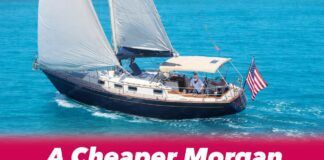
The Morgan 382 might be one of the most overlooked cruising sailboats ever built. Designed by legendary naval architect Ted Brewer and produced between...

Latest Sailboat Review

Jeanneau 55 Boat Review
This recent sailboat from Jeanneau may as well be a spaceship. They’ve taken all the time-honored designs of a monohull aft cockpit and turned...