

The No Discharge Zone Illusion
Long Island Sound, the belt of water stretching 110 miles from Hell Gate in New York City to the Race at the Sounds eastern end, is a fitting emblem of the water-quality woes future generations will face. Today, as Tom Andersen, author of This Fine Piece of Water: An Environmental History of Long Island Sound, describes, the Sound is at the brink of an ecological crisis, a term so frequently applied today that weve become numb to it.
PS’s Safety Tether Test Results Reignite Concerns
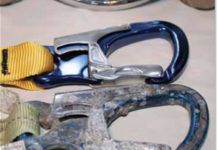
The safety tether is the sailor’s leash—a short stretch of webbing or rope that keeps a sailor from going overboard. Its purpose is complicated by the fact that it must be capable of two opposing functions: It must offer a secure means of attachment to the boat, and, when the need arises, provide a quick means of release. The recent Chicago-Mackinac Race tragedy and similar accidents, recent product recalls, and findings in Practical Sailor’s latest round of tether testing also bolster the argument that sailors—and manufacturers—need to pay more attention to the safety tethers on the market today. For this test, we evaluated three different West Marine tethers and found that despite improved engineering, they still fall short of perfection.
Sailing Fatality Studies Shine Light on Tethers
The capsize of WingNuts is not the first fatal accident that has put the spotlight on the harness-to-tether connection. Since 1986, several widely publicized fatal sailing accidents have prompted inquiries into the harnesses and safety tethers used by sailors.
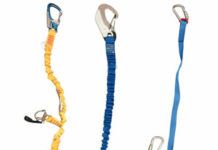
The Sailor’s Leash: Single or Double? With Elastic or Without?
Once you’ve settled on the types of clips you want on your tether, the next choice is the webbing construction. Currently, there are two main types of tethers: single tethers with one hook at each end; or double tethers, with two legs and three hooks. Double tethers have an extra clip, usually attached to a short leg at the mid-point of the tether, that shortens the length to about 3 feet.
Bugs Be Gone
Keeping bugs at bay has always been a conundrum for boaters, particularly when that calm, idyllic anchorage becomes a refuge for black flies, mosquitoes, and other flying bloodsuckers when the sun goes down. No one wants to slather on smelly chemical creams or sprays to enjoy happy hour in the cockpit, but bug repellent options have been rather limited until recently.
Orion Reports on Defective Flare Investigation
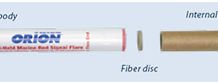
In the July 2011 Mailport, Practical Sailor reported that a new Orion handheld flare had malfunctioned during an emergency training course at the Annapolis School of Seamanship. The defective flare had melted through its end cap, allowing hot, melted slag to drip out.
The Sailors Leash: Single or Double? With Elastic or Without?
Once you’ve settled on the types of clips you want on your tether, the next choice is the webbing construction. Currently, there are two main types of tethers: single tethers with one hook at each end; or double tethers, with two legs and three hooks. Double tethers have an extra clip, usually attached to a short leg at the mid-point of the tether, that shortens the length to about 3 feet.
A Second Look at Safety Tethers
Sailing harnesses and safety tethers were put to the ultimate test in July when a storm packing winds of more than 50 knots swept through the fleet of sailboats racing in the annual Chicago-to-Mackinac Race. One of the boats, the Kiwi 35 WingNuts, capsized in a powerful gust. It stayed inverted, forcing the crew of eight into the water. At the time of capsize, the crew were wearing safety harnesses and tethers, and most were clipped in to jacklines on the boat. All but two of the sailors, skipper Mark Morley and his girlfriend, Suzanne Bickel, were able to unclip themselves and survived.
Youth Safety Gear Top Picks
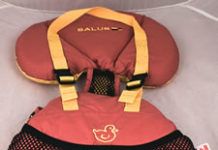
It’s summertime, which means the kids are out of school and flocking to youth sailing camps, heading out on family cruises, and cooling off in the pool. Over the years, we reviewed dozens of safety products to keep wee crew safe around the water, including PFDs (personal flotation devices) for children, toddlers, and infants. Here are some of our top picks.
Re-examining Youth Sailing Safety
Fourteen-year-old Olivia Constants was participating in the Severn Sailing Associations junior race training program on Chesapeake Bay in late June when she and her partners Club 420 capsized sharply to leeward and inverted. While her partner emerged from the inverted hull, Constants did not. By the time the support boat reached her and staff pulled her out of the water, she was unconscious. Attempts to revive her failed.
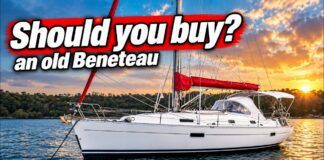
Video: Beneteau 361 – Full Review
Should you buy an older Beneteau sailboat? In this Practical Sailor boat review and yacht tour, we examine the Beneteau Oceanis 361 to see...


Latest Sailboat Reviews
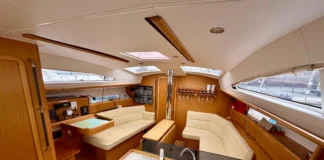
Jeanneau Sun Odyssey 42 DS Used Boat Review
This boat is dangerous for one simple reason—it looks like the answer. It’s big enough, pretty enough, modern enough, and suddenly, somehow, almost affordable...