


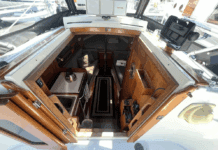
Dana 24 Used Boat Review
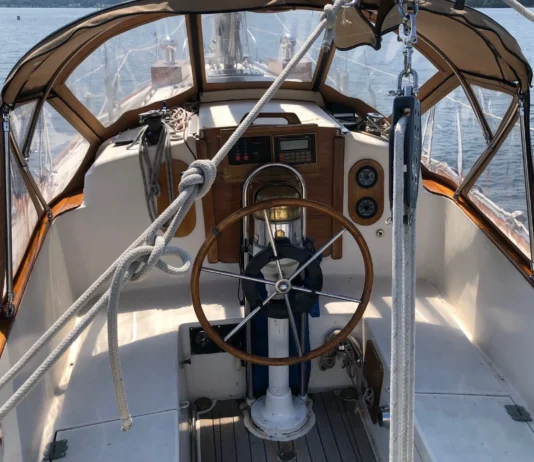
Small, expensive, and proven salty enough to cross oceans, this hip-pocket cruiser is best suited to couples who want a getaway vehicle that's easy to sail and laid out correctly down below.
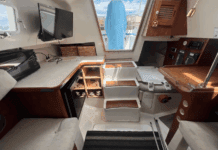
Hunter 27 Used Boat Review
The Hunter 27 is the smallest boat in the Hunter line, which runs up to 43' in length. The Hunter 27 is a popular boat with first-time sailboat buyers, and with small-boat sailors purchasing their first auxiliary cruising boat. Since the boat was introduced in 1975, thousands have been built. Judging from the response of Hunter owners we've talked to, all Hunters, including the 27, are purchased for one reason: price. The Hunter 27 is just about the cheapest diesel-powered 27' cruising boat money can buy.
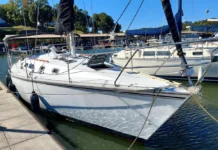
Hunter 34 Used Boat Review
The Hunter 34 is a fast boat, particularly in light air. This is due almost entirely to her huge rig, which towers over 51' above the waterline. Owners report that in winds of from seven to 12 knots, the boat is practically unbeatable in club racing. The typical PHRF rating of 135 for the deep keel boat is faster than most other cruiser/racers of her size.
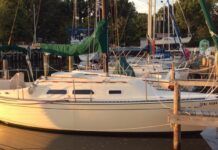
PY26 Used Boat Review
This C. Raymond Hunt design from the 1970’s has standing room and ample beam, making her a roomy family coastal cruiser. Our criticisms are few, the most serious of which is the iron keel.
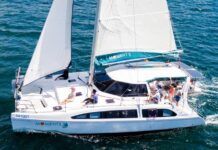
Seawind 1160 Used Boat Review
A big cat springs from small beginnings.

Tartan 3700 & 4100 Used Boat Review
Two of the best built production boats in America, the 3700 and 4100 will go darn near anywhere.
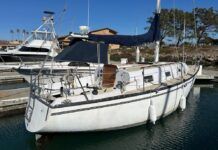
Hunter 30 Used Boat Review
Hunter Marine began building auxiliary sailboats in 1974, largely as the result of the first oil embargo and the new energy consciousness that followed. Founded by Warren Luhrs, Hunter began as a division of the powerboat-maker Silverton Yachts, which was interested in expanding its offerings and taking advantage of the new interest in saving fuel.

Island Packet 440
Light-wind performance aside, the IP 440 is built to go places.
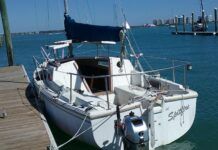
Catalina 22 Used Boat Review
In its 10th anniversary issue in 1980, Sail magazine named the Catalina 22 the boat that had represented the "breakthrough" in "trailer/cruisers" in those 10 years. We might quibble with its selection over more out-and-out trailerable boats such as the Ventures, but there is no denying the popularity of the Catalina: more than 10,000 have been built and sales continue to be strong.For many buyers the Catalina 22 is their first "big" boat and an introduction to the Catalina line. Many remain with Catalina and buy up within that line.

Beneteau 46 Used Boat Review
At last winter’s Paris Boat Show, Beneteau Groupe debuted a four-boat line intended to capitalize on its “design advantage.” Light and space were emphasized. “Ease of handling” and “intimacy with the elements” were buzzwords. The Beneteau 46 is a performance cruiser—long, low, and streamlined. Although it may look too racy to be a cruising boat, it is unique, attractive, and easy to handle. Its lowered center of gravity and elevated freeboard give it more initial stability than previous designs, and its mega-beam and firm bilges give it the power to carry sail well up the wind range. The 46 couples the naval architecture of Jean Berret and Olivier Racoupeau with an interior designed by Massimo Gino and Mario Pedol of Milan’s Nauto Yachts. Pros on deck include wide sidedecks, twin wheels that provide good visibility from the helm, adequate ventilation for warm climates, and a divided anchor locker. At sea with 10 knots of breeze, testers found that the Beneteau 46 helm remained light and the boat tacked through 90 degrees with minimal fuss. They noted a balanced helm and easy steering under both sail and power.
Latest Logbook

Practical Sailor Logbook – September 2026
In September we tour the Hans Christian 48T — the offshore cruiser many sailors call the holy grail — walk the custom Antigua 60...

Video: The 11.5 Knot Cruiser – Bavaria Match 42 Yacht Tour
Could this be the fastest family cruiser you’ve never heard of? The Bavaria Match 42 is a genuine performance sailboat hiding beneath the interior...



Latest Sailboat Reviews
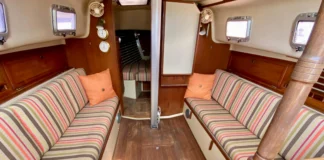
Bayfield 32 Used Boat Review
At first glance, the Bayfield 32 looks less like a fiberglass production boat from the 1980s and more like somebody shrank a traditional sailing...