



Anchor Shackles: The $15 Insurance Policy
Were always amazed how a sailor can spend months agonizing and wringing his hands over which anchor to purchase, and then, when he finally shells out $700 or much more for the anchor, hell attach it to a shackle that has no business being on a boat. Weve plowed through the topic of shackles in several recent issues, but we havent looked specifically at anchor shackles for more than a decade. Choosing a properly sized, high-quality shackle is important, but its also essential to be familiar with proper use.
Making Sense of Marine Chain Standards
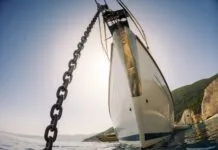
Chain is made from wire. The cross-sectional area and strength of the wire determines the strength of the chain. The weld of each link should be stronger than the wire, so if a chain breaks, it should break in the body (wire)-usually at the crown, or the curve in the link-not the weld.
Drudging To a Safe Landing
The word "drudging" can be traced to the middle-English word for dragging. It is the practice of using a chain, heavy weight, or anchor...

Reading the Telltales on Your Sails
Even the most laid-back cruiser has days when he would like to get there an hour sooner. But speed is not the only reason to fine-tune sail trim. Proper sail trim can often eliminate the noise of motoring. Properly trimmed sails last longer.
Anchor Swivels: Caution Required
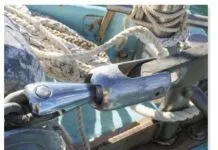
Stroll down the docks at any boat show, and youll see a surprising number of boats equipped with expensive, stainless-steel swivels between the anchor and the chain. Almost all of these swivels are highly polished, machined and/or welded gems that cost anywhere from $80 to $200 or more. By comparison, a galvanized anchor shackle rated to withstand the same or greater loads as the chain rode we rely on costs less than $15.
Lateral Thinking and Anchoring
When we think of anchoring a yacht we think of the obvious—deploy and set an anchor from the bow with a single rode. Our...
The Wrong Angle: Why Your Cam Cleats Won’t Hold or Release
Cam cleats are a marvel for their ability to quickly hold and then release lines under moderate tension. They are found on the simplest...
Sailboat Rig Inspection Tips
How frequently do you bother removing spreader boots and taping to check the condition of the spreaders and rigging? No matter how well the spreader ends are protected, and whether you use ready-made vinyl spreader boots or conventional rigging tape, water will get through to the fittings inside. On a boat used in salt water, the atmosphere's corrosive nature can cause rapid disintegration of aluminum fittings (nevermind the fact that the spreaders might be 25 feet or more off the water). The thorough taping job you did on the spreader ends may actually accelerate the problem by holding in water.

Revive Your Mast Like a Pro
Unobtainium is the metal at the top of every Naval Architect’s wish list. It’s a perfect marine material; light, strong, stiff yet flexible—it’s as...

Anchor Trip Line Tricks
An anchor trip line is a stout line connected from the after end of the anchor fluke to a marker buoy so that the...
Latest Logbook

Practical Sailor Logbook – September 2026
In September we tour the Hans Christian 48T — the offshore cruiser many sailors call the holy grail — walk the custom Antigua 60...

Video: The BEST Sailboat You Can Buy for $35,000 – Catalina...
If you’re searching for a mid-30-foot sailboat, affordable cruising sailboat, liveaboard sailboat, first sailboat, or a capable used sailboat for coastal cruising, the Catalina...



Latest Sailboat Reviews
Learning by Doing on a $5,000 Catalina 30 Mk II
When Davis’s mother started talking about wanting to do something “big” for retirement, Davis and Gloria half-jokingly threw out an idea that seemed suitably...