Practical Sailor

  • Subscribe
  • Free Waypoints e-letter
  • Customer Service


Forgot Your Password?

  • Home
  • Sailboat Reviews

    Articles

    Boat Review: Marshall 22 Catboat

    Funding the Dream

    New Boat Review: Beneteau Oceanis 41

    Building a New Beneteau

    Sailboat Reviews

    Unbiased, detailed reports on dinghies, daysailers, racer-cruisers, cruising sailboats, and multihulls. Insights into boat construction and design. Solid advice on buying a sailboat.

    Sailboat Reviews - Index

  • Marine Electronics

    Articles

    Lighting the Way

    Useful and Fun Nautical Apps for iPad

    PS Reviews Cheap and Free iPad Nav Apps

    PS Sea-trials the iPad and Nav Apps

    Practical Sailor Reviews Iridium and Inmarsat Satphones

    Marine Electronics

    Extensive tests of GPS chartplotters, fishfinders, VHF radios, radar, AIS, navigation software, and handheld gadgets. Professional guidance on installing and operating high-tech sailing gear.

  • Sails, Rigging & Deck Gear

    Articles

    Of Safety Tethers and Comfy Cockpits

    Anchor Testing and Rode Loads

    DIY Trysail Track Retrofit

    Adding Some Zing To Anchor Testing

    A Practical Look at Sailboat Cockpit Design

    Sails, Rigging & Deck Gear

    Independent tests of halyards, sheets, furlers, anchors, snatch blocks, shackles, ropes, winches, vangs, cleats, booms, masts, and standing rigging. Expert guidance on choosing a mainsail, jib, or spinnaker.

  • Systems & Propulsion

    Articles

    Worthwhile Advice from Hose Manufacturers

    Y-valve Installation Advice and Troubleshooting

    Y-valves Under Pressure

    Marine Sanitation Hose Test

    Installing Hoses Highlights Their Differences

    Systems & Propulsion

    Comprehensive comparisons of pumps, batteries, solar panels, wind generators, inverter-chargers, watermakers, propellers, toilets, engines, and other marine systems. Tips on ship-shape installations.

  • Boat Maintenance

    Articles

    Mailport: April 2012

    Antifouling for Aluminum Boats

    Mailport: May 2012

    Product Updates

    Where Credit is Due: May 2012

    Boat Maintenance

    Bottom paints, topside paints, varnishes, waxes, protectants, cleaners, metal polishes. If it comes in a bottle or can, PS has tested it. Proven methods to protecting your floating investment.

  • Belowdecks & Amenities

    Articles

    Clean Bottom, Fast Bottom

    Grill Griddle Faceoff

    What’s Cooking Now?

    Mailport: March 2012

    Showers

    Belowdecks & Amenities

    Our top picks in galley stoves, cookware, cabin lights, refrigeration, and entertainment systems can help turn your cruising boat into a home. Creative solutions to the challenges of living aboard.

  • Personal Gear & Apparel

    Articles

    PS Tests Padded Sailing Shorts

    Testers Search for an All-star LED Spotlight

    Testers Check Beam Patterns and Illumination

    Personal Gear & Apparel

    Thorough test reports on binoculars, boat shoes, foul weather gear, hand-bearing compasses, sailing knives, flashlights, headlamps, sunglasses boots, and anything else that belongs in a skipper's seabag.

  • Safety & Seamanship

    Articles

    PS Analysis: The 2011 WingNuts Capsize

    Safety at Sea Part III: Rambler 100 capsize

    US Sailing Investigator’s Recommendations

    Lessons learned

    Rambler 100 Recommendations

    Safety & Seamanship

    Our testers evaluate life jackets, flares, life rafts, harnesses, man-overboard strobes, medical kits, seasickness aids, and emergency devices. Tips on marine safety gear, boat-handling, and emergency procedures.

  • Mailport & PS Advisor

    Mailport & PS Advisor

    Insightful letters from sophisticated sailors. Do-it-yourself projects and reader feedback on a wide range of boats, marine manufacturers, and sailing products.

  • Inside Practical
    Sailor Blog

Features

Story Tools

  • Share |
  • E-Mail to a friend
  • E-Mail to the editor
  • Post a Reader comment
  • Printer Friendly

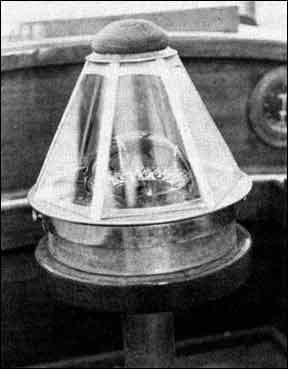
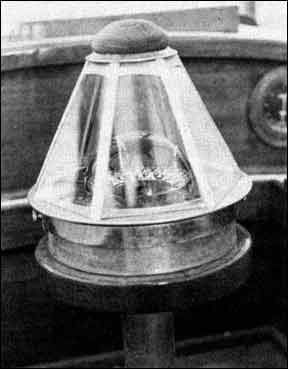
Adjust Your Own Compass

With a little care, boatowners can do a perfectly adequate job of compen­sating their own compasses. The ob­jective in compass adjusting is to neutralize the boat's magnetism, not to make the compass point in any par­ticular direction. You can determine the effect of the boat's magnetic field on any compass bearing by simply turning the boat 180 for the amount that the compass overshoots or under‑shoots a 180' change is always just twice the effect of the boat's field on that heading.

All you have to do is head zero degrees by the COMPASS (never mind what the heading actually is), then turn EXACTLY 180 '' and adjust the thwartship compensator to take out one half the over- or undershoot. Repeat on 90 adjusting the fore/aft compensator. That's all there is to it!

My favored approach is to tie the boat bow and stern across some quiet canal on a near north-south compass heading, winch up tight and read the compass. Then swap bow and stern lines, winch up tight again, and take out one half the amount the compass over- or under-shot the 180 turn. Do the same on a near east-west heading, and then repeat the process until there is no remaining over- or under­shoot of the    turns.

This procedure provides exact neutralization of the horizontal com­ponent of the boat's magnetic field at the compass location, which is the best that can be done with the two compensating adjustments usually provided on a small boat. The headings do NOT have to be exactly compass N-S and E-W. If they are within a few degrees that's good enough. If perchance the headings chosen happen to be exactly magnetic N-S and E-W, then the two ad­justments would be uncoupled and exact compensation theoretically could be reached in one round of ad­justments. The further the chosen headings are from exact magnetic N-S and E-W, the more adjustments would be required to achieve com­plete neutralization of the boat magnetism, but even then the pro­cedure does converge to the correct adjustment.

Incidentally, you don't really need two compensating magnets. Complete compensation could be provided by a single magnet mounted directly below the compass binnacle, and arranged to be raised or lowered to adjust the magnitude of the compensating effect and rotated to establish its direction.

-W. Palmer

Editorial Note: This simple procedure will, in fact, neutralize the vessel’s magnetic field within the capabilities of the internal adjusting magnets. However, the effect of the magnets can change on a sailboat as the boat heels, and it is also possible for the engine, when running, to affect the compass.

We would want to reinforce our faith in the compass, after neutralizing the boat’s magnetic field as much as possible, by running compass courses between a number of fixed points in known locations, under sail and under power, so that a good deviation card can be developed.


Read More on These Topics
  • DIY Projects
  • Tools & Gadgets

Comments (0)

Be the first to comment on this post using the section below.


Add your comments ...

New to Practical Sailor? Register for Free!

Already Registered? Log in

Forgot your password? Click Here.

Advanced Search

Current Issue

Cover Image

May 2012

  • Y-valves Under Pressure
  • Anchor Testing and Rode Loads
  • Funding the Dream
  • Safety at Sea Part III: Rambler 100 capsize

Subscribe Today

Back Issue Archive

Resources

  • Practical Sailor Dinghy Survey Results
  • DIY Boatyard Survey
  • Sailboat Reviews - Index
  • DIY Projects
  • Bookstore
  • Issue Archives
  • Other Resources
  • Customer Service
  • About Us
  • Home
  • Subscribe
  • Give a Gift
  • Renew
  • Products
  • Customer Service
  • Privacy Policy
  • About Us
  • FAQs
  • Contact Us
Practical Sailor

© 2012 Belvoir Media Group, LLC. All rights reserved.