



Gelcoat Restorer Durability Test
Practical Sailor reports on how the gelcoat restorer test products are holding up after three years in the field. Testers also take a look at what acrylic fiberglass restorers can and can’t do, and at the benefits and limitations of these “miracle cures” for aging gelcoats. In our search for the products that produce the best, longest-lasting gloss, we tested seven products: Poli Glow; NewGlass2; Vertglas; Presto Gel Coat Rejuvenator; Star brite Glass Cote; Klasse High Gloss Sealant Glaze; and Higley Fibergloss Restorer.
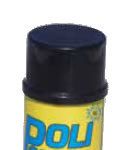
Test Looks at Durability, Gloss, and Application
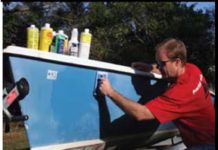
For a test subject, testers turned to the smallest—but most gelcoat-challenged—vessel in the Practical Sailor fleet. Our 1974 O’Day Javelin’s highly oxidized blue gelcoat was pushing the limits of these products—it was probably a better candidate for a paint job. But the oxidation was consistently spread from bow to stern, and in the end, testers were happy with the job done by the top performers—and it was easier than painting it.
No Supermarket At Sea
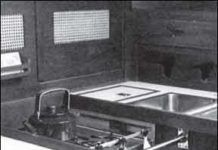
Cooking at sea has never been easy and is usually looked upon as a dull, but necessary task. Nothing can spur the queasy stomach to open rebellion more effectively than going below to a hot, stuffy galley to prepare , ugh! - food. Why would anyone in his right mind try to prepare a meal at a 30' heel while the rest of the crew enjoy a sail on deck? The term, 'slaving over a hot stove', takes on new meaning. Yet, the cook is a vitally important member of the ship's crew, and it is not an easy job. Whether on a delivery, racing or long distance cruising, a non-stop passage on your boat means no nipping out to buy that missing ingredient: there are no supermarkets at sea! So remember, the moment you leave the dock you'd better be sure you haven't forgotten anything. If you like acronyms, here are two secrets to success that you can remember: The Six P's, and MAMAS Theory.

Metal Chafe Plates: Functional Remedy for Scrapes and Scratches
What do you do when the pin in the leg of your folding cabin table digs up the cabin sole? What do you do about the groove in the top of the teak toerail caused by your dock lines? What about the scuffs in the varnished bulkhead behind the companionway ladder? The answer is that you make chafe plates to solve all three problems. While chafe plates can be made out of almost any material — sheet PVC, thin stainless steel, aluminum — the most readily available and easily worked stuff is plain old brass. Brass can be purchased in many forms: sheet, solid round bar, pipe, tubing, and half oval, for example. It is quite cheap. If you have a local scrap metals dealer, you can buy enough scrap brass in various forms for $10 or less to keep you busy with a lifetime of projects. If there's no metal dealer at hand, most hobby shops carry substantial supplies of brass, although hobby shop brass tends to be thinner than what you want for most jobs.

Ventilation Can be Improved in Almost Any Boat
Fresh air and a dry berth are two “rare," commodities in the belowdecks caverns of most boats. On deck you may be surrounded by endless quantities of fresh air. Below, fresh air frequently comes mingled with similar quantities of fresh or salt water, sometimes in the form of an emulsion that is difficult to breathe at best. Most boats are well ventilated at the dock or at anchor, or even under way in fair weather. But let the wind blow, the spray fly, and the rain fall, and the interior can quickly become a dank swamp if you leave an opening for ventilation, or an airless dungeon if you don't. Fortunately, ventilation can be improved in almost any boat, new or old. In the grand scheme of things, improving ventilation is relatively cheap; far less expensive, for example, than installing refrigeration or a sophisticated propane system.
Design For: Tableware Storage
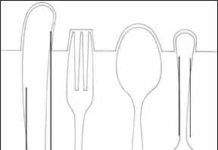
One solution to the problem of tableware stowage is a bulkhead rack of the type commonly available from marine chandleries and discount houses. If you have some free bulkhead space in the galley area such racks can be fine, but, if you've got a drawer or cupboard available, stowing your tableware under cover seems a better solution. The problem is that the tableware should be secured within the drawer or cupboard. You could use one of the compartmented, plastic trays such as many of us employ at home, but ideally you want something which holds the tableware against the movement and vibration of the boat.
Quick-dissolve Toilet Paper Test
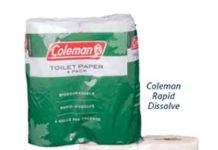
Just when you thought Practical Sailor had covered all marine head topics, we found another subject our readers are interested in: toilet paper. We followed up our reviews of marine toilets (PS, March 2011) with a look at some of the toilet tissues available for use in marine toilets and on-board sanitation systems. Practical Sailor evaluated 10 TPs from seven manufacturers: Coleman, Dometic, Kimberly Clark (Scott Paper), Thetford, West Marine, Camco, and Charmin. The test centered on well and how quickly the different toilet paper brands dissolved in water. TP that doesn't readily break down can eventually clog marine toilets, holding tanks, and the rest of the sanitation setup. The toilet tissues also were evaluated on tear strength, weight, softness, sheets per roll, and price per square foot.

Shaken and Stirred – Toilet Paper Test
This toilet paper evaluation aimed to find out three things: how quickly the different TPs dissolved in water, how strong they were, and how soft they felt. Each brand was given a number (1 through 10) for blind judging. Four sheets from each roll were crumpled and placed in a clear plastic canister with two quarts of lukewarm water and were stirred for five seconds, or five swirls, with a plastic straw.
Design For: A Mug Rack
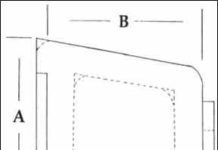
The modest mug, basic in shape and function, finds its way aboard all but the most elegant or the most rudimentary of vessels, because it is so useful. Equally at ease with soup or stew, coffee, tea, or chocolate, bread sticks, spoons, or even flowers, it serves faithfully in rough water and smooth. While almost universally carried aboard boats, the stowage of mugs varies as much as their uses. On some boats they rattle about in the galley sink, while in others they may be neatly nested in a drawer, hung from hooks, or (best of all) resting in proper racks.
Improve Your Catalina 30: Upgrading the World’s Most Popular 30-Footer
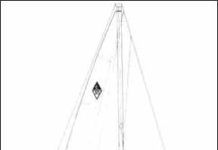
The Catalina 30 is a remarkable success story. We suspect that more Catalina 30s have been built than any other boat of that size anywhere in the world. While the basic boat has remained unchanged since it was introduced in 1975, there have been dozens, perhaps even hundreds, of minor developments in the boat in the course of a production run that is approaching 4,000 hulls. The advantage of a boat in production for so long is a high degree of product refinement over the years. The challenge for the owner of an early version of the boat is to upgrade his boat to the standards of models currently in production.

Small Boat, Big Keel Why This 27 Footer Works
What makes a small sailboat truly seaworthy? In this video, we take a deep dive into the Pacific Seacraft Orion 27, a rugged, long-keel...



Latest Sailboat Review

Tortue 147 Boat Review
What if I told you that the most radical sailboat you’ve never heard of looks like a turtle, weighs in at 17 tons (17,200...