


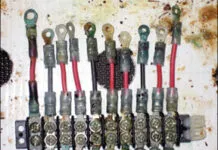
Marine Wiring: Are the Pricey Options Worth the Cost?
This article launches Practical Sailors long-term test of electrical wires, electrical connections, and corrosion inhibitors for electrical applications onboard sailboats. Ultimately, the goal of this ongoing project is to examine corrosion in wires and connectors in a marine environment. More concisely, it could be presented as a closer look at three common elements in marine wiring to answer some basic questions: What is the best wire to use on a sailboat? Is it tinned wire, automotive wire, or stranded machine tool wire? What are the best corrosion preventatives? Do you apply the anti-corrosion treatment to every connection and every crimp, or just certain types of connections? What are the longest-lasting connections? Which were most prone to electrolysis? We made observations during the six-month test period without disturbing the samples. At the end of the full one-year test period, we will unbolt all of the fittings from the terminal strips and look for corrosion under the fittings.
The Get-Home Sailboat Tool Kit
The tools and materials required to maintain and repair everything on a boat will barely fit in a room. Just the kit required to maintain vital systems will raise the waterline of a large boat and is impractical in a smaller boat. Fortunately, when day sailing and even cruising locally, all we really need to do is get back to the dock...any dock.
Six Best Homemade Boat Maintenance Tools
OSHA has a thing against homemade tools. While a shortened extension on a paint roller won’t give them heartburn, modified power tools and attachments...
Five Best Specialty Tools
In fact our list is much, much longer than this, so we picked five specialty tools that we thought would help most sailors for...
Bottom Paint Care
Modern anti-fouling paints promise a hull free of marine growth for one to several seasons. But in nutrient-rich water and as the paint becomes expended, barnacles and green stuff take hold, slowing us down, increasing fuel consumption under power, and degrading handling.

Battle of the Teak Cleaners — Snappy Teak-Nu vs. Star Brite
Aboard our Privilege 435 catamaran Confianza, we are teak oilers, not varnishers. Accordingly, our teak needs regular elbow grease. In our (seemingly never-ending) quest...

New Seacocks for the Offshore Sailor
Are you having trouble with your boat’s critically important seacocks? Maybe the handle is frozen and attempts to free it using penetrating oil, a...
How to Sell Old Sailing Equipment
There’s nothing more satisfying than installing a great new piece of equipment on your sailboat, unless it’s completing that upgrade and then selling the...
Hose Fitting Tips
Pulling hoses is generally low on the fun list. They are in bad places, jammed onto crusty hose-fitting barbs, and have stiffened over the years. As part of our 2016 update on long-term tests, we needed to wiggle loose a few of the sanitation hoses were testing to see how they were looking on the inside-a job much less pleasant than new installation.
A Smart, Easy Way to Rewire
Running the wires for new electronics requires your best cursing vocabulary, lots of sweat, twisting body contortions, luck, and the occasional bandage. For tips on how to make this job easier, we turned to PS contributor Bill Bishop. A professional marine-electronics installer, Bishop has many ingenious ways to thread a wire from point A to point B.
Latest Logbook

Practical Sailor Logbook – September 2026
This month we tour the Hans Christian 48T — the offshore cruiser many sailors call the holy grail — walk the custom Antigua 60...

Video: Morgan 44 Review – The Catalina Cruiser Everyone Forgot
The 1989 Morgan 44 is a big center-cockpit cruising sailboat with Catalina DNA—but it may be one of the most overlooked boats of its...



Latest Sailboat Reviews
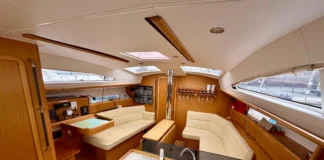
Jeanneau Sun Odyssey 42 DS Used Boat Review
This boat is dangerous for one simple reason—it looks like the answer. It’s big enough, pretty enough, modern enough, and suddenly, somehow, almost affordable...