



The Teenage Solo Sailor Syndrome
For 11 years, Ive resisted the urge to write about teenage circumnavigators. The last time I did, the protagonist was a young man named Brian Caldwell, the son of cruising sailors who, in 1998 at age 19, briefly held the title of youngest singlehanded circumnavigator. I probably wouldnt have had the pleasure of knowing Brian, except that he happened to stop for repairs in Port Vila, Vanuatu, while my wife and I were there. His 26-foot Contessa was anchored a stones throw away from our Atkin ketch, and the story was too compelling to pass up. I filed a few more stories as Brians voyage unfolded, and then it was over. A few months later, a young Australian bumped Brian from the record books. Brian turned toward his next goal of ocean racing singlehanded (www.liquidflight.net), and I decided never again to write about "youngest" quests. The current wave of young circumnavigators-whose names I purposely wont mention here-drove me to break that promise.
Tender Trimmings
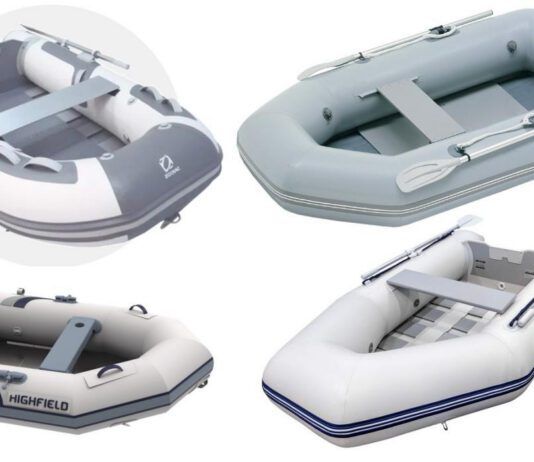
Tenders come in all shapes and sizes-from 6-foot inflatable kayaks to RIBs capable of towing skiers-and they serve a variety of transportation needs. Where the live-aboard couple will need a dinghy suitable for grocery and laundry runs, the small-boat daysailor usually needs only a fuss-free, easy ride to a moored or anchored boat. A few accessories that we checked out recently can add to such tender experiences.
Practical Sailor Tests Lightweight Tether Aimed at Racing Sailors
Theres a reason why we recommend safety tethers-the umbilical cords that connect the jacklines on our boats to the harnesses on our bodies-be 6 feet long or shorter. Getting dragged behind a boat, even at the sedate speed of 4 knots, can easily drown a person. Unless someone is on hand to haul you on board, survival relies on a superhuman burst of adrenaline. Though rare, there have been some highly publicized deaths involving harnesses. The story of Harvey Shalsky, a sailor in the 1999 Double-handed Farallones Race, is familiar to most racers. Shalsky, racing with longtime partner Mark Van Selst, drowned while tethered to his J/29 White Lightning. Van Selst was unable to slow the boat or haul his partner in, and eventually cut loose Shalsky (who was by then unconscious) so that following boats could recover him. The hazards associated with a tether that cannot be easily released under load prompted the International Sailing Federation (ISAF, the council responsible for regulating offshore sailing races) to recommend this feature in tether designs. It is not a requirement, only a recommendation, and ISAF does not stipulate what method should be used for the release.
Practical Sailor Tests a Ruggedly Built Safety Harness and Tether for Kids
Never mind what your experience tells you. Children do not go to sea. At least that is the only logical conclusion we can reach as we deal with the lack of adequate offshore safety equipment for kids. In October 2006, we ran down more than a dozen life jackets for infants and toddlers. There were only a few worth writing about, and none met our full expectations. Of the lot, we pegged the MTI Adventurewear Bay Bee 201-1, the Mustang Survival MV-3150 and MV-3155, and the Sospenders 12ACH as standouts, and all of these products are still available today. In the December 2006 and January 2007 issues, we dug into the topic of safety harnesses and tethers, and the outcome was worse. One product in that test, a safety tether designed for children more than 50 pounds, snapped under the load of a 35-pound weight being dropped from six feet. The tether, from Jim Buoy, underwent an upgrade immediately after our report.
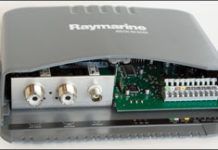
Practical Sailor Tests AIS Class B Transceivers from West Marine and Navico
Practical Sailor last looked at Automatic Identification Systems, or AIS, in November 2008, reviewing the Raymarine AIS250, a receive-only device. Since that report, the pool of AIS products has grown to include several affordable transceiver options for recreational sailors. In this head-to-head test, we review two AIS-Class B devices capable of sending and receiving AIS data: the Navico NAIS-300 and the West Marine AIS1000. AIS transceivers are split into Class A (commercial) and Class B (recreational). AIS devices improve safety at sea by receiving and broadcasting a wide variety of information about a ship, including its name, latitude and longitude, course over ground, speed over ground, heading, status, and Maritime Mobile Service Identity (MMSI) number.
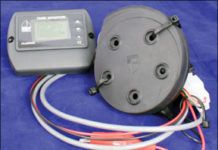
Practical Sailors Gear of the Year 2009
Practical Sailor editors pored over the dozens of products reviewed in the previous months to find the best of the best sailing gear, products that are worthy of the designation Gear of the Year. This years editors choice list includes a rugged rope clutch (Spinlock), a grippy ratchet block (Ronstan), feature-filled VHF handheld radios (Standard Horizon and Cobra), high-quality nesting cookware (Magma), a proven paste wax (Collinite), an ocean-ready first-aid kit (Adventure Medical Kits), a reliable LED bulb for cabin lighting (Imtra), an economical ice box conversion kit (Frigoboat), an innovative ultrasonic tank sensor (BEP Marine), cold-weather gloves (Gill), and an easy-to-install Wi-Fi booster (5mileWiFi).
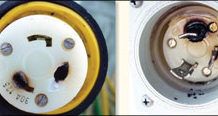
Shore-Power Boat Fire Protection
With the increased demand to have all the electrically powered comforts of home onboard, it should come as no surprise to boaters that the majority of AC-related electrical fires involve overheated shore-power plugs and receptacles. Prime Technology, aims to change all that with the introduction of its Shore Power Inlet Protector (ShIP for short), a monitoring and alarm device that automatically disconnects AC shore power when excessive heat is detected at the power inlet connector. We reviewed the ShIP 110 designed for use with a 110-volt, 30-amp system. The company also offers a similar unit (the ShIP 220) for use with 220-volt, 50-amp service. Charred plugs and receptacles are the result of resistance build-up (due to loose or corroded connections), which generates heat and the potential for fire, a problem especially prevalent among vessels that continually run high energy loads such as water heaters and air-conditioning units. In addition to monitoring the temperature of your vessels shore-power inlet plug and its wiring, the ShIP system automatically disconnects AC shore power when an unsafe temperature is detected, providing visual and audible alarms. (The audible alarm shuts down after five minutes to avoid prolonged disturbance to surrounding boats.)

Bluewater Sailors Review Tethers Underway
Practical Sailor had a chance to compare how three common snap hooks and three tether types function in actual use on a passage from Boston to Bermuda. Testers evaluated the pros and cons of elastic tethers and non-elastic tethers, double-legged tethers, single-leg tethers, the new Kong snap hooks, carabineer-style safety clips, and the Gibb-style clip. The Wichard elastic single-leg tether (nearly identical to our 2007 tether test favorite from West Marine, the West Marine 6-foot elastic tether with Wichards double-action hook at the deck end) was unanimously preferred over the non-elastic tether. Testers also preferred the Kong snap hooks over the others.
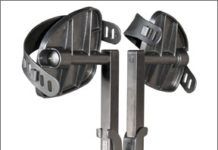
Hobie Mirage i12s Inflatable Kayak
Alright, we know what youre thinking: A pedal boat in Practical Sailor? Thats what we thought, too, when Hobie sent us the Mirage i12s in response to our search for an inflatable kayak that could serve as a secondary tender for a cruising sailboat. The 12-foot PVC hull has overlapping glued and welded seams and a slick, abrasion-resistant bottom. The chambers are inflated to a modest 3 to 5 psi (compared to the 6.5 psi for the Walker Bay Airex reviewed in July 2008), which limits stiffness. For the tropics, PS prefers Hypalon to PVC, but that would add weight and push the price up. The hull carries a two-year warranty, not enough for an $1,800 boat (MSRP), in our opinion. Five years would be our minimum. The stern of the boat has bungee cords and an area for lashing down a dry bag, tackle box, or snorkel gear, but potential for provisioning runs is limited. A compartment in the bow will hold small items. To our chagrin, the space was too small to easily stow the hand pump. What sets this boat apart is the drive system. This is not your Camp Hiawatha paddle boat.

The Search for Reliable Hands-free Onboard Communication Systems
Being able to communicate with a hands-free communication device along the length of the deck allows crew to coordinate activities like anchoring, docking, and going up the mast. Practical Sailor testers experimented with two systems: Motorola SX800R two-way radios and Nautic Devices Yapalong 3000. Both the Motorola and the Yapalong comprise a cell-phone-sized transmitter/radio unit and a separate handset. We tested them during anchoring, masthead repairs, and docking. The products were used with their mated headsets in various weather and sea conditions, including light rain and spray. The Motorola unit also was tested with a compatible Fire Fox Sportsman Throat Mic.

Video: Beneteau 361 – Full Review
Should you buy an older Beneteau sailboat? In this Practical Sailor boat review and yacht tour, we examine the Beneteau Oceanis 361 to see...



Latest Sailboat Reviews
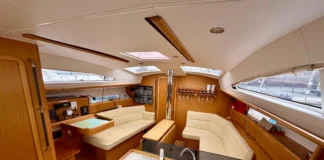
Jeanneau Sun Odyssey 42 DS Used Boat Review
This boat is dangerous for one simple reason—it looks like the answer. It’s big enough, pretty enough, modern enough, and suddenly, somehow, almost affordable...