

Reefing Basics
As the forecast for this season calls for much cooler temps and more frequent higher wind speeds and gusts, thanks to the effects of...
Reducing the Nylon Rode Slingshot Effect
Again we speak heresy! Practical Sailor has published at least four articles explaining why stretchy nylon bridles and snubbers are vital. But if the rode is nylon instead of chain, this no longer applies. The rode provides all the impact absorption we need, perhaps more than we need. By analogy, a bridle should function like an anti-sway bar on an automobile, keeping the boat centered.
How to Inspect Your Sailboat’s Chainplates—and Why It Matters
The purpose of chainplates on a sailboat is to transfer the enormous loads from the standing rigging into the hull structure safely. Without chainplates,...
Stopping Anchor Chain Twist
When an anchored boat spins, the anchor chain twists, and the anchor can come up backward. One solution is an anchor swivel, but failures with some poor designs are a concern-a lovely stainless swivel on one of our test boats had an interior crack that became visible only when disassembled. And as we found in our most recent test, many swivels arent very effective at reducing twist due to the inherent friction in the swivel.(see How Well Do Swivels Reduce Twist, Practical Sailor March 2016 online).
Other Methods to Control Yaw
Yawing is the result of imbalance between windage (you want it aft) and underwater resistance (you want it forward). If the center of windage...
The Super-Compact Sailboat Dodger
Sailing in general, but especially offshore, can be a wet experience, particularly on a low-freeboard boat like Far Reach, our highly modified Cape Dory...
Rethinking Anchor Snubbers
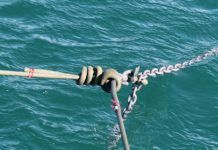
Anyone who has spent a night pitching in an exposed anchorage would not be shocked to learn that in many dragging incidents the snubber parted, or was stretched to its limit, allowing the chain and boat to absorb some teeth-rattling shock loads before something finally gave. Recently, PS testers have devised a series of tests to determine what the ideal snubber looks like. Some of our findings run contrary to popular assumptions. Some will surely surprise you, and may even-one day-save your boat. What does your snubber look like?
Are Your Cleats in the Right Location?
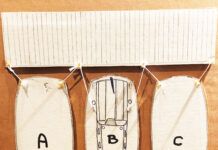
Cleats are those ever-present little devices we all have on deck and, until a line must be tied, most boaters pay little or no...

DIY Wooden Bowsprit
Bowsprits are a common feature on traditional boats as a way to extend the sail plan beyond the boat’s length over deck and create...
A Better Bridle Plate
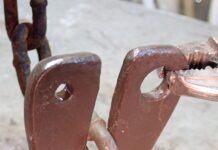
In the midst of discussing bridles, snubbers, and rigging multiple anchors, ten years ago we introduced the idea of an improved bridle plate—see “Adjustable...
Latest Logbook

Practical Sailor Logbook – September 2026
In September we tour the Hans Christian 48T — the offshore cruiser many sailors call the holy grail — walk the custom Antigua 60...
Video: The BEST Sailboat You Can Buy for $35,000 – Catalina...
If you’re searching for a mid-30-foot sailboat, affordable cruising sailboat, liveaboard sailboat, first sailboat, or a capable used sailboat for coastal cruising, the Catalina...

Latest Sailboat Reviews
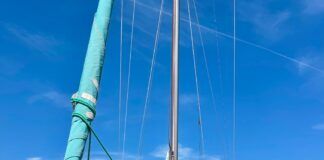
Learning by Doing on a $5,000 Catalina 30 Mk II
When Davis’s mother started talking about wanting to do something “big” for retirement, Davis and Gloria half-jokingly threw out an idea that seemed suitably...