

Mailport: January 2011
Letters to Practical Sailor, January 2011. This month's letters cover subjects such as: Sailing non-profits, wind gens, pressure cookers, wood finish and mildew remover.
Update on 10 Long-term Practical Sailor Tests
As a publication that strives to give readers a thorough look at similar items competing in the marketplace, Practical Sailor's long-term testing is vital to determining product durability. Over the years, weve found various ways to update our views. Occasionally run a column called Gear Graveyard, and once in a while, we just round up products that have or havent stood the test of time. This is one of those roundups. All of the items mentioned are, or have been, in use aboard either a 26-foot biodiesel-powered inboard powerboat or a 32-foot Union cutter test boat. They are among quite a few items aboard that undergo testing and abuse, formal and informal, intentional and unintentional. The 10 items included in this report are the Plastimo flexible water tank, Seoladair Easystow inflatable fender, Garmin GPSMap 545s chartplotter, Coleman thermo-electric cooler, Jabsco oil changer, ACR Firefly 2 strobe light, Force 10 Seacook single-burner propane stive, FilterBoss, Aere inflatable fender, Boatsense systems alarm.
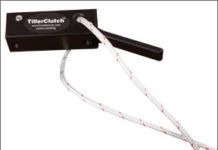
Tiller Taming with Two Fingers
During the past decade, Practical Sailor has looked at a number of devices designed to hold the tiller while the helmsman can attend to other important business-such as trimming a jib sheet or popping open a frosty cold beverage. Theres the Davis Tiller-Tamer (Oct. 1, 1992), the Tillerstay (April 15, 1997), the Tillermate (April 1, 2005), and the Steer-iT (April 1, 2008). Except for the Steer-iT, all of these systems involve some form of line-clutch device on the tiller. The clutch "grabs" an athwartship line that passes through it. The line then leads back to cam (or clam) cleats on either side of the tiller that can be used to tension or release the line.

A Short List of Stuff That Lasts a Long Time
This months feature on long-term product testing (pages 25-30) got me thinking about my own cruising experience between 1989 and 2000. My wife and I didnt have much gear to start, so our list of survivors is small. I suppose that makes it a list worth sharing.

Mailport: December 2010
Letters to the Practical Sailor editors in December 2010 include: paint colors, sailmaker services, bilge pumps, pest control and the Wirie v. a DIY WiFi antenna.
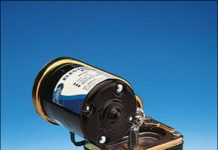
PS Advisor: Are Diaphragm Bilge Pumps OK?
My boat has an ITT/Jabsco 36600 diaphragm bilge pump that does not sit in the bilge and is rebuildable. With an 8-foot head on the pump installation, I think this type of pump may be a better type for me than the electric centrifugal pumps you reviewed in the September 2010 issue—although they are more expensive. You did not include any diaphragm pumps in your review. Was there a reason? Do you plan to test this type of pump and perhaps compare them to the ones reported on in the September article? Any information on diaphragm pumps versus centrifugal pumps would be greatly appreciated.
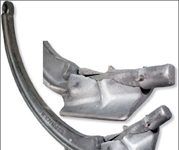
Broken Barnacle
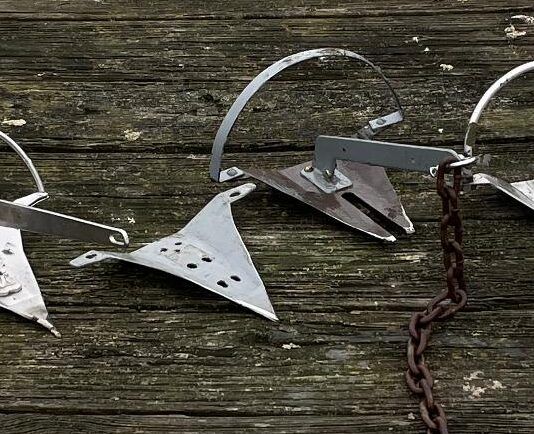
The editors at Practical Sailor get a few reports of broken anchors each year. Typically, these are failed fluke welds on Danforth-style designs or bent shanks on plough-types. The experience of Ted Goodwin, whose 43-pound cast aluminum Barnacle anchor catastrophically broke on the Bahama Bank earlier this year, is fortunately quite rare. …

Testers Examine Running Rigging Options
Today's sailboat owner faces myriad options when shopping for running rigging. When faced with so many choices-from lines made with the old standby materials like polyester to the newer high-tech ropes made from materials like Vectran and Spectra-it's hard to know which one would make the best mainsail halyard, best afterguy, or best genoa sheets. To find out, Practical Sailor tested 26 different varieties of braided rope from four manufacturers: Yale Cordage, Samson Rope, Novatech Braids, and New England Ropes. With so many lines to consider, we grouped the products by material and construction, sorting them into three fairly distinct performance groups (low, mid, and high tech) based upon their fiber content. The ropes were evaluated on their elongation, abrasion resistance, and handling characteristics. Ultimately, when all the stretching, abrading, and coiling was done, testers were able to find some clear choices based on price range and offer some general guidance for those who are shopping for new cordage.

Mailport: November 2010
Letters to Practical Sailor from our readers. November 2010's topics include cleaning products, sail hardware, galley stoves and anti-fouling paints.
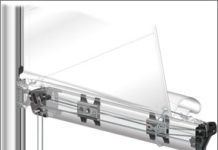
PS Advisor: Rig Loads and Reefing Lines
Recently, while working to add third-reef controls to the mainsail reefing on my Morgan 382, I realized I had no idea how to calculate loads and, therefore, no concept of the size and strength of hardware to install.
Latest Logbook

Practical Sailor Logbook – September 2026
In September we tour the Hans Christian 48T — the offshore cruiser many sailors call the holy grail — walk the custom Antigua 60...

Video: The BEST Sailboat You Can Buy for $35,000 – Catalina...
If you’re searching for a mid-30-foot sailboat, affordable cruising sailboat, liveaboard sailboat, first sailboat, or a capable used sailboat for coastal cruising, the Catalina...



Latest Sailboat Reviews
Learning by Doing on a $5,000 Catalina 30 Mk II
When Davis’s mother started talking about wanting to do something “big” for retirement, Davis and Gloria half-jokingly threw out an idea that seemed suitably...