


Practical Sailor Tests Bosun Chairs and Harnesses
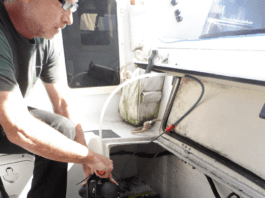
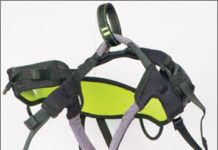
Practical Sailor recently took a look at nine different bosun chairs and bosun chair alternatives to determine which ones are worth recommending to the sailor facing a repair project high above the deck and which ones wed drop into the nearest dumpster. Included in this test were products from ATN, renowned-rigger Brion Toss, Black Diamond outdoors sports company, sailing hardware-maker Harken, French yacht-equipment manufacturer Plastimo, and Spinlock, a company that specializes in deck hardware and personal safety gear. While none of the products, which were bench tested and evaluated in the field, would ever be considered comfortable, several fit the bill for getting crew to the masthead (and down) safely and offer the features necessary for working aloft. In the review, we also give a rundown on tips and the essential techniques for going aloft safely.

Mailport: June 2010
The June 2010 issue featured letters on subjects such as: spiders, addition of color to handheld electronics, DIY boatyard recommendation and propane fridges.
PS Advisor: Mooring System Failure
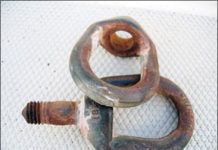
My wife and I leave our boat moored in Bahia Coyote, Sea of Cortez, BCS Mexico. Our mooring is a system of anchors and chain that has worked well for us since 1987. Last year, I hired some friends to dive it. They replaced the chains and reported that everything else was in good shape. Days later, a neighbor noticed the boat drifting and rescued her. The cause: a swivel had failed. The swivel was in good shape, but the nut holding the halves together unscrewed. I don’t use jaw/eye swivels because cotter pin-related failures are too common, and I don’t use Chinese swivels because the U.S.-made ones are more reliable. Have you heard of this happening?
Eight Sailboat Cam Cleats Tested on Doomsday Device
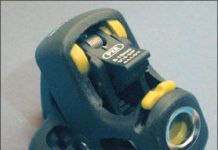
Practical Sailor frequently tests sailboat cam cleats and their applications and even developed a machine for testing cleats: Doomsday. For this test we requested production cam cleats designed to handle 3/8-inch line and received products from Harken, Selden, Ronstan, Garhauer, Schaefer, and Spinlock. The Doomsday machine runs the cleat through a series of tests to evaluate fuzz, neck, and abrasion, with results showing what we can expect from a cleat after a season of use. The models tested are just a sampling of the range of cam cleats offered in various sizes and materials. A racing sailor, who probably uses cam cleats more frequently than a cruiser and who is keen to keep weight down should consider a composite model. At the other end of the spectrum, a cruiser who is more concerned about durability should consider one of the heavy-duty cam cleats in the test.

Mailport: May 2010
Letters to the editor in May 2010 included topics: lightning, tsunami warnings, MOB retrieval and cam cleats.

Whats a Deluxe Pickup Stick?
Overheard aboard a bareboat charter at the Bitter End on Tortola, British Virgin Islands, at sunset circa 1978: "I wish George would hurry up and whack all those big orange balls out of the way, so we can anchor." There are still many places where snagging a mooring requires someone who knows the business end of a boat hook, but in most of New Englands municipal harbors, the ubiquitous mast buoy has made the chore infinitely easier. These "pickup sticks" are now standard in the region (much to the chagrin of area divorce lawyers). If you are tasked with maintaining your own mooring-and you don't yet have a good pickup stick-we can recommend a replacement: a "deluxe" mooring buoy from Island Mooring Supplies. Now, before the idea of a deluxe pickup stick starts you choking with laughter, please bear with us.
Cape Dory 25 Do-It-Yourself Refit
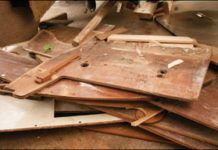
Cape Dory sloops-even those like the 25, which was not designed by Carl Alberg-have one of the most loyal followings among production boats. These loyal owners, added to a reputation for quality construction, enables Cape Dory boats to hold their resale value well, making them prime candidates for a do-it-yourself project boat like Practical Sailors test boat, Satori, a 1981 Cape Dory 25.Satori was purchased in 2008 in Sarasota, Fla., for $1,500. Although structurally sound for a boat her age, the interior had been gutted.Satoris sale price included an inventory of like-new sails, a new 5-horsepower Nissan outboard, and ground tackle. Completely rebuilding a boats interior would seem daunting to many, but Satori owner Jon Perkins is a carpenter by trade so he had the tools, resources, and know-how to get the job done. Cape Dory is an ideal fixer-upper boat, if the owner is up for the project. On today market, the Cape Dory 25 can fetch $3,000-$8,000. The pocket cruiser is also an excellent boat to fix and sail as a nice weekend cruiser for a family or a coastal cruiser for a couple.
Practical Sailor Takes a Close Look at the State of Boat Cleats
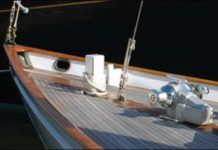
Boat cleats are an elegantly simple yet essential piece of marine hardware. Yet, after scrutinizing cleats at the Annapolis and Miami boat shows, it appears that while there a few innovative designs and tried-and-true classic models, many builders are using sub-par installations. The shape of a cleat needs to take in the significance of how a cleat locks a line in place and yet still allows a crew member to control the easing or snubbing process. Proper topping and backing cleat plates can greatly improve cleats durability and long-term performance. Some hide-away cleats or pop-up cleats have water drainage issues and less-than-robust support structures. Other designs use the less-secure rings and eyes instead of proper cleats.
Ode to the Long-forgotten Deck Cleat
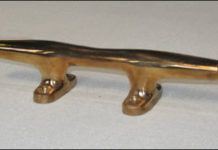
The devastating train of hurricanes that rolled through Florida in 2004 and 2005 gave engineers an opportunity to see firsthand what happens when a modern boats mooring points and lines are pushed to their limits. A post-mortem look at many lost boats revealed shocking design and construction oversights that contributed to the carnage. Buttonhole-size chocks made it impossible to add chafe gear. Sharp turns at chocks and hawseholes sawed lines until they broke. Tiny, poorly installed cleats yanked free from soggy, cored decks. Cheap cast aluminum cleats riddled with air pockets simply snapped.
Practical Sailor Tracks Down the Best LED Tri-color Light
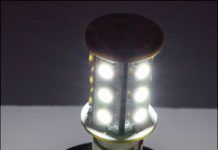
Practical Sailor found that the full brightness that LEDs offer, coupled with a huge energy savings, a wide tolerance to voltage changes, and a very long expected lifespan, make LED a great alternative to incandescent lights for masthead tri-color. The tradeoff is the considerable heft of the price tag. Practical Sailor tested LED tri-color lanterns from Orca Green Marine (OGM), Signal Mate, and Lopolight. We also evaluated LED tricolor bulbs designed to replace those in the popular Aqua Signal Series 40 tri-color light. Those were bulbs from Lunasea, Dr. LED, and LED Shop.
Latest Logbook

Practical Sailor Logbook – September 2026
In September we tour the Hans Christian 48T — the offshore cruiser many sailors call the holy grail — walk the custom Antigua 60...

Video: The BEST Sailboat You Can Buy for $35,000 – Catalina...
If you’re searching for a mid-30-foot sailboat, affordable cruising sailboat, liveaboard sailboat, first sailboat, or a capable used sailboat for coastal cruising, the Catalina...



Latest Sailboat Reviews

Learning by Doing on a $5,000 Catalina 30 Mk II
When Davis’s mother started talking about wanting to do something “big” for retirement, Davis and Gloria half-jokingly threw out an idea that seemed suitably...