



Are Wrinkles Killing Your Sail Shape?
Polyester sails stretch. Sailmakers add resin to the cloth in order to stabilize the fibers. Sailmakers then cut the sail to arrange the load...

Superlight Anchors: Not Just for Racers
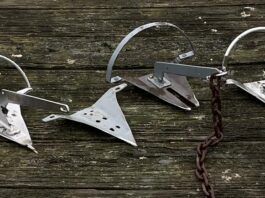
The anchors a sailor chooses to carry onboard are often a compromise between weight and necessity. Since different anchor types are designed to work best in different conditions, it is a good idea to carry several anchors of different designs. So where does a lightweight alloy anchor fit in the hierarchy of cruising anchors? Practical Sailor looked at the weight, performance, design, and price of lightweight, alloy anchors from Spade, Fortress, Manson, and Anchor Right.
Refining Furling Line Fairleads
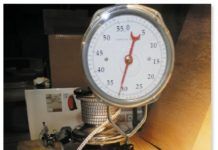
There was a time when headsail handling meant snapping on bronze piston-hanks and hauling on a smooth-running halyard. Times have changed, and now its all about how the furling drum rotates and the headsail wraps around a foil-covered headstay or freewheeling torque rope. (See PS August 2009 for our in-depth jib furler comparison.) Some systems behave more willingly than others, but all benefit from low-friction leads guiding the furling line back to the cockpit. The following report takes a close look at how these fairleads stack up and how much efficiency they add to the furling process.

Solving the Dodger Dilemma
The phrase ‘cruising canvas’ has always had a sail inventory connotation, but today it’s even more descriptive of cockpit coverings that range from small...
Polyester vs. Nylon Rode
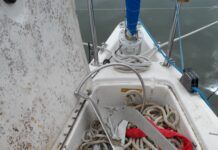
In order to minimize the strain on our anchor, we expect the rode to absorb impact forces imposed by waves, yawing and gusts. These...

How (Not) to Tie Your Boat to a Dock
No sailor can resist the temptation to look over another sailors work, and nothing draws the eye faster than your neighbors docklines. We like to know our boat and our neighbors boats will be where we left them when we return, not rubbing together or worse. Sometimes, however, a stroll down the dock makes us nervous. This gallery of rogue docklines represents only a taste of what PS tester Drew Frye found within a short walk of his slip. How many of these will come loose during the next storm?
Stopping Mainsheet Twist
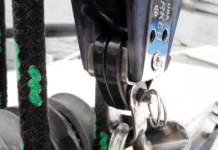
The dinghy requires a gorilla to hoist onto the davits. The mainsheet won’t release in a gust. The internal reefing line inside the boom...

Working with High-Tech Ropes
If you are working with low friction rings, sooner or later youre going to work with Amsteel and other high molecular polyethylene (HMPE) ropes, and that means learning to splice-in rings.
Getting a Clue for the Blown-Out Clew
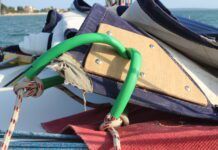
How do you manage major sail repairs in remote locations? By using whatever you have onboard to get you home—or beyond.
After an easy three-day...
Monel Seizing Wire is Worth the Extra Cost
Just weeks ago, a fellow Corsair 24 owner dismasted due to a seizing wire failure. More than once I’ve had stainless seizing wire fail...
Latest Logbook

Practical Sailor Logbook – October 2026
This month leans into used-boat value and hands-on maintenance: Tim Labute tours the traditional, shoal-draft Bayfield 32, Nick Nicholson revisits the much-requested Morgan 38/382,...

Video: Catalina 356 Review – The First Boat of the Comeback
Catalina Yachts is BACK! After a change in ownership and a pause in production, Catalina has returned to building sailboats in America, and we're...



Latest Sailboat Reviews
Tartan 31 Piper: Used Boat Review
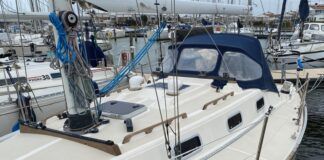
The Tartan 31 is one of the new line of performance cruising yachts from the venerable-and durable--Grand River, Ohio boatbuilder. In the last few years, Tartan Marine has come out with a range of new models, including the T-28, the 3500 and the 4600. A 41-footer is in the works. Both the 28 and the latest version of the 31 are part of the new Piper series, which are marketed in sailaway condition. Tartan has a reputation for solid construction and good workmanship and that's what the 31 is: solid and well put together. The hull is hand-laminated with alternating layers of chopped strand mat and unidirectional E glass. Behind the NPG/ISO gelcoat there's a layer of vinylester resin, which so far appears to provide the best osmotic blister protection available.