


Mailport: Carl Alberg, Tinned Wire, Fiberglass Durability
HIGH PRAISE FOR CARL ALBERG
Regarding your report “Small-boat Dreams and Carl Alberg’s Classic Daysailers,” my first sailboat, 25 years ago, was a Pearson Electra....
Preventing Electric Shock at the Dock
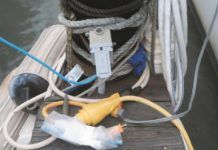
The human body runs on electricity and if you overload the nervous system with an external field, everything goes haywire. Every year several people die because they go swimming near a dock, a wiring fault creates an electric field in the water, and their muscles freeze. It is called Electric Shock Drowning (ESD).
Batteries, Cleaners & More
As a subscriber, you have free access to our back-issue archive-more than 2,000 articles. Here are a few topics you might find relevant this season.
Testing VHF Coaxial
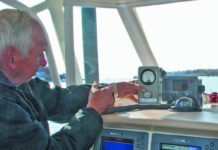
The loss in RF coaxial cable increases substantially and quickly, when there is water intrusion. Coax that uses foam dielectric, like RG8X and LMR type coax, is particularly prone to this problem because the water can quickly propagate along the foam dielectric used in these type coaxes.
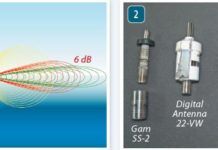
Antenna Gain and VHF Transmission Range
Recreational marine VHF antennas are usually broken down into three categories: 3- and 4-foot sailboat antennas (3dB gain), 8-foot powerboat antennas (6 dB gain) and 16-plus-foot, long-stick antennas (9+ dB gain) that are popular on larger, long-range craft. Antenna gain is a ratio related to an antennas effective radiated power (ERP) instead of a fixed quantitative value.
Sailing Gifts for 2018
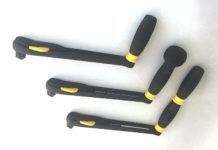
No one really wants just practical gifts, so weve tried to locate a few items that go beyond pure utility for this holiday season.
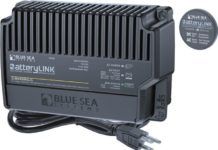
Blue Seas New Smart Charger
Keeping batteries fully charged is a science that cruisers have to master sooner or later. If todays high-capacity AGM batteries arent managed properly, valuable amp hours in can permanently trickle away through sulfation, as we saw in our test of AGM batteries (See Fighting Sulfation in AGMs, PS May 2015). Good battery management means complete re-charging that matches the charging profile of your battery, and this means an accurate sensing of battery voltage. As we saw in our recent report on battery monitors (see Best Battery Monitor Test Update, PS October 2017) a good monitor will also keep track of temperature, as this can be a limiting factor in charge acceptance rate.
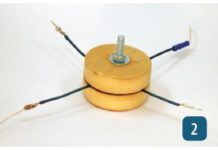
A New Spin on Dependable Crimps and Splices
Our test focused primarily on the small-wire connections tensile strength, with and without solder, but we also looked at their durability under tough environmental conditions. We tested the pull-out strength without solder and the pull-out strength of soldered connections at 400 degrees by heating the connections in an oven to simulate overheating conditions. We tested fatigue by spinning a 6-inch length of splice wire at 650 RPM in a simple device that we called the wire-fatigue whirligig. Finally, testers soaked all samples for four months in salt water to accelerate corrosion, and then, we repeated the fatigue test.
Monitoring Your Marine Battery Bank
Two recent tests graphically demonstrated the importance of monitoring state of charge in a boats batteries. hese tests demonstrated that a sealed batterys capacity will be reduced over time, if its never brought back up to a full state of charge. But just how accurate are the monitors we use to gauge our batteries states of charge?
Testing Marine Battery Monitors
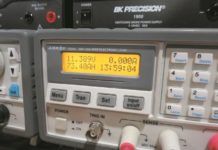
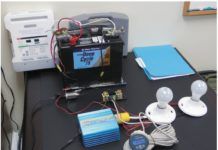
Our test gear comprised a ProMariner ProNautic 12-40P battery charger; West Marine-branded, flooded-cell, deep-cycle battery with a 75-amp hour rating; and two 120-volt, 70-watt incandescent light bulbs powered through a Heart 140-watt DC to AC inverter. This setup created a 12-amp DC load on the battery. We confirmed voltage and current draw using a Fluke Model 867B graphical meter and a Blue Sea Systems Model 8110-amp clamp/multimeter.
Latest Logbook

Practical Sailor Logbook – September 2026
In September we tour the Hans Christian 48T — the offshore cruiser many sailors call the holy grail — walk the custom Antigua 60...

Video: The 11.5 Knot Cruiser – Bavaria Match 42 Yacht Tour
Could this be the fastest family cruiser you’ve never heard of? The Bavaria Match 42 is a genuine performance sailboat hiding beneath the interior...



Latest Sailboat Reviews
Cal 2-27 Used Boat Review
Our story begins in 1970, with the introduction of the Cal 29. Looking for something similar but a bit smaller, the company asked designer Bill Lapworth for a 27-footer, which at first was the Cal 27, a fin keel, spade rudder design with a convertible pop top; another incarnation of this basic hull was the T/2. But the concept of the 29 found its full expression in the Cal 2-27, which began production in 1975 and continued to 1977, after which it was again modified and called simply the Cal 27...again. Production of it ceased in 1986.