


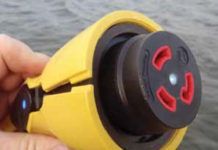
Marinco’s Shorepower Solution
We’ve seen a slew of new shorepower cords, plugs, and accessories coming onto the market in recent years, and with good reason. The majority of AC-related onboard electrical fires occur at the vessel’s shorepower inlet. The twist-lock connector used in shorepower cords and at the boat outlet has been around since the 1930s, and the design has seen little updating to make it better suited for use in the marine environment. The electrical contacts are small, exposed to the elements, and often required to support the plug and cord, all factors that beget corrosion and loose connectors, which can lead to electrical arcing, overheating, and fire.
Marincos Shorepower Solution
We’ve seen a slew of new shorepower cords, plugs, and accessories coming onto the market in recent years, and with good reason. The majority of AC-related onboard electrical fires occur at the vessel’s shorepower inlet. The twist-lock connector used in shorepower cords and at the boat outlet has been around since the 1930s, and the design has seen little updating to make it better suited for use in the marine environment. The electrical contacts are small, exposed to the elements, and often required to support the plug and cord, all factors that beget corrosion and loose connectors, which can lead to electrical arcing, overheating, and fire.
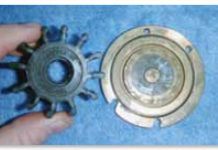
SpeedsealLife Kit Test Update
In the Practical Sailor August 2010 issue’s Chandlery, we reported on the installation of a SpeedsealLife kit aboard one of our test boats, a Union 36 sloop powered by a 43-horsepower Beta Marine inboard. An improvement on the original Speedseal (PS, July 15, 2005), the SpeedsealLife is designed to extend the life of a water pump impeller, even in a run-dry situation.

Y-valve Installation Advice and Troubleshooting
All waste plumbing hoses should be kept as short and straight as possible with no dips where waste could collect. The diverter valve should be located for easy access to the selector handle and free of other stored “stuff” that could bump the handle. The handle positions should be clearly marked for no confusion as to tank or overboard. Before mounting, make sure there is enough room for all three hose fittings and hose bends. Use 120- or 90-degree hose fittings where necessary to prevent tight bends in discharge hoses, and make sure to use the correct reinforced hose designed for sanitation systems.

Y-valves Under Pressure
Continuing with our most recent evaluations of marine sanitation systems, Practical Sailor tested eight marine-grade diverter valves (Y-valves), the valves that control the flow of liquid from one source to two different outlets or from two sources to one outlet. The test field comprised seven manual diverter valves and one electric valve from seven manufacturers. Testers looked at construction, performance, ease of use and install, price, and warranty. The manual Y-valves tested included products from Bosworth Co., Jabsco, Forespar, Groco, Johnson, Whale, and Trudesign (distributed in the U.S. by Raritan). Testers also looked at an electric Y-valve from Trudesign.
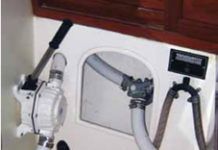
Marine Sanitation Hose Test
Sanitation hoses are specifically designed to contain odorous gases. They are made of very different materials than the many similar-looking hoses used for fuel, coolant, and potable water—and they are not interchangeable. In a home, sewage is contained by rigid metal and PVC pipes, materials that are not practical on a boat. So what are the best hoses to use in an onboard waste system? Practical Sailor tested hoses made of butyl rubber, white vinyl, and polyurethane from Raritan, SeaLand, Shields Marine, and Trident to find. This report covers the test results at the one-year mark.
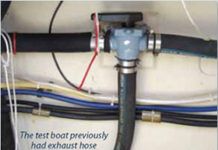
Installing Hoses Highlights Their Differences
While model holding-tank testing allows side-by-side comparisons, there’s nothing like on-the-boat testing to sort out practical differences. Our test boat, a PDQ 32, had been plumbed with a mix of low-end vinyl sanitation hose and water exhaust hose; the rubber hose was permeated, cracked, and discolored, and the sanitation hose was permeated to the point of having a thin film of sticky goo that had condensed on the external surface. A textbook case of time showing the weaknesses of poor material selection.
Worthwhile Advice from Hose Manufacturers
Before starting most tests, we like to interview the participating manufacturers. Below is a rundown of some advice we gleaned from the waste hose manufacturers.
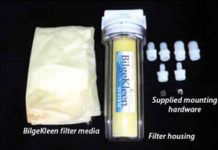
PS Bench Tests BilgeKleen Filter
There are two primary reasons why U.S. boat owners are required by law to display the familiar “Discharge of Oil Prohibited” placards aboard. For one, it serves as a reminder that we all must do our part to help protect the environment. Secondly, it helps enforcement officials because those carrying the placard can’t plead ignorance of the Federal Water Pollution Control Act.
Holding Tank Test Followup
Practical Sailor recently tested an updated version of the SeaLand 20 HTS-VRT holding tank reviewed in our November 2011 test, which found the Trionic SP-2020 super premium holding tank to be the Best Choice. For this test followup, SeaLand sent us a tank with the inlet and outlet fittings firmly installed and sealed with pipe sealant, as the maker recommends. (Aftermarket tanks are typically shipped with fittings separate.) The re-test found the revised SeaLand to be leak free, but the Trionic is less expensive and showed less deflection.
Latest Logbook

Practical Sailor Logbook – September 2026
In September we tour the Hans Christian 48T — the offshore cruiser many sailors call the holy grail — walk the custom Antigua 60...

Video: Why Are Tartans So Expensive? Inside the Tartan 3700
If you’re researching Tartan Yachts, looking for the best traditional cruising sailboat, comparing premium used sailboats, shopping for a bluewater cruiser, or considering a...



Latest Sailboat Reviews

Learning by Doing on a $5,000 Catalina 30 Mk II
When Davis’s mother started talking about wanting to do something “big” for retirement, Davis and Gloria half-jokingly threw out an idea that seemed suitably...