

Leaving Your Boat in a Foreign Port
A high percentage of cruisers we meet each year plan on leaving their boats in a safe place and flying home, often once a year. If youre leaving your boat for less than four weeks, it may be most convenient to leave it in the water, providing you can find a secure marina slip or mooring. For longer periods of time, it may be cost effective and attractive to combine dry storage in a secure boat yard with your annual haul out. Weve left Mahina Tiare 1, II & III on the hard or in the water in Portugal, the Azores, Sweden, Panama, Chile, Hawaii, Canada and New Zealand and over the past 35 years and have learned quite a bit about the process, from choosing a place to keep the boat.
Folding vs. Feathering Props
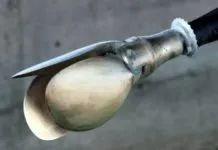
For the past 40 years we've sailed an average of 10,000 miles annually between Australia, Alaska, Antarctica and Spitsbergen motoring or motorsailing between 400 and 600 hours, depending on the area - more hours in high latitudes of Antarctica and the Arctic, fewer in the tropical trade winds.
Educating the Sailor: Start Small
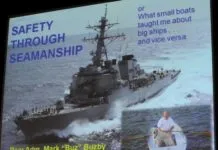
Learning to sail is simple. Thousands of youngsters perfect the essential small-boat skills over the course of a summer. Mastering the art of crossing an ocean in small boat is a different story. Sure, we read about clueless individuals setting out in ramshackle boats making 1,000-mile crossings. The ocean, especially in tropical seas, is not nearly as foreboding as it might seem to the average landlubber.
Preventing Emergency Flare Fizzle
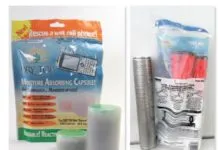
Weve been enjoying desert-dry gasoline for five years, courtesy of silica gel vent driers from H2OUT (see EPA Mandate Sparks Fuel-Vent Filter Test, Practical Sailor, January 2013). As a result, carburetor corrosion and jet plugging have been eliminated. PS diesel testers have report reduced condensate water and corrosion. We tested H2Out space driers against desiccan'ts and dehumidifiers (Dehumidifier Field Tests, Practical Sailor, June 2017) and concluded they had insufficient capacity for cabin drying. However, we quietly put one to work, protecting our flares. Although marine signal flares are waterproof, are packaged in plastic bags, and include deliquescent ingredients in the formulation, it is well known that by the expiration date, as many as half will not function. When we cleaned out our new-to-us boat 10 years ago, we discovered a package of four Orion Hand Held Signal Flares stored in a damp transom locker. They looked shaky, so we tested them, still a year short of expiration. Three of the four flares lit, but only one burned properly. The others sputtered, one going out and the other burning long and dull. This time, with fresh flares, we included an H2OUT SD109 space drier inside the bag and stored them in a dry cabin locker.

Simple Steps Will Keep Salt Out of the System
Depending on the collection area and the sailing, salt can be a primary problem. Spray falls and dries, layer after layer, until the decks hold enough salt to foul a considerable flow of water. The solution? Wash the deck with seawater before the rain comes. Squeegee off as much as practical or towel dry, and common sense dictates this is best done when at sea and must be done away from red tides. We tested the run-off from the top after scrubbing with seawater, allowing to dry, and then spraying with tap water equivalent to 1/10-inch of rain (see results in table below). In addition to taste, seawater contains significant sulfate levels, which combined with bacteria in the tank under anaerobic conditions, can lead to sulfurous water; sailors notice this when a seawater flush is used for the head, but allowed to become stagnant for a few days; the first flush will smell.

Winterizing Wisdom from the Chemistry Lab
Each winter sailors must tackle the project of winterizing their potable water system. Our preferred method is to dry the system completely (see PS September 2014, Step-by-Step Winterizing tips. If thats not possible we completely empty the tank and then treat the plumbing with the correct concentration of anti-freeze. The online version of this article provides all the details you need to carry out this process, as does the recent Inside Practical Sailor blog post, The (Cold) Case of the Frozen Anti-freeze.
Towing Generator Field Report
For free power when under sail on ocean passages, towing generators are hard to beat. In the early 1980s I purchased a first generation towing generator from Hamilton Ferris. At six knots the output was five amps providing all the electricity I needed on passage. During 15 years and 100,000 miles of use I only needed to replace brushes and bearings twice.

Sleep Routines for Long Passages
The US Navy has finally gotten around to a serious study of watch standing schedules (https://goo.gl/dE4W4R). As an active duty Navy Medical Officer, I certainly saw enough injuries related to sleep deprivation; fortunately, none were as disastrous as the recent collisions. I am glad to see the navy move away from a centuries old approach to scheduling watches.

2017 Top Sailing Gear
Each year, just prior to the fall boat show season, Practical Sailor editors consult with our testers to come up with a select list of Gear of the Year from the previous 12 months of testing. For most of the 2016-2017 testing season we focused on essential everyday products that owners of boats of all sizes-with a few exceptions-rely on. While our testers appreciate new technology, they recognize that a safe passage often depends on the reliability of the weakest link, and that weakest link is often a seemingly minor component that gets little attention. In short, our Editors Choice list is not the sexiest product roundup, but if youre serious about keeping your electrical connections corrosion free, making professional repairs on a blue-collar budget, maintaining a safe speed in a steep following sea, or looking for a way to manage a big genoa without upgrading to an electric winch, youll appreciate it.
Making a Safe Landfall
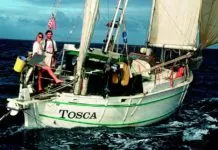
I feel for the crew of Tanda Malaika, a family of six whose 46-foot Leopard catamaran was lost on a reef on the southwest corner of Huahine in French Polynesia in July this year. The loss is especially acute because, as the captain himself points out, it could have been avoided. The account of the wreck, provided by the skipper/owner Dan Govatos, and recorded in the podcast Slow Boat Sailing offers important lessons for cruising sailors.
Latest Logbook

Practical Sailor Logbook – September 2026
In September we tour the Hans Christian 48T — the offshore cruiser many sailors call the holy grail — walk the custom Antigua 60...

Video: The BEST Sailboat You Can Buy for $35,000 – Catalina...
If you’re searching for a mid-30-foot sailboat, affordable cruising sailboat, liveaboard sailboat, first sailboat, or a capable used sailboat for coastal cruising, the Catalina...


Latest Sailboat Reviews
Learning by Doing on a $5,000 Catalina 30 Mk II
When Davis’s mother started talking about wanting to do something “big” for retirement, Davis and Gloria half-jokingly threw out an idea that seemed suitably...