

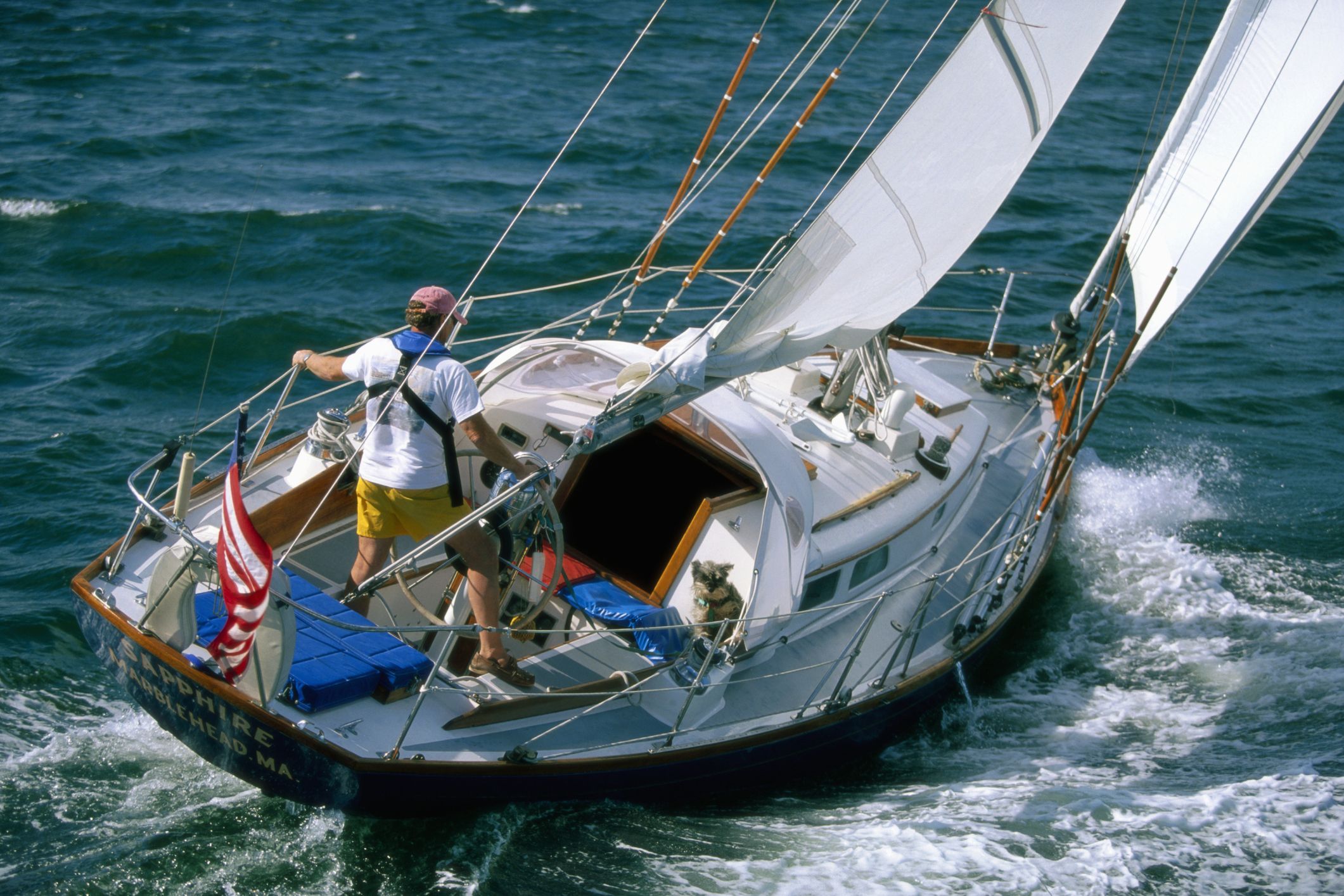
As the forecast for this season calls for much cooler temps and more frequent higher wind speeds and gusts, thanks to the effects of a Super El Niño, reefing has become a frequent topic. I was somewhat surprised when many sailors at our yacht club confessed they had never reefed their sails and, frankly, were not sure how to on their boat or when. Many claimed they simply furl in—reef— their foresail since it’s the easiest and quickest thing to do. However, when asked, they admit to losing a lot of steerage and experience violent sail and gear flogging. For unfamiliar or novice sailors and crew, this can indeed provide for some scary moments.
To continue reading this article or issue you must be a paid member. Sign in

Join Practical Sailor
Get full access to Practical-Sailor.com – more than 4,000 articles – for just $34.
Join today and save 42% off our full price.










Like many things, you don’t want to be learning in rough weather, but that is when you need to reef. Instead, practice running through all of the reefs (if there are two or three) on a light/moderate wind day to work out all of the kinks. Maybe it feels silly, but smart sailors will understand that you are doing something smart.
Confirm that the tack reefing line or reefing hook applies forward pull, securing the tack and preventing the sliders from pulling out of the mast; I’ve seen sails torn and I’ve snapped sliders due to the aft pull of the outhaul.
My first two boats reefed by disconnecting the mainsheet tackle from the boom, disconnecting the clew from the boom, laying the boom in the cockpit, lowering the main as needed, re-attaching the downhaul, and then re-connecting the boom to the clew grommet and re-hanging the mainsheet tackle. This sounds cumbersome, but the boom was not heavy and large hooks on the boom and tackle made it fast. Finally, you tied up the bunt.
The next boat had internal single-line reefing, as discussed above. One of the things to watch is careful coiling of the reefing lines, without inducing twist (figure eight coil or equivalent). If the lines twist up inside the boom, reefing becomes difficult to impossible, and working the twist out is onerous. I also added a third, external reef. I did not leave the third reaved; if that sort of weather was coming, you knew it a day ahead.
My current boat has a main that rolls on the outside of the boom. Very fast. However, unless you want to rip a sail, the loads are carried by grommets at the tack and clew. The downhaul goes in the tack grommet, and a lashing goes through the clew.
Wow that first boat system sounds wild if reefing while underway! Thanks for sharing Drew. I always find it amazing to see how many reefing systems and processes are out there. I know you current boat has a boom winding reefing system. Although this is not my favourite system, it does have the advantage of being to reef as much or little as you want. In other words, unlimited reefing points.. right?
Single line reefing often gets a bad rap mainly because people don’t know how to do it properly. They lower the main too much with no marks on the halyard tighten the reefing line and raise the main. This causes two problems. One, when the main is lowered too far and you tighten the reefing line the blocks are block to block and there’s too much friction to get the new reefed foot bar tight making a very full sail. Second when raising the main after that there isn’t enough power to get the luff tight. No one showed me the proper way so it came with experience. My motto is reef early and often. 90% of the time we’re on autopilot. I watch how much helm is being used and if it’s more than 90 degrees of wheel movement I reef. The boat speed stays the same or increases and leeway is reduced as well. My boat is beamy and likes to be sailed without much heel. After racing older boats that liked the rail in the water to increase waterline length it took me some time to realize how bad that is in a modern boat.
When at the dock or mooring raise the main to the whatever reef you want to manage. Make sure the block, low friction ring or whatever you use on the luff is about 6″ above the block on the boom. As mentioned earlier mark the halyard. Depending on the length of the luff and the stretch of the sail you may need more than 6″ clearance. Depending on your sails you may need to ease the vang some before tightening the reefing line. I installed a batcar system which allows me to reef on any point of sail. My sails have 3 reefing points but I only use 2 and 3. I also use dynema cored reefing lines which allowed me to downsize the line and reduces friction making reefing quick and easy. Reefing lines are very long. For every foot of halyard lowered it takes 4′ of reefing line pulled in.
Hi David and thanks for being a PS reader and taking time to share your experience. Indeed, having marks on my halyard and reefing line does make it much easier by taking the guess work out of how much I need to lower the mainsail until I can tighten the reef lines. It truly makes reefing much quicker and easier and, because of that, making the decision to reef because easy.
The other thing I would add, as my colleague Drew also commented, is to never think or concern yourself about what other sailors are thinking about you reefing. As I’ve always said, you role as Captain is the safety of the crew and boat. Besides, when the breeze does come up, your passengers will be much more comfortable while the others sailors will be in stressful reefing manoeuvres.. lol.
If you do need to go forward, especially as a single hander, don’t underestimate how much easier simply heaving to will make things.
It only takes about a minute (the racing mentality can be counterproductive at times) and far safer if conditions are sporty.
Thanks James, you are absolutely right and I regret not adding that to my list of best practices. Wearing a PFD is definitely steps 1. Especially since today’s PFDs are so much more comfortable, there is really no reason not to wear one when sailing under any condition, but for sure when a reef is being considered. Thanks for reading PS James.
Of course, if you are single-handed, depending on the season and location, PFDs require a certain degree of optimism. Tethers and jacklines can make a lot of sense.
In this specific case, even if you are not using a jackline at the moment, having a local, single-purpose tether at the mast, especially for single-line reefing, can make a lot of sense. Now you have two hands free to work. I always clipped at the mast on my cruising cat, even in moderate weather, because the hard top was way above the deck and water.
In fact, the “drop-the-boom” system wasn’t that bad on my Stiletto 27, once you had it dialed in, but not a first choice. But with no rigid vang (doesn’t even make sense with a rotating mast and no vang) and no topping lift or place to rig one, choices are limited. The sailing manual instructions made even less sense. With two hooks, and detaching the heavy 8:1 tackle first, it was quite manageable, because the boom was very light. But a big pain in waves, with everything swinging to and fro.
No, you cannot roll any amount on my roller boom, or I wonder, any roller boom. The problem is that the leach is NOT reinforced to take the load except at the reefing grommets, and you can tear a sail in half if you reef to an intermediate point (I know this for a fact, having done it to an old sail in a rough jibe). I do wonder about some systems that are set up that way. Generally, roller boom sails are conservatively sized, with no roach (mine had considerable roach and a square top), which reduces performance in exchange for ease of use.
I remember a Grampian 26 I sailed with a roll boom reefing system. We hated it. You had to basically detach the vang to roll the boom. The mainsheet was attached to end of the boom with the topping lift.
What about the intermediate little lines in between that one uses to tuck up the extra sail? I’ve always heard from old salts that you should run those ABOVE the boom (assuming you have a loose footed main), presumably not to put stress on those parts of the sail? Is this correct? Or should they go UNDER the boom to spread out the load on the sail?
Hi Andrew, thanks for being a PS reader and thanks for your comment and question. The answer is really about what type of mainsail you have as well as reefing system.
In my experience, modern sails rarely have the tie up lines between the reefing points any more. With curent sail material and reefing methods, they’ve become kind of not used much anymore. If you do and have a loose foot or not, tying them up above or under doesn’t really make a difference.
Remember that when we reef, it’s because we have a string breeze coming. Hence we really want to make the sail as flat and tight as possible. So making sure your reef points and your halyard are a tight as can be is really all you need to do.
If however you’re traveling for long periods and expect the breeze to last, tying these tie up lines will make a nice clean packing.
I’m just a newbie, but perhaps engaging the topping lift would be a good early step?
Hey Robert, thanks for reading and sharing your comment and question. Yes, you are correct, if you have a topping lift and had it fully released while sailing, then yes, you should reapply tension to prevent the boom from coming down while you release the main halyard and set a reef. However, it also a good idea, once the mainsail it up, put a mark or a figure eight knot on the topping lift line to identify where it can be loosen enough to not interfere with the sail performance yet hold the boom if dropping the main halyard quickly.