


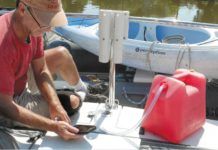
Taking the Spill Out of Fill-ups
Fueling a boat has never been as easy as fueling a car. Spills-exacerbated by poorly designed fill pipes and vents-are common. The U.S. Environmental Protection Agency (EPA) has updated the fill and vent requirements on boats to prevent these spills, but they only apply to new gasoline-powered boats. New jerry cans designed to prevent spills and comply with new emission standards arent making things easier. Most are hard to control and slow during filling, spill prone, and break after limited use.
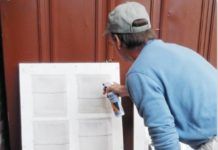
Fighting Mildew, Mold, and Lichen
Most boat owners regard their boat as a living, breathing thing, but when real living things-especially the microscopic variety-move aboard and start occupying large swaths of damp real estate, its time to draw the line. Weve done a series of reports on mildew in past articles, but those black spots on the deck, lines, and canvas probably arent mildew. Mildew and mold require darkness, and even the shaded areas on deck are too well lit. Those spots are more likely black algae and lichens, the latter a symbiotic combination of algae and fungus.
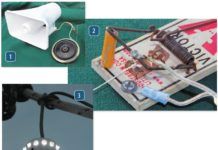
Do-It-Yourself: Onboard Security
Some ports and anchorages are safer than others, but it never hurts to be cautious when it comes to boat security. When youre away from the boat, blasting a loud stereo down below can give the appearance that someone is onboard and may slow a prospective thief. (Doesnt everyone turn radios and TVs off when they leave?) Trailing a spare dinghy or kayak off the stern is also a good deterrent, as is on-deck illumination.
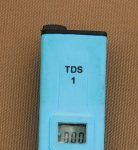
Water Testing Tools
Leave water from any source in a storage tank for a while, and interesting things will start to grow. Only the purest water in an airtight bottle will have a long shelf life. But not all bottled water is what the label says it is. For a cruiser, there are two water-testing tools that are important, and a third tool that is helpful in determining what is going into a tank and managing the quality of fresh water on a long-range cruising boat.
DIY Mast Boot
With a little imagination and some inexpensive materials, you can put together a leakproof mast boot in a few hours. 1. Roofing Rubber One reliable boot sealer is self-adhesive ethylene propylene diene monomer (EPDM), a common rubber-membrane roofing material. Sold at local building supply stores, the rubber is black in color and comes in a roll that is 5 inches wide. (Dont confuse it with ice and water shield, which is much thinner.) Peeling the plastic backing from the underside of the EPDM material exposes the sticky side. Arrange precut strips prior to permanent installation. We suggest using American-made products as the imported stuff doesn't adhere well to itself.
Exterior Wood Finishes
After a brief-and for testers, much needed-hiatus from testing wood finishes, we recently launched a new long-term evaluation of exterior wood coatings. Our last round of tests, a two-year death match, wrapped up in 2011. Although the test field this go-around is smaller than the previous tests lineup, it includes some new products and some that have been reformulated since the last long-term test began in 2007.
A DIY Water Filter
For those of you unfamiliar with Baja fuel filters, they are multi-layer strainers, purchased or handmade, used to filter diesel fuel of dubious pedigree before loading. Water, whether from a dockside hose or rainwater, presents a similar challenge. Weve been exploring freshwater filtration possibilities for a series of articles to come, and while there are great pre-filtration products out there, none offer the versatility of our own home-grown solution, which we call the Baja water filter.
Making Engine Oil Changes Easier
Some boat manufacturers have no concern for simplifying things, like changing the auxiliary engines oil, once the boat leaves the factory. But the process should not be more than a 15-minute job, and at most, only a few drops of oil should need to be cleaned up.
Out, Out Brief Wiring Terminals!
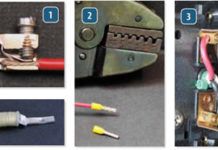
Eurostrips, Euroblocks, set-screw terminations-whatever you want to call them-they are here to stay. Many companies supply set-screw terminations as part of electronics installations, solar controllers, inverter/chargers, navigation lights, or even engine gauge panels. These set screws, if not protected by a pressure plate or a wire terminal, can cause damage to the wire stranding and eventually lead to failure. Attention to the details should always be top on the list when dealing with Euroblocks or any set-screw termination that bears directly onto the wire strands.
Painting Water Tanks
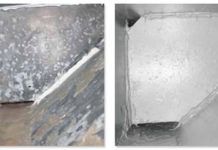
When it comes to onboard water tanks, we prefer stainless, fiberglass, and even roto-molded tanks (in that order) to aluminum ones. Aluminum tanks tend to pit and corrode over time, often needing to be replaced. The insides of the two 60-gallon aluminum water tanks in our 30-year-old Valiant 40 were more like a nasty moonscape than a drinking source. Their surfaces were pitted and rusted from what looked like a reaction to long-time use of chlorine.
Latest Logbook

Practical Sailor Logbook – September 2026
In September we tour the Hans Christian 48T — the offshore cruiser many sailors call the holy grail — walk the custom Antigua 60...

Video: If You See This on a Used Sailboat, Walk Away
If you’re searching the used sailboat market, comparing sailboats for sale, or learning how to inspect a sailboat before buying, these are the red...



Latest Sailboat Reviews
Cal 2-27 Used Boat Review
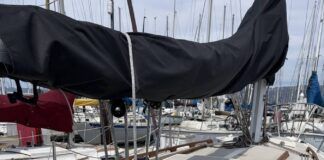
Our story begins in 1970, with the introduction of the Cal 29. Looking for something similar but a bit smaller, the company asked designer Bill Lapworth for a 27-footer, which at first was the Cal 27, a fin keel, spade rudder design with a convertible pop top; another incarnation of this basic hull was the T/2. But the concept of the 29 found its full expression in the Cal 2-27, which began production in 1975 and continued to 1977, after which it was again modified and called simply the Cal 27...again. Production of it ceased in 1986.