

My summer cruise took me up to the Discovery Islands just north of Desolation Sound off the coast of British Columbia with sailing buddy Paul aboard Natasha, my 1978 Islander Bahama 30. We met up with Chris sailing solo aboard his 2005 Sabre 386 in Cameleon Harbour, a remote, forested anchorage far from the busy life ashore. A pleasant evening was shared over dinner and drinks as the sun set over nearby mountain tops.
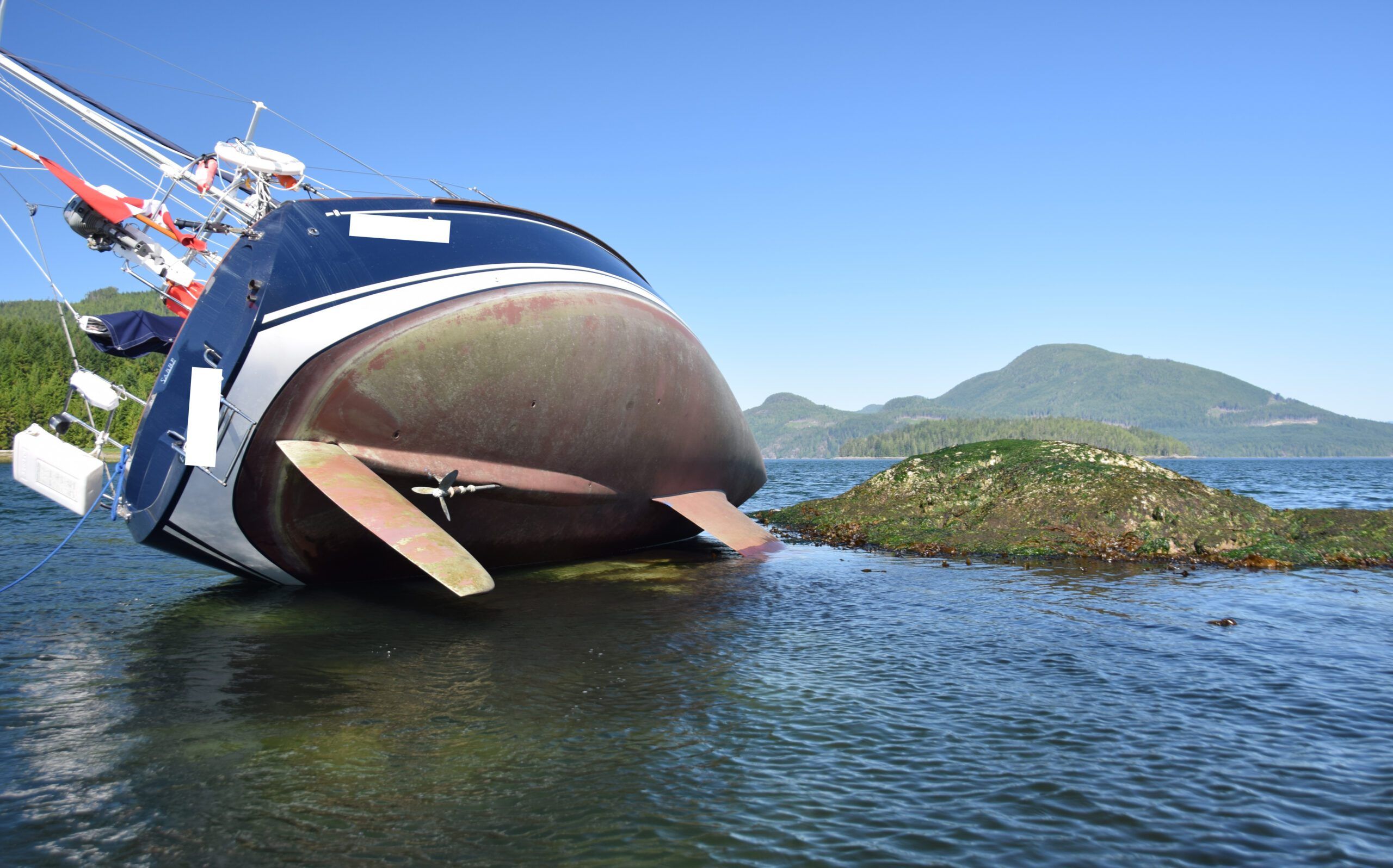
The next morning Chris raised anchor early, motoring out of the anchorage and out of view, catching the falling tide going further north. Paul and I, heading south and in no hurry, followed a while later only to discover Chris high and dry on a shelf just outside the harbor! It was due to a slight miscalculation with his navigation. The Sabre was going to be there for most of the day, the tide not returning until later that afternoon. Paul and I weren’t going anywhere either.
Inevitably, the water returned and, fortunately, the Sabre righted herself without water ingress. Good design! Chris motored back into the anchorage and reported a water flow problem from his trusty Yanmar, something was not right with the volume of water emerging from the exhaust. As I looked after the boat during the winter months, Paul and I dinghied over to have a look.
Engine Water Flow Diagnostics
Aboard the Sabre, as with many production sailboats, the diesel is in a small compartment under the cockpit sole with access to the front of the engine by removing or raising the companionway steps. The raw water intake is located immediately in front of the engine with a short hose leading from the seacock barb to a 90-degree bronze elbow fitted into the raw water strainer. From the strainer, the raw water hose loops up to the raw water pump and then to the engine heat exchanger. All very standard, all very familiar. All in a very constricted area.
To investigate the apparent limited water flow, the seacock was closed and the top of the raw water strainer was removed. A tenacious type of seaweed in the strainer was found, leading back into the elbow. This is a common type of seaweed in B.C. waters and usually found near the seabed, not normally floating near the surface. Chris admitted that he had tried to power off the shelf after going aground, stirring up mud and debris from the seabed.
The raw water strainer was cleared and, using a small section of wire with a hook fabricated at the end, as much of the seaweed was removed from the pipe as could be reached. Using the dinghy pump trick mentioned in this article, the hose on the raw water pump was removed and pressurized back through the strainer and to the through-hull. Bubbles could be heard coming up from under the hull. Success!? Everything was re-assembled, the diesel restarted. Chris indicated that the water flow still didn’t look right. There was probably still seaweed in the hose between the elbow and the seacock.
Temporary Solution to Get to the Yard
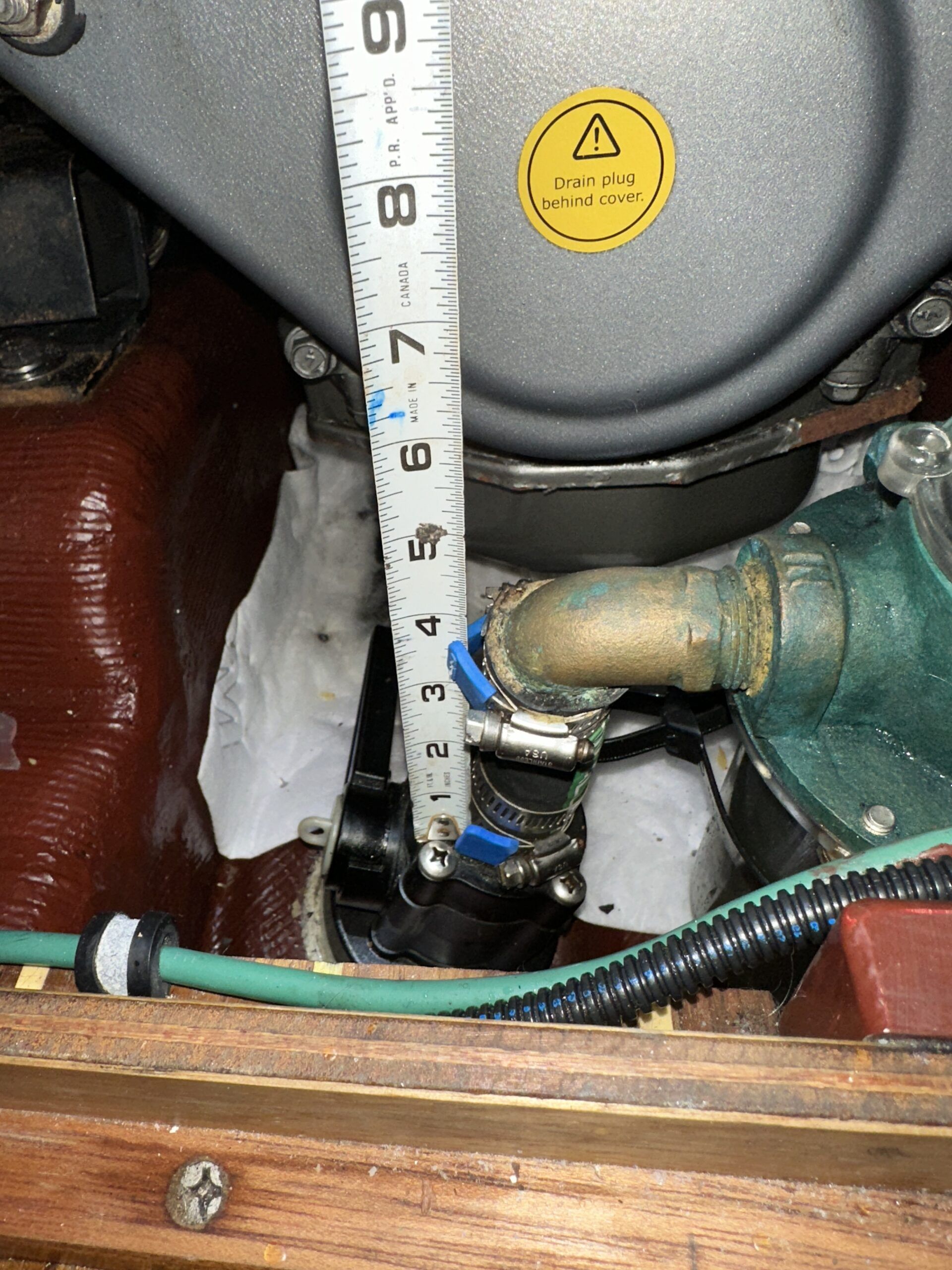
Examining the hose from the seacock barb to the elbow, it appeared to have been there since construction. I was loathed to try and remove it to clear the rest of the seaweed. There was no spare hose aboard and I suspect the hose would have meet with destruction in the attempt to remove it. I didn’t know if it was hardwall (reinforced with wire) or soft wall hose, and it was only four inches long. No room for error. None of us was prepared to dive under the boat in the sub 50 F (10 C) water to have a look. Hey, we’re all old and wise!
Testing demonstrated that the engine could run at moderate speed without overheating, there was enough water flow to keep the temperature at a tolerable level. The decision was made to travel back 15 nm to the nearest haul-out facility at Campbell River. Paul and I met Chris there and the offending seaweed was removed from the seacock and hose from underneath the hull. There was minimal damage from the grounding. All was well once again.
Over the following months Chris encouraged me to come up with a solution to this particular issue, that being:
- The 90-degree elbow restricting the passage of any debris to the raw water strainer; and
- The elbow prohibiting clearing the hose from inside the boat.
The overriding problem was a lack of room between the seacock and strainer. There are no alternative locations for the strainer in the crowded compartment and moving the through-hull was not a practical option. Initial thoughts were of putting a bronze “T” fitting in to replace the elbow. The top of the “T” would have a cap at one end, the raw water coming in the bottom of the T and turning to the other end of the T. This would allow the cap to be removed and a length of wire to be pushed down to clear any debris once the seacock was open. A wet option as water would pour in past the partial obstruction until it was cleared.
Longterm Through-Hull Clearing Solution
Then a lightbulb went on. Why not just a longer section of hose? Replace the elbow at the strainer with a straight hose barb, then attach a measured hosed from the seacock hose barb up, loop around and down to the intake on the raw water strainer? It sounded too simple.
I removed the current hose with some difficulty, destroying the hose end (good thing I didn’t try this at Cameleon Harbour). I selected hard wall hose (metal coils integrated into the rubber) to ensure that it would not kink in the loop. The bronze elbow was replaced at the strainer, Teflon tape used to ensure a good seal. The hose was attached at both ends and it performed perfectly!
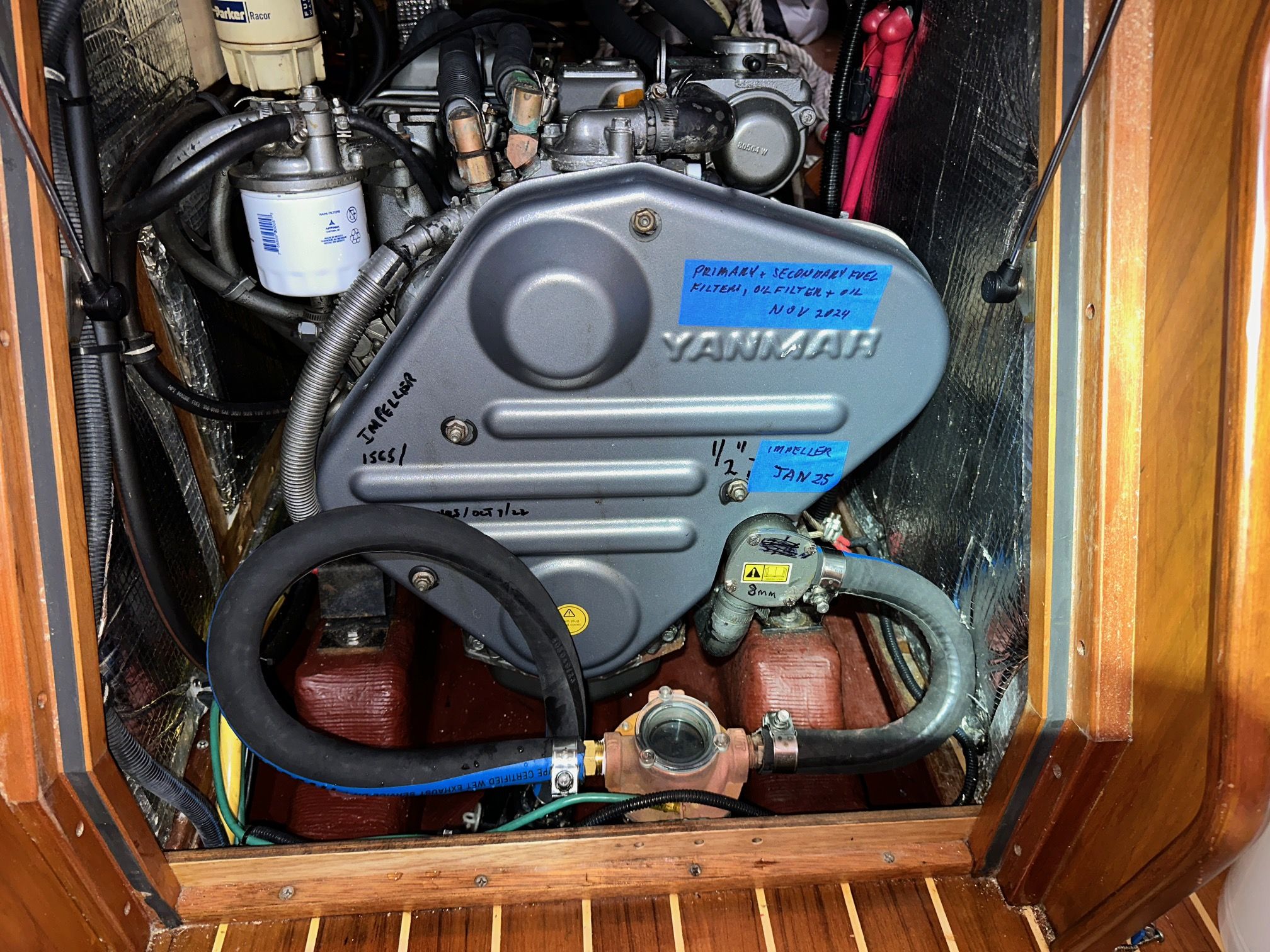
As an added bonus, if there is ever another plug between the seacock and the raw water filter, just disconnecting the hose from the strainer causes the hardwall hose to spring up vertically, well above the water line. No water comes in even if the seacock is opened. Now the dinghy pump trick can be applied and, failing that, in Chris’s case, the top batten on his mainsail is the perfect size to poke anything out of the hose through to the valve.
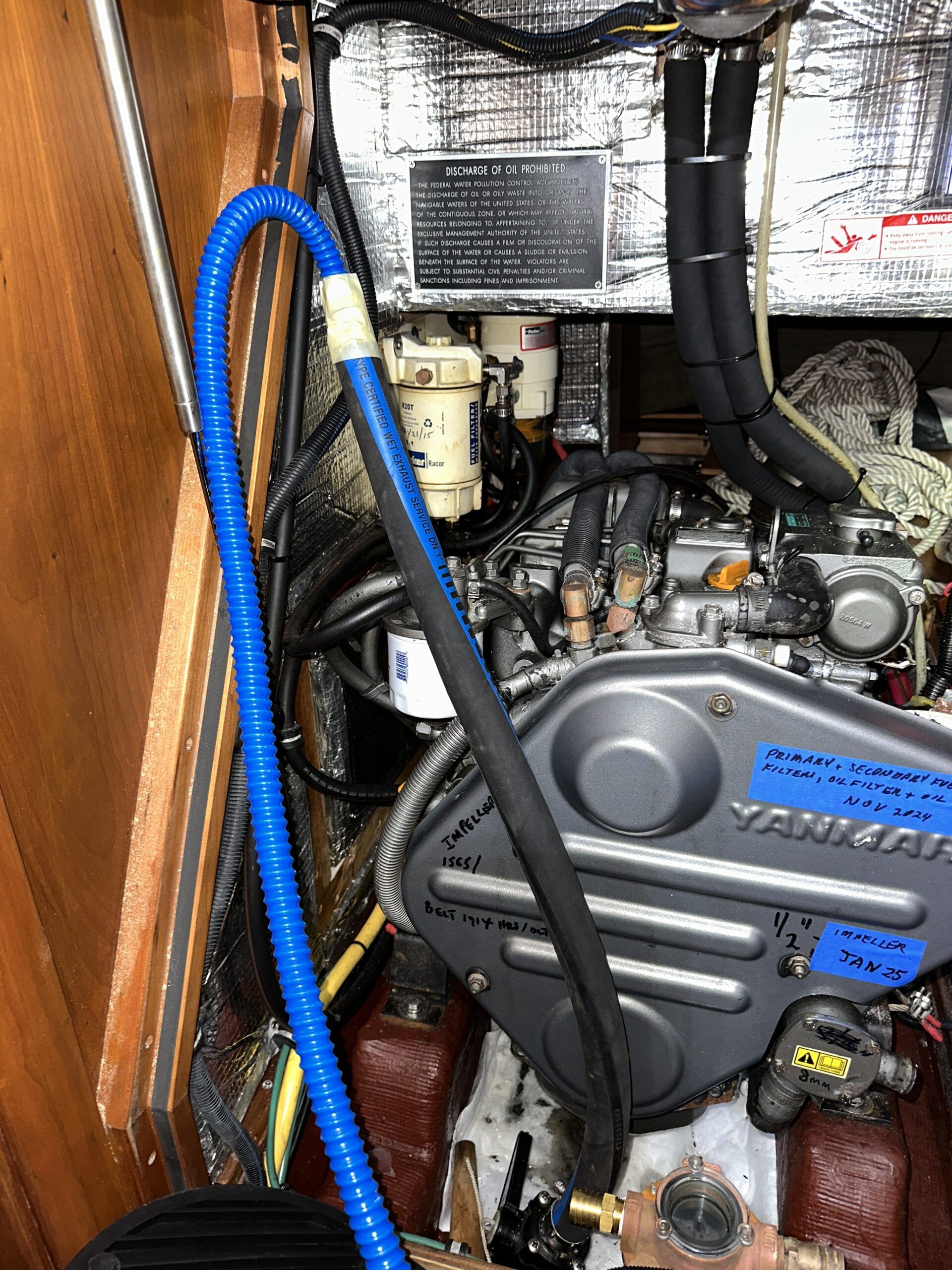
A simple solution that worked in this case. Have a look at your raw water intake. Is there an elbow in your system, waiting to catch seaweed? This may be a solution to keep in mind.












The usual problem is getting the hose to release from its fitting. Heat applied gently has worked for me. Thankfully, I have only had to work at the dock where electricity to power a heat gun was available.
Reassembly using silicon (brake) grease will ease the process the next time. Petroleum grease will damage hose. Syl-Glide is my go to. Also works as a lubricant and rejuvenator for any rubber gasket (hatches, fridge, etc.)
Using the dinghy pump to apply reverse pressure to clear the debris is very clever. So is the using a length of hose to eliminate the elbow. Thanks!
Thanks for he comment. I’ve never used brake grease on marine hoses, but it should work. I’ve used dielectric grease in the past, probably the same basic silicon structure and doesn’t appear to damage the hose over time. I’ve been using it on the “T” roof on my car for years to stop the squeak of the rubber gasket against metal, no damage to the rubber.
I had a similar problem in my A/C cooling circuit. I replaced the sharp 90 degree elbow with a Groco FFC Series Full-Flow Pipe To Hose Adapter – 90 deg. which is a sweeping elbow. End of problem.
Thanks for the comment. I didn’t know that part existed! Now I do. However, there wouldn’t be enough clearance in this situation for that fitting anyway, but good to know for future problems like this.
I’ve used the boat’s air horn to force air thru the raw water intake and blow out whatever was clogging it. Just fit the horn over the hose running to the thru hull and hit the trigger. If it works, it’s fast and easy.
I went with the bronze “T” with a cap. I have a 20 gauge shotgun brass cleaning brush on a short rod. When the intake clogs I just close the seacock, remove the plug from the “T” and insert the cleaning rod. I then open the seacock and rapidly push the brush up and down a few times to clear the obstruction. When the obstruction clears water starts flowing out the top of the “T” and I quickly remove the rod and close the seacock. Replace the plug and you are ready to go. Water intrusion is minimal. I have never had a clog between the “T” and the raw water strainer. I also added a water flow meter so I know if the line is clogged before the engine overheats.