











Practical Sailor Reviews Seven Performance-Sailing Dinghies
With summer upon us, light, quick sailing dinghies that are easy to sail and easy to transport make summertime on the water a blast. Practical Sailor reviews some of the perennial favorites-the Optimist, Sunfish, Hobie, and Laser-and looks at how newcomers like Bic Sports Open Bic match up. Testers also review a do-it-yourself sailing dinghy kit, the Eastport Pram from Chesapeake Light Craft, and Hobies newest catamaran, the Bravo, a quick-to-launch beach cat with plenty of get-up-and-go. We also take a look at Laser Performances newest club trainer/racer for the wee sailors, the Bug.
The Art of Building with Thermal-setting Plastics
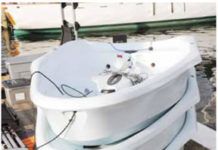
One of the themes seen among the new entries is a trend toward thermal-setting rather than thermal-fixing plastic construction. The latter is representative of the most common approach to fiber-reinforced plastic (FRP) boatbuilding. A process in which room-temperature liquid-resin systems are used to wet-out reinforcing filaments in what has become generically referred to as fiberglass boatbuilding.
Youth Safety Gear Top Picks
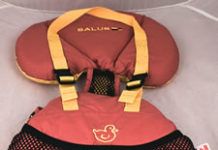
It’s summertime, which means the kids are out of school and flocking to youth sailing camps, heading out on family cruises, and cooling off in the pool. Over the years, we reviewed dozens of safety products to keep wee crew safe around the water, including PFDs (personal flotation devices) for children, toddlers, and infants. Here are some of our top picks.
Sailmaker Survey Reveals Readers’ Favorites
Our informal online sailmaker poll generated 336 complete responses, not large enough to be statistically significant, but still useful, in our opinion. In total, readers recommended more than 100 different lofts. The responses are subjective to each respondent’s experience, making it impossible to fairly rank sailmakers based on the poll, so readers should consider this report an overview and use it accordingly in any sailmaker search. The responses can offer some insight into what can be expected of a specific sailmaker and what should be considered in the selection process.
Sailmaker Survey Reveals Readers Favorites
Our informal online sailmaker poll generated 336 complete responses, not large enough to be statistically significant, but still useful, in our opinion. In total, readers recommended more than 100 different lofts. The responses are subjective to each respondent’s experience, making it impossible to fairly rank sailmakers based on the poll, so readers should consider this report an overview and use it accordingly in any sailmaker search. The responses can offer some insight into what can be expected of a specific sailmaker and what should be considered in the selection process.
Mailport: June 2011
Letters to Practical Sailor, June 2011. This month's letters cover subjects such as: Barnacle Barrier Success, Pump Switches, Antifouling Field Report and more!
Wooden Anchor Chocks
Conventional commercially available anchor chocks, though convenient, can be nasty metal toe stubbers and not particularly attractive. In contrast, wooden chocks are easy to make, handsome, and relatively snag- and toe-proof.
Upgrading the Tartan 27: The Small Cruiser as Durable Investment
When a boat stays in production for 18 years, it is safe to assume that the builder is doing something right, and that the original design had more than a little merit. The Tartan 27 was one of the early small production fiberglass cruisers, entering production in 1961. About 700 27 s were built before construction stopped in 1979.

PS Reviews the Presto 30 Trailer-sailer
Rodger Martin’s Presto 30 is clearly a descendant of the round-bilge sharpies made famous by Ralph Munroe’s Presto and Egret. The origins of the hull and rig date back to a classic American oyster-tonging boat, the New Haven sharpie, which first appeared in Long Island Sound around 1850. Martin wanted the Presto 30 design details to include trailerability and shallow draft. The Presto is 30 feet long and 8 feet, 6 inches wide. With the centerboard up, it draws just 13 inches; with the centerboard extended, it draws 5 feet, 6 inches. The 320 feet of sail area is evenly divided between two sails set on wishbone booms, and while the designer calls it a schooner rig, the maker, Ryder Boats, has deemed it a cat-ketch rig. The Presto’s 1,000 pounds of lead shot in the keel help address this shoal-draft weekener's tender handicap, but like any shallow-water boat, the Presto will need to be actively sailed in a blow.

Construction Details Presto 30
Built by Ryder Boats in Bucksport, Maine, the Presto 30 is a lightweight performance craft built with modern composite construction and assembly techniques.

Has Fountaine Pajot Broken the 44 Foot Catamaran Market
Is the Fountaine Pajot 44 really one of the cheapest ways to buy a brand-new 44-foot cruising catamaran… and if so, what’s the catch?...


Latest Sailboat Review

Jeanneau 65 Used Boat Review
From the drawing board of Philippe Briand, a renowned marine architect over the past four decades, comes the Jeanneau Yachts 65. This boat is...