











PDQ 32
The PDQ 32 was introduced in 1996. The concept was to offer a smaller, lighter and less expensive alternative to the PDQ 36. One of the things we like about PDQ boats is the quality materials and generally clean workmanship. A modified epoxy resin (AME 5000) and tri-axial knitted fiberglass fabrics are used in the hull and deck. The mast is supported in part by a carbon fiber-reinforced deck beam. The hulls are solid glass below the waterline and cored with Klegecell foam above the water, an arrangement we think makes a lot of sense. Each hull has an air-tight comparatment forward, which provides a measure of safety in the event of collision, and the keels also have sacrificial sections. When you poke around in lockers, you don't see a lot of unfinished glass.

Caliber 33
The Caliber is a peculiar blend of tradition and innovation, of security and performance, of practicality and pizzazz. All of the owners we heard from were "satisfied." One called the 33 his favorite boat over six decades of sailing.
Melges 24
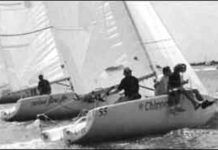
Introduced as a prototype at Key West Race Week barely three years ago, the Melges 24 has already created the same sensation in the small boat performance world as the J/24 when it was first introduced. We're not suggesting that we should commence composing the epitaph for the J/boat, especially since hull number 5,500 was launched recently and sales are still strong, but we are preparing ourselves for a high noon, main street shoot-out between the aging sharpshooter and the young gun as they wrangle for ownership of the small-boat race market.
Catalina 27
The Catalina 27 has been in production since 1971, and well over 6,000 of them have been built. This is undoubtedly the largest production run of any 27' sailboat in US history, and probably the biggest anywhere. The flip side of the coin is that Catalinas are known as cheaply built boats, with lots of corners cut in places they shouldn't be cut.
Santana 2023
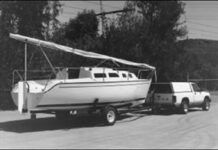
With the introduction of the Santana 2023, one of the newer water-ballasted trailerables, the W.D. Schock Corp. in Southern California offered entry-level sailors the same types of mix-and-match options available at an automobile showroom. The A model is your basic family sloop with a contemporary, low-profile cabin. The 2023 C (cruise) has a longer trunk cabin with more amenities below. The 2023 R (race) is optimized for performance with a sprit for flying asymmetrical spinnakers, though you can add a tall mast to either the A or C model. The R model has the same cabin top as the A model, which we think is more attractive, but has less headroom below, of course.
Frers 41
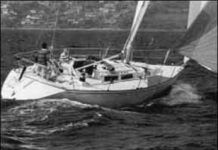
The term "racer/cruiser" has been used by many builders to describe their products, with varying degrees of truthfulness. Some are really cruising boats fashioned after racing boats, but only competitive in races at the club level. Some are pure racing boats, with perhaps a dodger and an enclosed head added to qualify them as cruisers. This series of Frers/Carroll Marine boats, however, are "racer/cruisers" in the truest sense.
Chrysler 22
According to the BUC Research Used Boat Price Guide, Chrysler first offered recreational boats in 1957, building three aluminum runabouts and cruisers from 16' to 21'. Its first fiberglass boat was the Caribbean 19' cruiser in 1958. The Buccaneer was the first sailboat in the Chrysler line, introduced in 1971. The Chrysler 22 appeared in 1975. Just when Chrysler stopped building it is uncertain, but according to BUC, 1979 was the last year; we have not received information from readers owning boats built later than that, so perhaps '79 was indeed the finale.

Beneteau Oceanis 350
Beneteau is the largest builder of sailboats in the world. The French company has made its mark not only in Europe, but in the U.S. as well, opening some years ago a plant in Marion, South Carolina, with headquarters in Charlotte, North Carolina. Probably more than any other company, Beneteau also has influenced sailboat styling--the so-called Euro-style, typified by smoked wrap-around windows, scoop transoms with molded-in steps, and lots of curvy interior shapes. The Oceanis 350, built between 1986 and 1993, is a reasonable example of Beneteau's impact on the sailboat market. About 144 were built in the US, more in Europe.
Ultimate 20
In the late 80's, the Ultimate 20's landscape was littered with the remains of boatbuilding companies that couldn't cut to fit. The conventional wisdom was that starting a new company was guaranteed to convert a large fortune to a small one. In this period, Jeff Canepa conceived the idea of entering the fracas with a pint-sized company based in Santa Cruz, California, that would introduce yet another performance 21-footer.
MacGregor 26
The MacGregor 26 is not your usual boat. We first reviewed Roger MacGregor's water-ballasted trailer sailer in 1987, and while we think our conclusions about construction and performance are still valid, we've received many letters from MacGregor owners saying our criticisms--especially our reservations about centerline water ballast--are at worst unfair, at best suffering from a lack of perspective.

Has Fountaine Pajot Broken the 44 Foot Catamaran Market
Is the Fountaine Pajot 44 really one of the cheapest ways to buy a brand-new 44-foot cruising catamaran… and if so, what’s the catch?...


Latest Sailboat Review

Jeanneau 65 Used Boat Review
From the drawing board of Philippe Briand, a renowned marine architect over the past four decades, comes the Jeanneau Yachts 65. This boat is...