











Beyond Jacklines: Innovative Uses for Webbing
When a sailor needs to connect point A to point B, he reaches for rope. We make an exception for jacklines because rope rolls under foot and webbing doesn't.

Breaking Down Performance
When it comes to sailboats, performance is a relative term, especially when it comes to a crews concept of how the boat will be used. Racing sailors, cruisers, and daysailors each have very different perspectives on performance. For example, those facing a light-air, around-the-buoys race measure performance in terms of how well their speed through the water holds up against the decrease in true-wind speed. Cruisers, on the other hand, especially those crossing oceans, often define it as a measure of versatility under sail, not just how a boat copes with near calms or gales, but how it performs in everything in between.

Is Your Quiver of Sails Sufficient?
In this two-part look at headsail options, we focus on sails for coastal cruisers and daysailors. The first part delves into what weve observed during our new-boat sea trials and vintage sailboat reviews. In next months report, we will divide the fleet into categories based on how, what, and where boats are sailed and explore what sailmakers have to say regarding headsail material and what sail options they recommend for a 35-footer. Our goal is to define which types of sailors will do just fine with a standard boat show sail inventory (a mainsail and a roller-furling jib or genoa), and to examine whether coastal cruisers need a second smaller headsail. Well also look at whos a candidate for a drifter/reacher or an asymmetric spinnaker, and why thats a measure of both crew mindset and vessel design.

Keeping Ice at Bay
Southern sailors often put their boats away for a few months when the water gets a little cool. Northern sailors have a more definitive reason; they put their boats away when the water gets hard. Often, freezing is limited to harbor areas, where shallow water, freshwater input, and limited tidal flushing encourage ice formation. Far north, you can walk on it for weeks, while in the mid-Atlantic, the layer is often thin and transitory. And while a few inches of ice are generally harmless to a sound boat, thick moving ice can damage paint, exposed steering gear, and planking. Although we can't make the weather any warmer, there are measures boat owners can take to keep ice at bay.

Anchoring in Squishy Bottoms
Practical Sailor carried out its own series of anchor tests in a mud bottom in 2006 (see April 2006 and October 2006 issues), and those tests bore out a commonly known fact: Danforth-style anchors, which feature flukes that are proportionally larger than other types of anchors of the same mass, tend to hold better than older, plough-style anchors in soft mud. When Practical Sailor was invited to witness Fortresss test, editors were initially skeptical; the playing field seemed heavily tilted in Fortresss favor. In the end, however, it was a busy test schedule, not outright skepticism, that prevented our attending.
Anchor Shackles: The $15 Insurance Policy
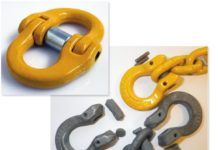
Were always amazed how a sailor can spend months agonizing and wringing his hands over which anchor to purchase, and then, when he finally shells out $700 or much more for the anchor, hell attach it to a shackle that has no business being on a boat. Weve plowed through the topic of shackles in several recent issues, but we havent looked specifically at anchor shackles for more than a decade. Choosing a properly sized, high-quality shackle is important, but its also essential to be familiar with proper use.

Making Sense of Marine Chain Standards
Chain is made from wire. The cross-sectional area and strength of the wire determines the strength of the chain. The weld of each link should be stronger than the wire, so if a chain breaks, it should break in the body (wire)-usually at the crown, or the curve in the link-not the weld.
Drudging To a Safe Landing
The word "drudging" can be traced to the middle-English word for dragging. It is the practice of using a chain, heavy weight, or anchor...

Reading the Telltales on Your Sails
Even the most laid-back cruiser has days when he would like to get there an hour sooner. But speed is not the only reason to fine-tune sail trim. Proper sail trim can often eliminate the noise of motoring. Properly trimmed sails last longer.
Anchor Swivels: Caution Required
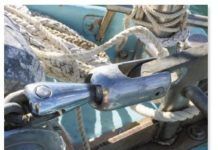
Stroll down the docks at any boat show, and youll see a surprising number of boats equipped with expensive, stainless-steel swivels between the anchor and the chain. Almost all of these swivels are highly polished, machined and/or welded gems that cost anywhere from $80 to $200 or more. By comparison, a galvanized anchor shackle rated to withstand the same or greater loads as the chain rode we rely on costs less than $15.

Why Is This 46 Foot Sailboat So Cheap? Hunter 460 Review
Is the Hunter 460 really one of the best-value cruising sailboats on the used market? In this video, we take a deep, honest look...


Latest Sailboat Review

Jeanneau 65 Used Boat Review
From the drawing board of Philippe Briand, a renowned marine architect over the past four decades, comes the Jeanneau Yachts 65. This boat is...