
Stagger while you anchor? It sounds like I’ve either been drinking too much or sailing too long. Bear with me. It’s not easy to see in three dimensions when looking across the water. Right and left is easy, and some rough sense of distance is possible, but translating what you see into a map-view is not a simple thing.
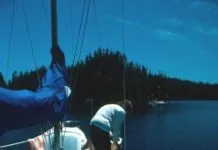
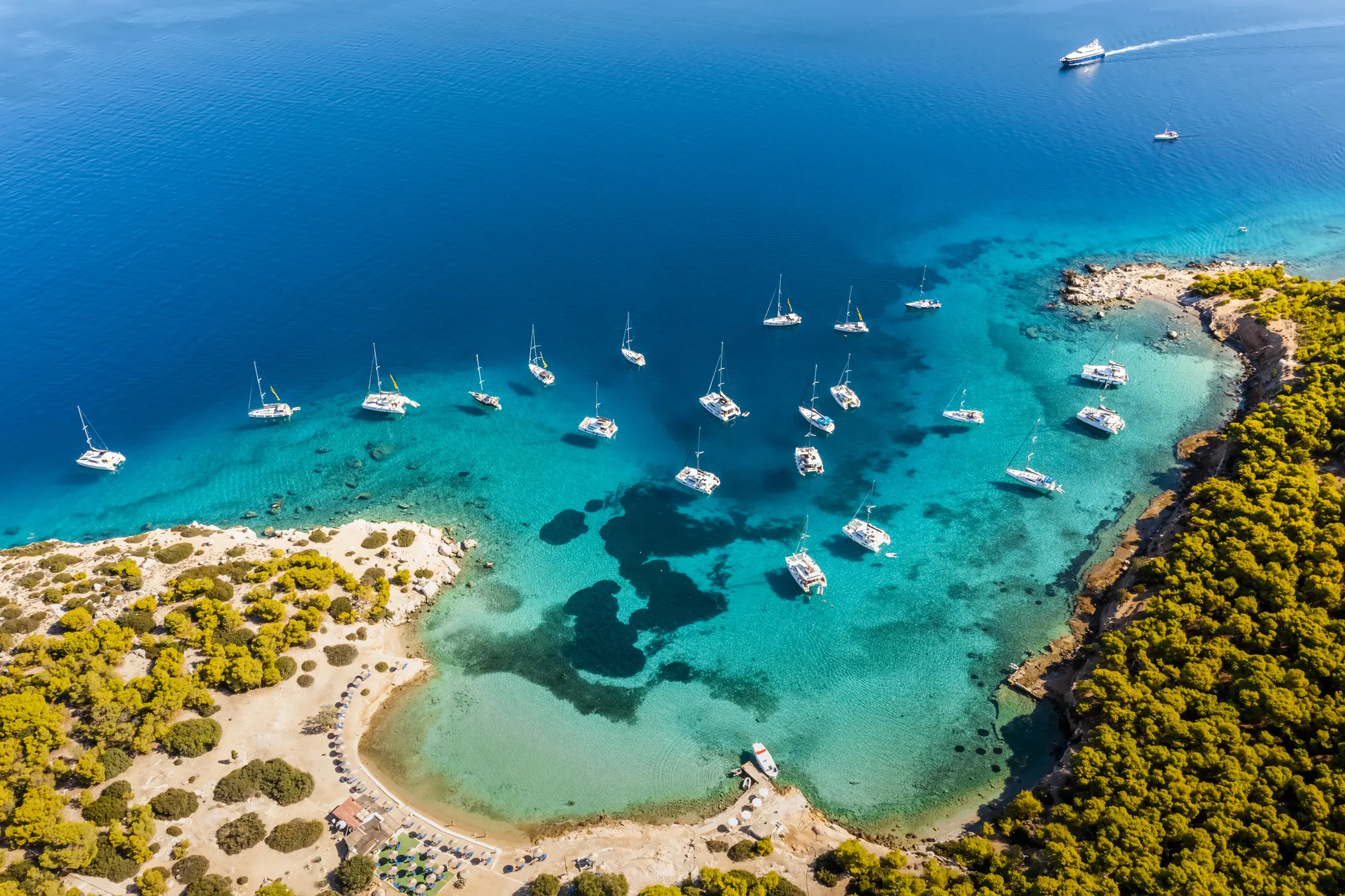
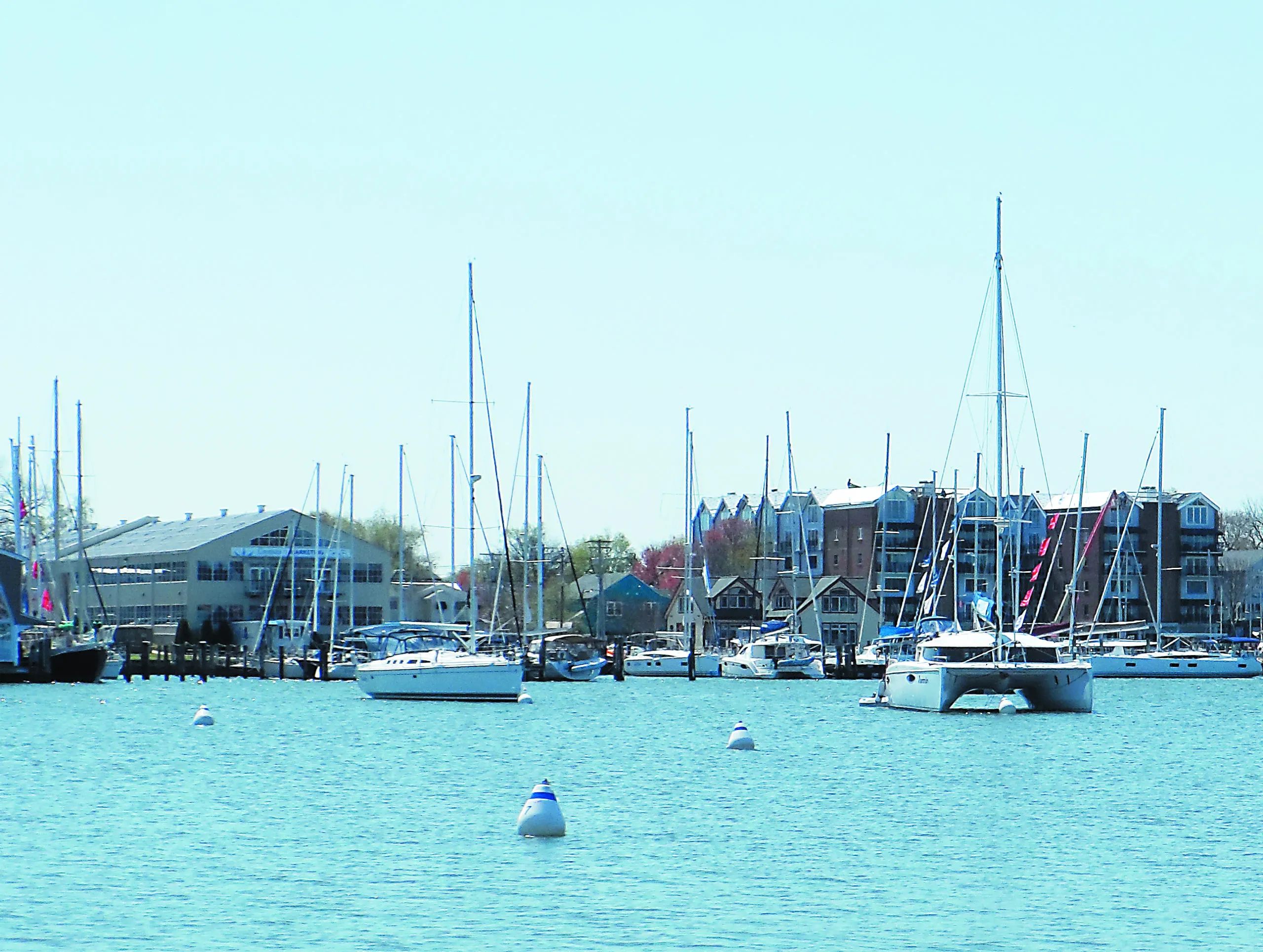
Anchoring is the classic case. A new cruiser approaches a crowded anchorage, positions their boat in an open spot, and lowers the anchor, without visualizing where the boat will be once the rode stretches out, or how their boat will swing in relation to the others. By the time the anchor is set and the rode is deployed, they end up anchoring either very close in front of you or exactly beside you, neither of which they actually intended. They just measured wrong.
Instead, have a plan to address scope, swing, and stagger in a simple, repeatable way.
How To Choose the Right Distance
- Calculate how much rode you will use, including an allowance for adding scope if a storm arrives. For example, if the water is 7 feet, your bow is 3 feet off the water, and you want 7:1 scope, (7+3) x 7 = 70 feet.
- Lower your anchor one rode length + one boat length off the bow of your neighbor. This will typically be two to three mast-heights, a simple way to gauge distance if you are approaching from astern of your neighbor. By the time the anchor tips, digs, and sets, particularly in softer mud, the anchor will be off the beam of your neighbor, about one swing circle away. Note: Some cruisers recommend using an affordable rangefinder to be sure of distance.
- Need to anchor in front? Drop anchor about two rode lengths + two boat lengths (about 210 feet in this case). Simply come up beside the boat, note the long/lat, and move about 0.04 minutes forward (a minute is 1 nautical mile, and GPS typically displays 0.001 increments). Or time the distance; 1-knot ~ 1.5 feet per second. At 3 knots, 210 feet will take about 45 seconds. The point is, do something better than guess.
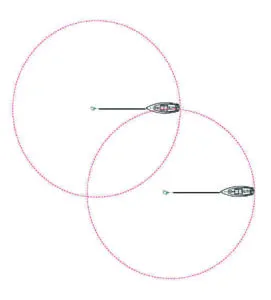
By “staggering” your position relative to other boats in a crowded anchorage, you prevent the chance that your boats will make contact.
You have now achieved the optimum stagger, which will fit the maximum number of boats in the available space, with minimal need to visualize the geometry. The swing circles overlap, possibly an issue in anchorages beset by calms—but in most cases the boats will follow the same swing pattern and remain apart.
Bottom Line
There is no reason to anchor this close in normal circumstances; anchored sailors are often seeking solitude. There are also other considerations in picking a spot.
Are there boats to windward that may drag down on you? What hazards are to leeward, both now and as the wind shifts, and do I have space to escape if I drag? Is the holding good? Is there protection from wind and waves? Just because everyone else anchored here does not guarantee it is safe.
Consider the whole picture. This is only a trick to get the spacing right, just one more rule of thumb in the cruiser’s bag of tricks.
Drew Frye is technical editor for Practical Sailor and author of Rigging Modern Anchors (Seaworthy Publications). He also blogs at his website.
This article was published on 23 May 2019 and has been updated.