
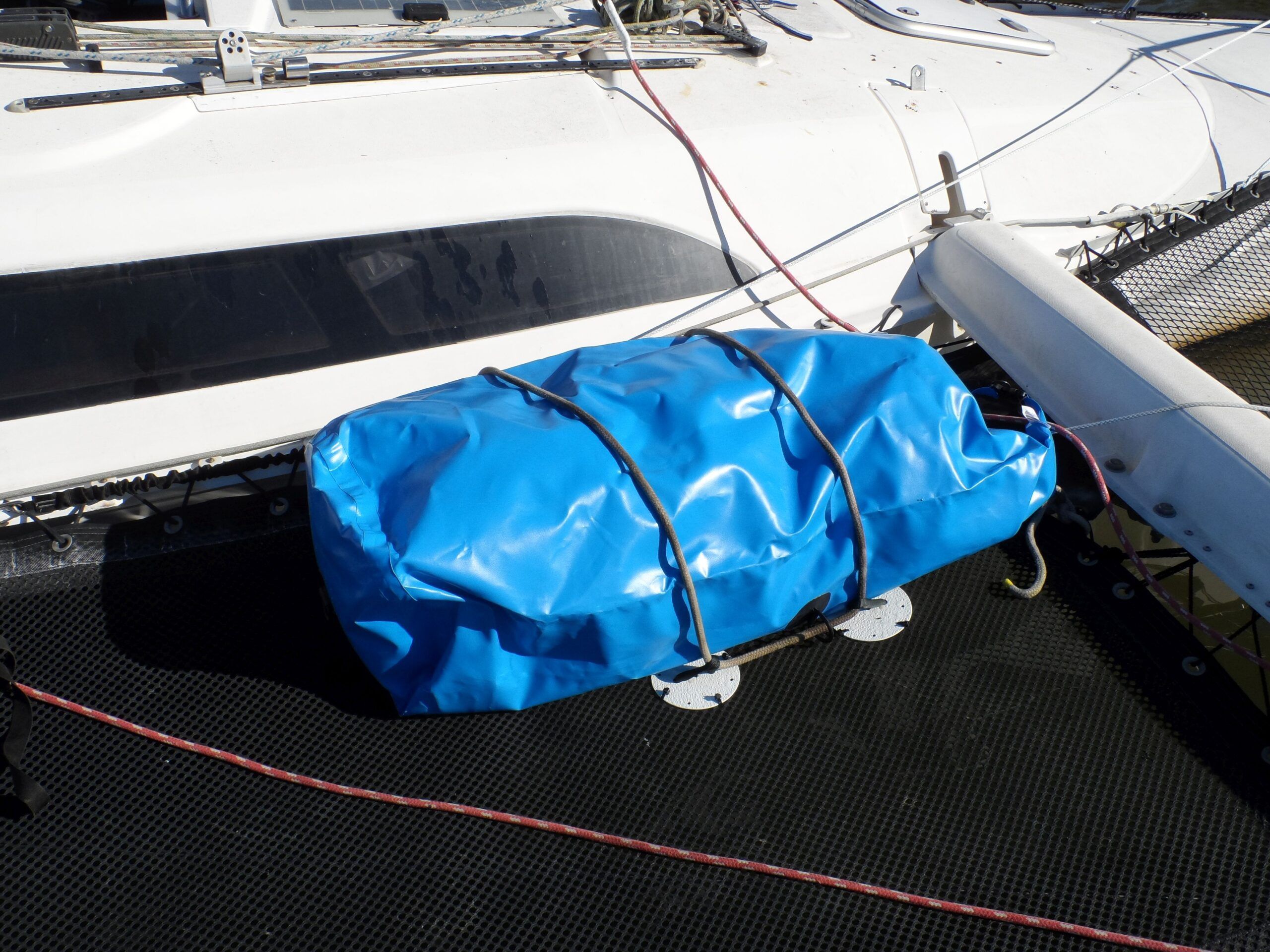
I love sailing and kayaking, and while some stuff is meant to get wet, sandwiches, cell phones and spare clothes would rather stay dry. Careful handling is often enough, but dinghy rides are unpredictable, boarding can go wrong and there is always spray underway, plus the walk to the car in the rain. This gear is proven.
Dry Packs
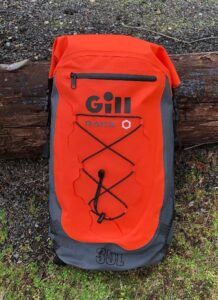
We’ve tested backpacks from Mustang, Mantus and Ronstan, but our favorite is the Gill Voyager 35 L Backpack (formerly Gill Race, same design and specs). It has been our every-trip bag for seven years, the bag we drag from home and carelessly toss to the front end of the cabin. It has nary a scratch on it, stays open when filling or searching the contents, still has good padding on the back and straps, and doesn’t leak a drop in the main compartment.
The zippered pocket I trust less, perhaps because we haven’t lubed the zipper and don’t always fully seat the slider at the end, as required of waterproof zippers. Our bad. It’s made of 300 denier polyester PVC coated fabric, with Fastex buckles to secure the roll and adjust the straps. ($94).
Dry Bags and Duffles
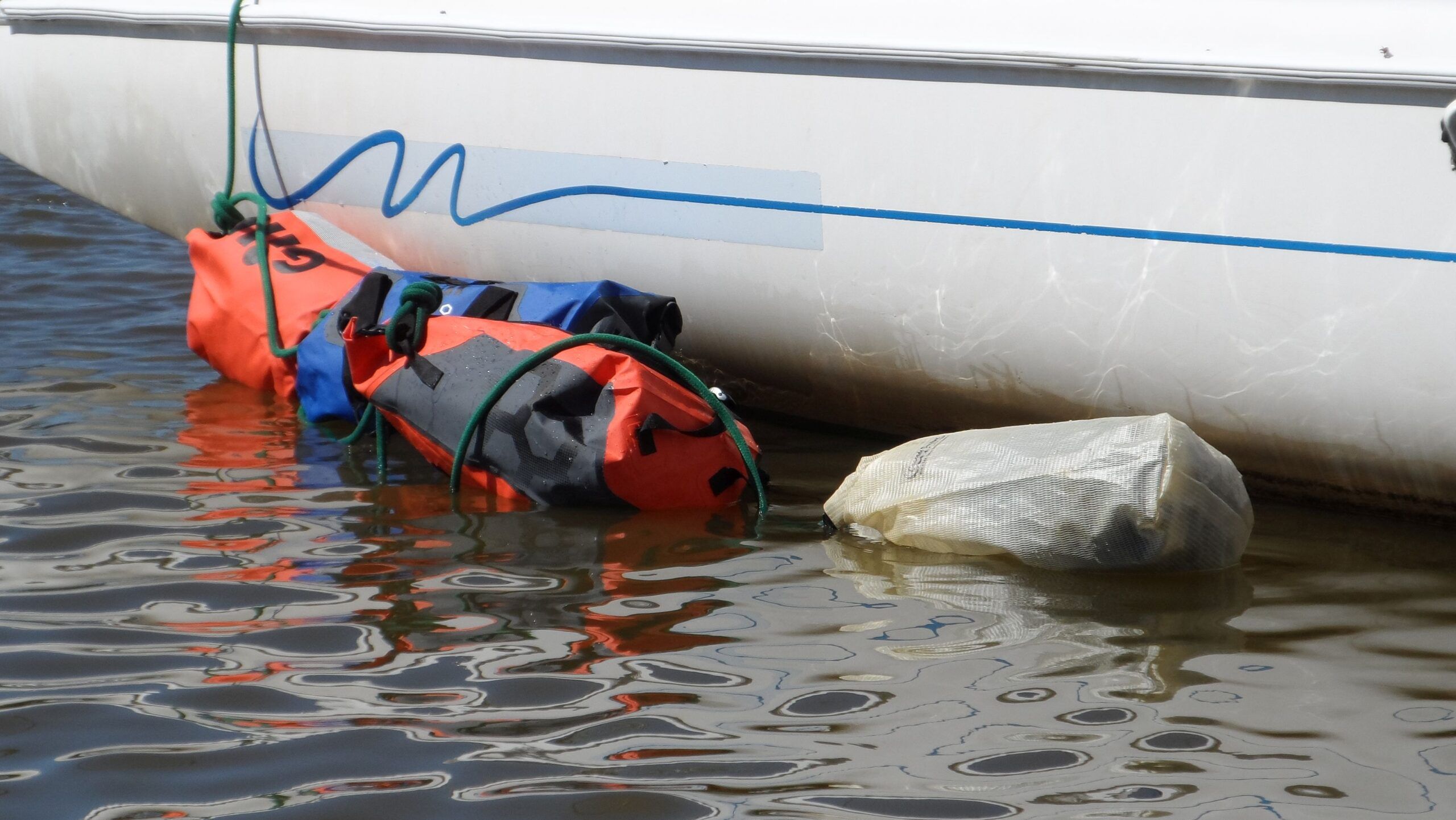
We’ve had good luck with all of our dry bags. All are the roll-down style, and so long as they are not over loaded (enough space for at least one role down) and no one sits on them while immersed in water (practically any dry bag can leak if the pressure in the bag cycles repeatedly because you are sitting on it) they never fail. Obviously, take some care with sharp items.
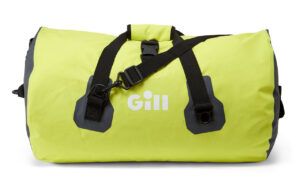
We’ve used Gill, Mustang, Cascade Designs and NRS. We’ve used the Gill 60 L Dry Duffel ($75) many times and it’s still like new. Dry bags range from $25 to $40 for 20 liters.
Dry Box
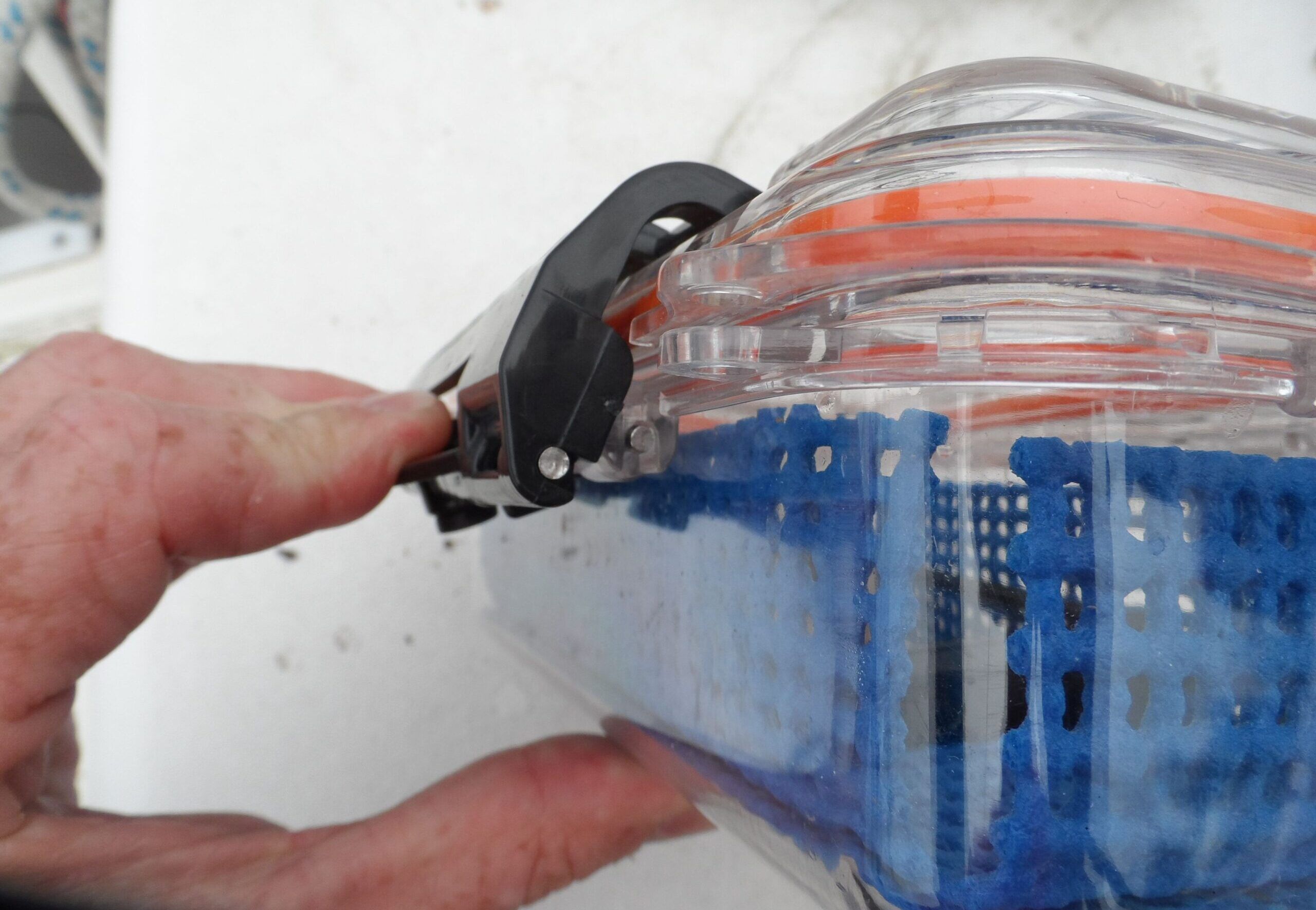
The Plano Guide Series 3500 Field Box ($29) has been our favorite for a cell phone, car keys, knife and wallet for kayaking trips for seven years. It gets tossed behind the seat and clipped to a cord, where it is slashed and wallows in bilge water all day. We’ve flipped the boat in white water a few times. It’s gotten sand in the seals, which is easy to wash out. The seal is a fat silicone o-ring. The latch is a sturdy over center type that locks with a satisfying snap. The hinge is sturdy.
We do keep a drainage mat in the bottom so that electronics don’t lay in any few drops that might get in when we open it to make a call or take some pictures while paddling. No dry container is safe when open!
Deck Cargo
It’s best to get everything below, but that’s not always practical on smaller boats. In fact, dry bags can do quite well on deck if well secured. In the case of our trimaran, we lash large dry bags, up to 120 liters to the net, up tight to the cabin side, where direct wave impacts are nonexistent, but heavy spray is common.
Transom Wash Board
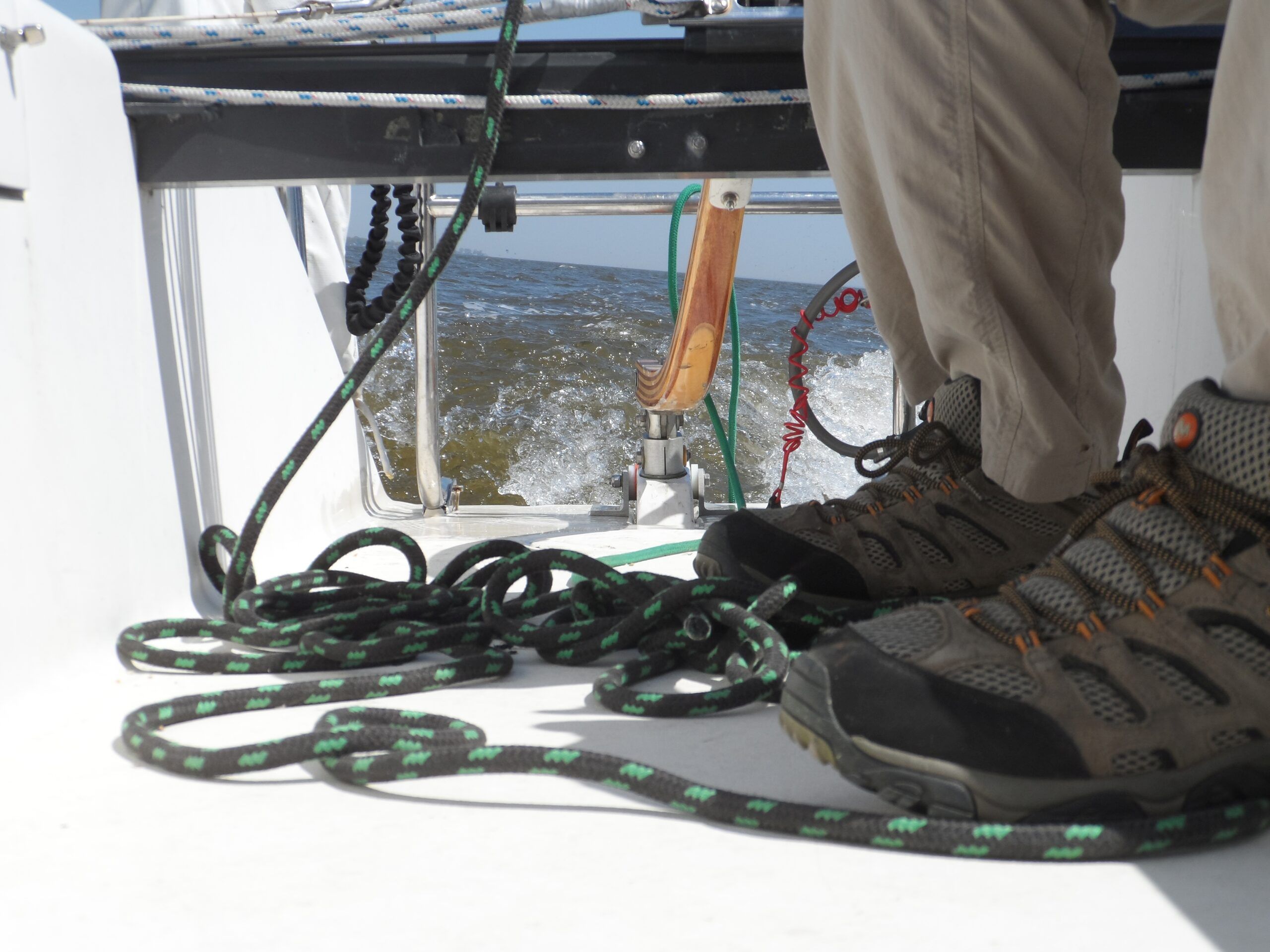
Many sport boats have an open transom—the theory is that boarding waves will quickly drain. They make abundant sense for dinghies with full flotation; bailing after a capsize is avoided. But my F-24 cockpit has never experienced more than a few drops of spray, except when we have done a slow jibe in big waves. And then the transom wave can board through that darn open transom, enough to overwhelm the 4-in. companionway sill. Hats and lunch wrappers have a way of blowing out the back as well.
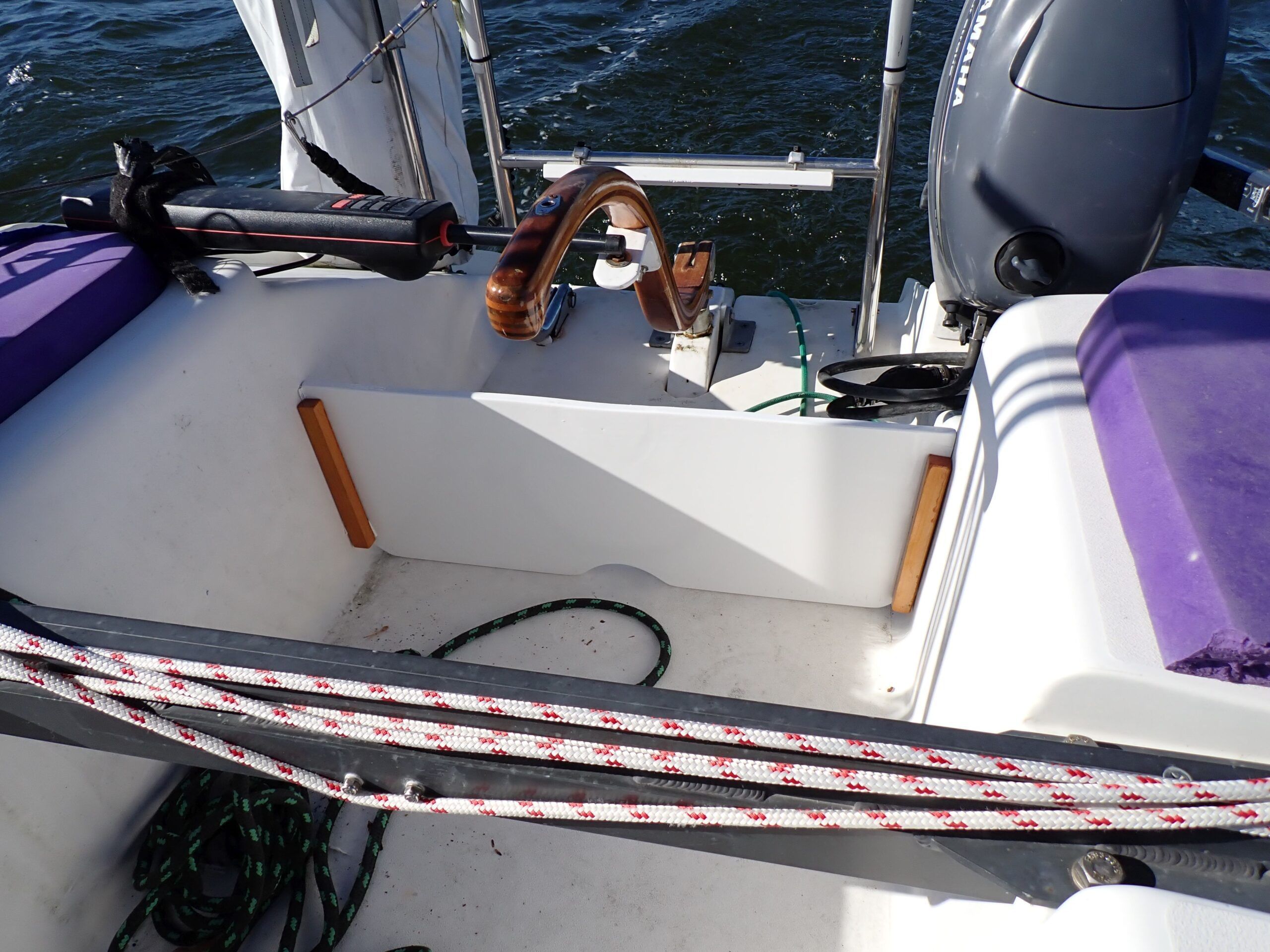
Our solution, for both dry feet and to leave the companionway open, was adding a removable washboard. There wasn’t much to it. I picked an out-of-the-way location, bonded a set of cedar guide rails in place with 3M 5200, and cut a board from an old inflatable dinghy floor. The funny thing is, it works so well we’ve never taken it out! Our feet stay dry, we don’t lose hats or trash, and the rain still cleans the cockpit. Free, practically. If you have an open transom, it doesn’t have to be a sport boat for following waves to be an issue, though it is probably only for truly foul weather.
Note: Another reason to insert the cockpit boards in foul weather is to prevent down flooding in a knockdown. A washboard does not help with that.
Bottom Line
While it can feel like a constant battle to keep your important stuff dry, the right gear, maintained well, will be invaluable partners in the effort.