







In Search of the Magic Spray
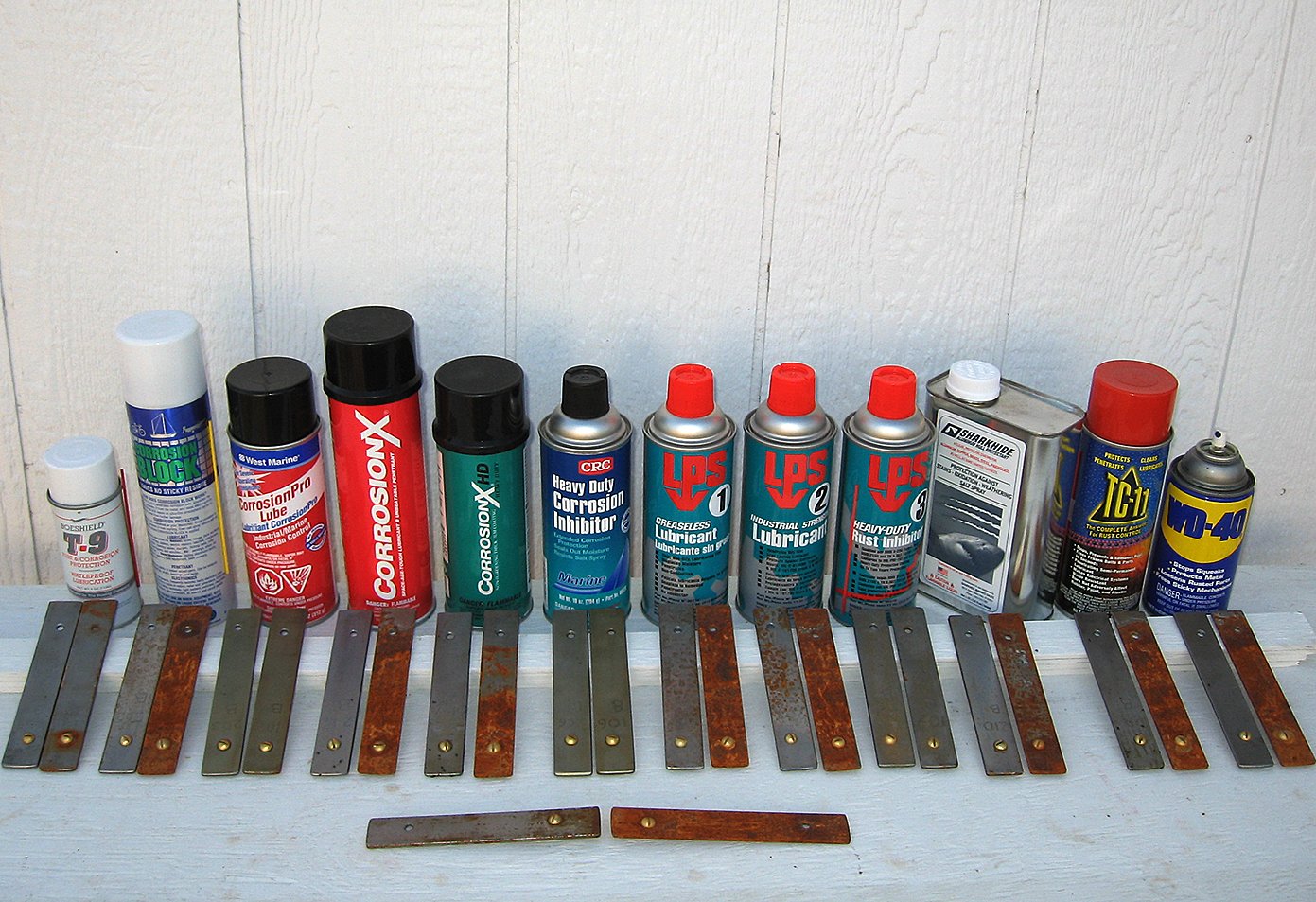
Given boaters' wide range of expectations for anti-corrosion sprays, it is simply impossible for one spray to fit all our needs. Some spray petroleum products are good for loosening bolts, some seal electrical connections, some protect against corrosion, some even claim to improve conductivity. Unfortunately, not all of these sprays live up to their lofty claims.
Bracing for Cold and Wet Sailing
As any cold-weather sailor will tell you, the battle against the elements involves more than just bibs and a jacket. Keeping out the wind and wet begins with underlayers, boots, and gloves. Whether youre dreaming of high latitude adventures, or just want to keep sailing through October, weve got you covered. Here is a summary of past reports on cold-weather sailing apparel.

Caring for Encapsulated Ballast Keels
If your boat has an encapsulated iron keel, don't get lulled into believing that you are completely free of keel worries. Although you are...

Pondering Options for Varnishing a Mast
One of the most common questions we get regarding marine varnish is what kind of finish is best for a mast. Even though aluminum has long since replaced Sitka spruce as the material of choice for a sailboat mast, there is no shortage of boats that still have wooden masts. Many of the Taiwanese-built boats of the 70s and 80s had wooden masts, and of course, a wide range of U.S.-built classics still have their original wooden masts.

Eight Bells for Jeremy ‘Mac’ McGeary
Ive waited to write about Jeremy crossing the bar because I was waiting for him to get out of my head, as they say. But Ive given up waiting. Apparently, he has made himself at home in the aft cabin. The witty, talented, and dedicated crew who did some of the best work of anyone who has worked for Practical Sailor will surely be with us for years to come.

Tips on Choosing and Sizing Anchor Shackles
No matter what brand of anchor shackle you decide to use, understanding sizing and grades of shackles is essential, since this connector between your rode and anchor is often the weakest link in your ground tackle. And the weakest point in the shackle is often where the shackle pin meets the body. When the shackle pin or body is loaded from an angle, the shackle body can be forced open, causing the pin to break or fall out. This is the most common failure we have seen in our tests-even when under straight-pull loads.
Squall Tactics for Sailors
The danger in running before a squall (or jibing downwind, a tactic sometimes employed by Transpac racers) is the inevitable wind shift that can cause an accidental jibe. Since squalls are usually short lived, with the strongest winds lasting less than 20 minutes, simply reducing sail to a safe configuration and motoring or motorsailing through or past the squall can be a less taxing approach than trying sail through it. What is a "safe" configuration?
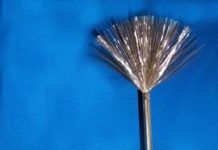
Lightning Protection: The Truth About Dissipators
About this time of year, when lightning strikes become common, we receive a good deal of mail asking about static dissipators such as the Lightning Master. These are the downside-up, wire-brush-like devices you see sprouting from antennas and rooftops in cities and towns, and, more frequently, on sailboat masts. When these devices first appeared on the market, we did a fair amount of research to find out whether they realistically could be expected to spare a sailboat's mast from a lightning strike.
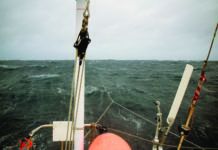
Testing Sailing Knots that Really Grip
The widespread use of Dyneema and similar high-strength, high-tech lines presents a slippery problem for the knot-tying sailor, especially if they are tying a gripping hitch. A gripping hitch is the knot you would use to tie one line to another (or itself) when you don't want the line to slip. Here's a look at some of the gripping hitches that we've tested for holding ability and ease of tying.
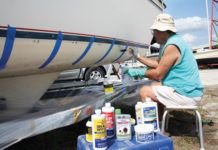
Conquering (or Coexisting with) Waterline Stains
Summer is here, and our routine maintenance chores now require some serious elbow grease. Our first impulse is to go for the super-strength acids that will take care of the hard growth as well as the stains. But there are kinder, gentler options, if you have the willpower and the patience.

This “Bulletproof” Cruiser Has a Serious Weak Spot Caliber 40 LRC...
If you’re shopping for a serious cruising sailboat, the Caliber 40 LRC is often described as “bulletproof.” Heavy displacement, huge tankage, conservative construction, and...


Latest Sailboat Review

Union 36 Used Boat Review
While not the best boat for light-air sailing, the Union 36 is a good sailboat for the bluewater cruiser. It wont get you there fast, but it will get you there comfortably and in one piece. The boats teak decks and lavish use of interior wood is attractive but requires much upkeep and maintenance. A product of the Taiwan-U.S. boatbuilding industry, the Union 36 is a heavy-displacement, full-keel, cutter-rigged double-ender designed for ocean sailing. The Union 36 is nearly identical to several other boats built during the same period: the Hans Christian 36, Mariner Polaris 36, and the EO36. According to well-known naval architect Bob Perry, the Union 36 and its cousins are all based on the design of a 34-footer that Perry was commissioned to create back in the early 70s.