








Florida’s Anchoring Debate Heats Up
The state of Florida is at it again. The Florida Fish and Wildlife Commission held a couple of poorly advertised workshops earlier this month to discuss the future of anchoring in the state. The public hearings made it clear that the state is once again trying to tighten anchoring restrictions in coastal areas, particularly in urban areas along the Intracoastal Waterway.
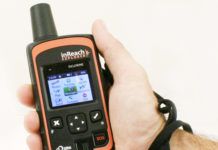
A Preview of the inReach Explorer
Last month, I had the chance to do some preliminary testing of Delormes InReach Explorer. The inReach Explorer is the third generation of the original inReach that we tested in March 2013. Later that year, Delorme added a display screen and some functions, calling it the inReach SE. The Explorer adds even more functions to the SE frame, including an internal digital magnetic compass, altimeter, and accelerometer that allows for rudimentary route planning. The device is not intended to be a full-fledged handheld GPS navigator; its a communication device with some navigation features.
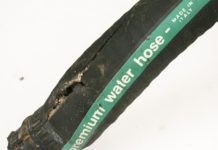
The Great Leak Hunt
I peered into the bilge. A steady stream of water flowed from the aft cabin, under the engine and spilled into the sump. I dabbed my finger in it-salt. Definitely not the icebox. The electric bilge pump was keeping up with the flow, but the water was troubling. Maybe the stuffing box, I thought.

Marine SSB, Ham Radio, or Both?
While the high-frequency (HF) marine radio landscape has shifted dramatically in recent years, amateur radio guru Gordon Wests advice for those who are trying to choose between a marine SSB or a ham radio has remained relatively steady. When we contacted Gordon for our upcoming update on marine SSBs, he pointed out that there remains a lot of confusion regarding the differences between ham and marine SSB, and the pros and cons of each. He also explained that in many cases, while there are practical differences, the decision often comes down to personal preference.

Finding the Right Mix of AntiFreeze
While the polar vortex was pummeling the northern states last winter (ahhh, remember those days?), Practical Sailor contributor Drew Frye was knee deep in glycol antifreeze and engine coolants. One of the test's most important findings was that how you use antifreeze is as important as what product you use. The only sure way to know how effective your antifreeze will be this winter is to measure the glycol as it comes out the other end of the plumbing. There are a couple ways to do this.
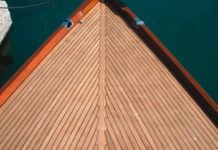
Sticking with Teak
If you find a surprisingly cheap, well-equipped, used cruising boat these days, chances are it has a teak deck in dire need of attention. The owner of a boat like this has a few options. Fix the deck in piece-meal fashion, sealing bungs, replacing rotted subdeck, and recaulking. Or, more expensive options include removing the teak and either installing new teak or laminating a fiberglass deck.
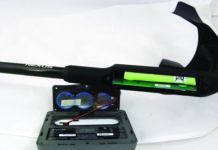
Masthead Wind Sensors: Wired vs. Wireless
Does a wireless masthead wind indicator make sense? This is the question with wind instruments, and there are certainly some pros and cons to consider. For sailors with wiring-unfriendly masts, the wireless approach is a good one. These include wooden spars, ones with conduits that are full with other wiring, and masts that are regularly unstepped. The downside of going wireless is that the batteries will need to be changed on occasion, and in some cases, signal interference is possible.

Matchmaking: First Date for Garmin and B&G
Over the past 10 years or so, weve highlighted the many advantages and disadvantages of the NMEA 2000 (N2K) marine electronics standard. From a consumers perspective, one of the most obvious advantages of installing N2K electronics is the ability to mix and match components from different manufacturers. While this sounds terrific on paper, we've often run into installation hurdles when trying to get sensors and displays from different manufacturers to play nicely-even those that advertise being N2K-compliant. Our foray into the world of wind systems has yielded a much more positive NMEA 2000 experience.
Is the Single-sideband Radio Still Relevant?
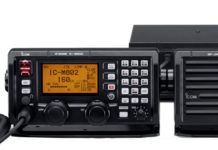
As satellite communication equipment becomes more reasonably priced, more reliable, and more compact, we often hear sailors raise the question, Are single-sideband radios even relevant anymore? As contributing writer Capt. Frank Lanier points out, the question is easy to answer. Here is an excerpt from his forthcoming report on single-sideband radios, which also will look at some of the latest products for simplifying SSB installation.
Cheeki Rafiki Loss Puts Spotlight on Keels-Again
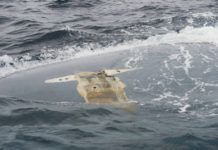
If youve been following the tragic story of Cheeki Rafiki, the Beneteau First 40.7 that lost its keel with fatal consequences while crossing the Atlantic last week, and youre sailing a production boat with a similar high-aspect, deep-ballast keel, you might be asking yourself, Should I be concerned?

This “Bulletproof” Cruiser Has a Serious Weak Spot Caliber 40 LRC...
If you’re shopping for a serious cruising sailboat, the Caliber 40 LRC is often described as “bulletproof.” Heavy displacement, huge tankage, conservative construction, and...


Latest Sailboat Review

Union 36 Used Boat Review
While not the best boat for light-air sailing, the Union 36 is a good sailboat for the bluewater cruiser. It wont get you there fast, but it will get you there comfortably and in one piece. The boats teak decks and lavish use of interior wood is attractive but requires much upkeep and maintenance. A product of the Taiwan-U.S. boatbuilding industry, the Union 36 is a heavy-displacement, full-keel, cutter-rigged double-ender designed for ocean sailing. The Union 36 is nearly identical to several other boats built during the same period: the Hans Christian 36, Mariner Polaris 36, and the EO36. According to well-known naval architect Bob Perry, the Union 36 and its cousins are all based on the design of a 34-footer that Perry was commissioned to create back in the early 70s.