
Bladder Failure Sparks Inflatable PFD Recall
Mustang Survival recently issued an urgent safety recall of several inflatable PFD models with fluorescent green bladders. In the U.S., those models are the MD3183, MD3184, and MD3188; in Canada, they are the MD3153, MD3154, and MD3157. Note that the recall is only for those models with fluorescent green bladders that were manufactured between September 2014 and September 2015.
Synthetic Teaks Go Toe to Toe
Teak offers many advantages that make it a great decking choice. Compared to other woods, metal, and fiberglass, teak is a good non-slip surface and is very durable thanks to its resistance to rust, rot, mildew, and UV damage. Its also fairly low maintenance; if left to turn silver, a regular rinse with clean seawater is all it needs as the salt and minerals help hold in moisture.

Synthetic Decks vs. PS Testers
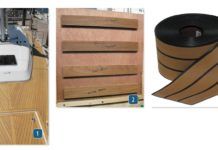
For this comparison of synthetic teak options, our first concern was ease of installation. The manufacturer typically carries out the hardest part-welding the panels together to achieve the correct dimensions. The ease of gluing our test panels to a simulated fiberglass deck was similar for all five test products. The difficulty of your own project will depend on how much work the manufacturer does in terms of measuring, assembling, and fitting the panels.
Stocking Stuffers for Sailors
The holidays are upon us, and for those who are still working on a holiday gift list, here are a few ideas for fun, practical, and nautical stocking stuffers.
Marine Maintenance Q&As
I cannot eliminate the smell of diesel fuel from my boat. The previous owner had a fuel leak that soaked the wood under the fuel tank. The tank has since been fixed, but the odor remains. Any advice?
Free Online Nav Course
Vanderbilt University is offering a free online course in celestial navigation fundamentals. The course-developed in collaboration with PS Technical Editor Ralph Naranjo, made possible by the Blended & Online Learning Design (BOLD) Fellows Program, and hosted by Vanderbilt-covers the basics for completing a sight reduction form to obtain a line of position (LOP). Using videos and an online worksheet, the course includes an overview of celestial navigation (astronav) concepts, the mechanics of plotting an LOP, and examples of using a sight reduction forms to obtain values to plot the LOP of a celestial body. According to Vanderbilt, this course serves to address the lack of widely available instruction in celestial navigation.
Mailport: December 2015
We recently purchased a Webasto Airtop 3900 do-it-yourself (DIY) kit from Defender Industries. The instructions were very comprehensive, and the installation and product work exactly as they should, which typically would lead me to recommend this as a great DIY product. The issue, however, came when we tried to register the product for warranty.
Where Credit is Due: Trident Marine, Tidewater Sodablasting, and More!
Just wanted to give a big two thumbs-up to Taylor Made Products (www.taylormadeproducts.com). I had purchased a large-diameter buoy online, and the vendor twice sent me one with a small hole. After the second attempt, I was told I could only get a refund. After a quick call to Taylor Made and a pleasant conversation with Amanda in their customer service department, a replacement was at my house quicker than the original order had been delivered. What had become a frustrating ordeal (large buoys not that easy to repack and return) became one of those increasingly rare moments of satisfaction from a company that really wants to build and sell a great product. Quality is worth the price.
Taking the Spill Out of Fill-ups
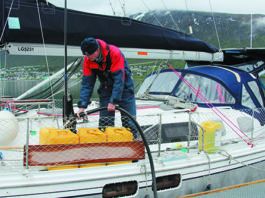
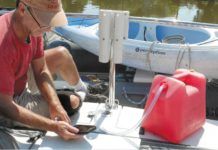
Fueling a boat has never been as easy as fueling a car. Spills-exacerbated by poorly designed fill pipes and vents-are common. The U.S. Environmental Protection Agency (EPA) has updated the fill and vent requirements on boats to prevent these spills, but they only apply to new gasoline-powered boats. New jerry cans designed to prevent spills and comply with new emission standards arent making things easier. Most are hard to control and slow during filling, spill prone, and break after limited use.
Practical Holiday Gift Ideas for Sailors
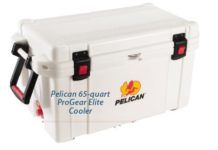
Looking for gift ideas for the sailors on your holiday gift list (or to add to your wishlist)? Here are some that will please a variety of budgets and sailors.

Performance Sailing – Beneteau First 44 Review
The Beneteau First 44 Performance is not just another modern cruiser. In this Practical Sailor boat tour, we take a close look at the...



Latest Sailboat Reviews
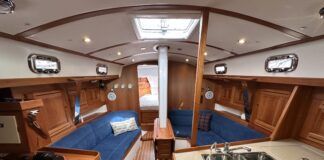
Tartan 395 Boat Review
Co-founded by Charlie Britton in the early 1960s, Tartan Yachts was established on the shores of Lake Erie in Grand River, Ohio. The original...