

Old Salts Anti-chafe Solution
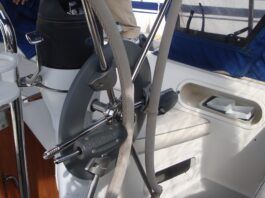
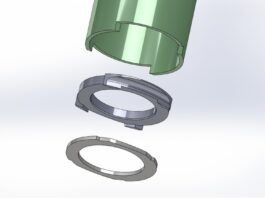
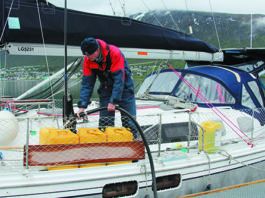
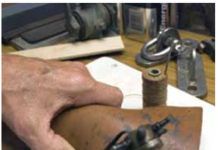
Being a team of diehard do-it-yourselfers, we decided to try our own hand at devising a workable solution to defeating line chafe. After fiddling with canvas, old fire hose, and even messing around with some Kevlar, we settled on leather—an old rigger’s standby. It proved to be rugged and remained unholed after a ride on the belt sander. The fabrication process was kids craft 101, and there was something quite seafaring about the result. …

Mailport: July 2011
Letters to Practical Sailor, July 2011. This month's letters cover subjects such as: Boat Shoes, Rope Cleaning, Rigging Care, Drain Surgery and More!
Where Credit is Due: July 2011
Letters to Practical Sailor, June 2011. This month's letters cover subjects such as: Whale Pumps, Rigging and More!
Design For: Winch Handles
Making spare winch handles is a simple job for a competent metal worker. This I discovered because our Norlin designed Scampi, Windhover, has eight winches, all of which were manufactured before the world standardized on the 11/6" winch handle lug size. Since Windhover's 9/16" size handles are difficult to obtain and impossible to find at discount I went to Frank "Red' Grobelch, a superb metalsmith/welder of Waukegan, Illinois with some ideas for making up some spares for me. I'm so pleased with the results that I'd recommend the project to any reader who is a competent metal worker or has a friend who is. Even if you can use and buy standard 11/16" size handles, your mental state when clumsy Uncle Fred drops a handle overboard will be far more buoyant if you know you can easily replace the lost handle in your own shop.
Ventilation Can be Improved in Almost Any Boat
Fresh air and a dry berth are two “rare," commodities in the belowdecks caverns of most boats. On deck you may be surrounded by endless quantities of fresh air. Below, fresh air frequently comes mingled with similar quantities of fresh or salt water, sometimes in the form of an emulsion that is difficult to breathe at best. Most boats are well ventilated at the dock or at anchor, or even under way in fair weather. But let the wind blow, the spray fly, and the rain fall, and the interior can quickly become a dank swamp if you leave an opening for ventilation, or an airless dungeon if you don't. Fortunately, ventilation can be improved in almost any boat, new or old. In the grand scheme of things, improving ventilation is relatively cheap; far less expensive, for example, than installing refrigeration or a sophisticated propane system.

Metal Chafe Plates: Functional Remedy for Scrapes and Scratches
What do you do when the pin in the leg of your folding cabin table digs up the cabin sole? What do you do about the groove in the top of the teak toerail caused by your dock lines? What about the scuffs in the varnished bulkhead behind the companionway ladder? The answer is that you make chafe plates to solve all three problems. While chafe plates can be made out of almost any material — sheet PVC, thin stainless steel, aluminum — the most readily available and easily worked stuff is plain old brass. Brass can be purchased in many forms: sheet, solid round bar, pipe, tubing, and half oval, for example. It is quite cheap. If you have a local scrap metals dealer, you can buy enough scrap brass in various forms for $10 or less to keep you busy with a lifetime of projects. If there's no metal dealer at hand, most hobby shops carry substantial supplies of brass, although hobby shop brass tends to be thinner than what you want for most jobs.
Design for: Through-Deck Fittings for Coaxial Cable
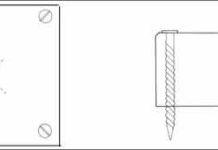
Sealing the holes in decks where Loran and VHF antenna cables penetrate is a fairly common problem on modern boats. If there were only the cable to be considered, a hole of the appropriate size plus a dab of sealant would do an adequate if tacky looking job. But these cables inevitably include sizable end connectors which require holes much larger than those required for the cable itself. Solutions include removal and reinstallation of the connector each time the cable is removed during storage or servicing, and any number of commercially available through-deck fittings or plugs. None of these solutions is simpler or better than the wood fitting shown here. It is attractive and can be made in a few minutes for a few cents.

Fall Maintenance: Don’t Wait Until Spring!
As the frost line marches southward over the next few months, it will signal the end of the season for sailors stranded to its north. The end of the sailing season, however, does not mean the end of boat responsibilities. A pleasure for some, a chore for others, off-season layup and winter's armchair sailing is all part of the game. Like it or not, a boat requires care when it is laid up, just as it does when it is in use. In a way, the fact that you may not get to use your boat for more than half a year is a plus. If you have ever looked at a boat that has been in the Caribbean charter trade for four years, you realize that the concept of the no-maintenance fiberglass boat with eternal life is little more than a myth. A boat is a big investment, and like most investments it requires some attention from the investor (you) to do its best.

No Supermarket At Sea
Cooking at sea has never been easy and is usually looked upon as a dull, but necessary task. Nothing can spur the queasy stomach to open rebellion more effectively than going below to a hot, stuffy galley to prepare , ugh! - food. Why would anyone in his right mind try to prepare a meal at a 30' heel while the rest of the crew enjoy a sail on deck? The term, 'slaving over a hot stove', takes on new meaning. Yet, the cook is a vitally important member of the ship's crew, and it is not an easy job. Whether on a delivery, racing or long distance cruising, a non-stop passage on your boat means no nipping out to buy that missing ingredient: there are no supermarkets at sea! So remember, the moment you leave the dock you'd better be sure you haven't forgotten anything. If you like acronyms, here are two secrets to success that you can remember: The Six P's, and MAMAS Theory.
Fall Maintenance: Dont Wait Until Spring!
As the frost line marches southward over the next few months, it will signal the end of the season for sailors stranded to its north. The end of the sailing season, however, does not mean the end of boat responsibilities. A pleasure for some, a chore for others, off-season layup and winter's armchair sailing is all part of the game. Like it or not, a boat requires care when it is laid up, just as it does when it is in use. In a way, the fact that you may not get to use your boat for more than half a year is a plus. If you have ever looked at a boat that has been in the Caribbean charter trade for four years, you realize that the concept of the no-maintenance fiberglass boat with eternal life is little more than a myth. A boat is a big investment, and like most investments it requires some attention from the investor (you) to do its best.

Performance Sailing – Beneteau First 44 Review
The Beneteau First 44 Performance is not just another modern cruiser. In this Practical Sailor boat tour, we take a close look at the...



Latest Sailboat Reviews

Tartan 395 Boat Review
Co-founded by Charlie Britton in the early 1960s, Tartan Yachts was established on the shores of Lake Erie in Grand River, Ohio. The original...