
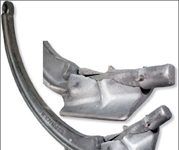
Broken Barnacle
The editors at Practical Sailor get a few reports of broken anchors each year. Typically, these are failed fluke welds on Danforth-style designs or bent shanks on plough-types. The experience of Ted Goodwin, whose 43-pound cast aluminum Barnacle anchor catastrophically broke on the Bahama Bank earlier this year, is fortunately quite rare. …

Marine Maintenance: Multi-purpose Cleaners Test
We tested a total of 15 products-including eco-friendly cleaners, concentrated formulas, degreaser-cleaners, and even one homebrew formula-from 11 manufacturers. While the test field wasn't inclusive of all the marine cleaners marketed as multi-purpose products, it did include a good cross-section of products from such companies as Star brite, Nautical Ease, Spray Nine, Yacht Brite, Biokleen, MDR, and Marykate. To get an idea of how they would stand up to real-world tasks, the products were tested on grease and grime on multiple surfaces-fiberglass, rubber, vinyl, and Formica. Practical Sailor also measured the pH balance of each test cleaner to find out which products were best suited for certain applications. With multiple data tables presenting the test findings, the report offers PS's picks for the best general cleaner, the best green cleaner, and the product that offers the best clean for the buck.
Chandlery: Practical Sailor Holiday Gift Ideas 2010
Every November, Practical Sailor editors celebrate the impending holiday season by reviewing gift ideas for the sailors on your list-or to add to your wishlist. This years wrap-up covers a range of interests and includes something to fit every budget. Looking for a new gizmo for the gadget junkie? Check out solar-powered, water-resistant Eton Soulra sound system, which can play most MP3 players and iPods, iTouch and iPhones while charging them. Or take a look at the SolarTech SolarPulse, a solar-powered device that charges and maintains a ship's batteries. The featured galley goodies from Galleyware and JetBoil will make practical gifts for those galley goddesses, and the Sailor's Solutions wireless remote switch for 12-volt devices is a good stocking-stuffer for creative boat owners and those looking for convenience.
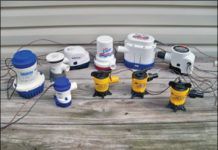
Marine Systems: Low-capacity Electric Bilge Pumps Faceoff
On the heels of its performance evaluation of electric bilge pumps rated at 1,600-gallons per hour (GPH) or more, Practical Sailor bench tests 10 smaller pumps rated at 1,500 GPH or less. These smaller centrifugal pumps are a good fit for small boats or as a primary bilge pump when installed in conjunction with a high-capacity bilge pump. When selecting the best overall pump from such a diverse group, a number of factors have to be considered to make the choice meaningful as it relates to the real world. In addition to performance, all of our top picks rated well for price, wiring, quality of construction, and warranty. Testers evaluated automatic bilge pumps and pumps without float switches from Shurflo, Attwood Marine, Johnson Pumps, and Rule Industries.
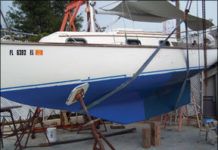
Marine Maintenance: Bottom Paint Test Results
In the interest of saving readers both time and money, Practical Sailor recently inspected six different sets of antifouling test paints that had been submerged for varying amounts of time in the waters of Florida and New England. Each fiberglass panel set was painted with more than five-dozen different bottom paints, including ablative antifoulings, hard paints, freshwater paints, eco-friendly bottom paints, and copper-free paints. This seasons report-we offer these in-depth looks at antifouling twice a year-reinforces what weve stated before: Most modern paints designed for salt water are effective against hard growth for 12 months, but some are clearly better slime fighters. Test paints included formulas from Interlux, Pettit Paints, Blue Water Marine, BoatKoat Laminates, Coppercoat, Sea Hawk, Epaint, Flexdel, and West Marine. The report breaks it down by performance, price, and niche so readers can decide which paint best suits their needs.
Mailport: October 2010
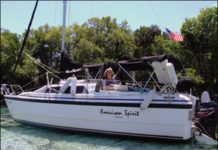
Letters to Practical Sailor, October 2010. Subjects include an owner's comments about MacGregor boats, digital maps, teak cleaners, props and adhesives.
High Capacity Electric Bilge Pump Test
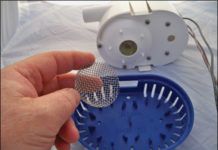
Not only do bilge pumps serve to clear incidental water, but they can also give the crew extra time when a boat is taking on water-time that can be spent repairing a leak, donning life jackets, or making a distress call. Practical Sailor tested more than a dozen centrifugal pumps from Attwood Marine Products, Rule/ITT Corp., Shurflo, and Johnson Pump. In this report, we look at the eight higher-capacity electric bilge pumps (output rated at or above 1,600 gallons per hour, or GPH) and see how they fared in exhaustive bench testing. A follow-up report next month will examine pumps rated for 1,500 GPH or less. Testers measured bilge pump flow rates and power ratings at two voltages and tested for compliance with the American Boat and Yacht Councils standards for dry run performance. In the final analysis, we picked the best bilge pump based on performance, warranty, wiring, and price.

A Year Later: Liquid Wax Test Results 2010
Gelcoat, particularly porous gelcoat, requires a more specialized wax than what youd use on your car. And while most of the liquid waxes we tested are liquid polymers designed specifically for gelcoat surfaces, we also tested some automotive waxes to see how theyd fare against the best marine waxes. These test products are designed to be the final layer of hull protection applied to a new boat or to a boat with oxidized gelcoat that has been thoroughly compounded and polished to a smooth, shiny finish. We tested liquid waxes from Star brite, Cajun Shine All, Collinite, 3M, Mothers, Restructure, Interlux, Imar, Nu Finish, Flitz, Yacht Brite, Woody Wax, Marine Shield, Meguiars, Flagship, Glare, West Marine, Turtle Wax, Island Girl, MP Pros, and Zaino Brothers.
The Best Sailing Gear of 2010
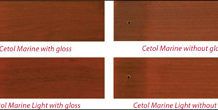
Practical Sailor offers the annual selection of Editors Choice products for the Gear of the Year 2010 lineup. We hope the list will guide you through the dizzying array of gear at the fall boat shows, or at least help you whittle down your wishlist for Santa. The roster covers a broad spectrum of products-from gadgets for measuring speed to a performance multihull built for speed-that have bested their peers in our tests. The lineup includes gear from Spinlock, Brion Toss, Lopolight, Selden Mast, DuBarry, Keen, Standard Horizon, and Mastervolt. It covers LED navigation lights, bosun chairs, footwear for sailors, and marine electronics. Boat maintenance products from Polymarine and Interlux also made the list.

Mailport: September 2010
Letters to Practical Sailor from our readers. September 2010's topics include barnacles, teak finish, knots for a bosun chair and LEDs.

Performance Sailing – Beneteau First 44 Review
The Beneteau First 44 Performance is not just another modern cruiser. In this Practical Sailor boat tour, we take a close look at the...


Latest Sailboat Reviews
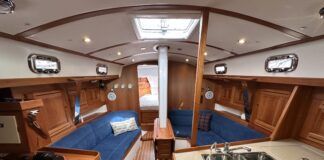
Tartan 395 Boat Review
Co-founded by Charlie Britton in the early 1960s, Tartan Yachts was established on the shores of Lake Erie in Grand River, Ohio. The original...