










Galvanized Coatings Test
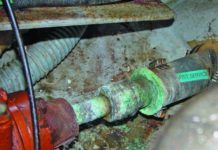
Corrosion attacks anchor chain long before it has reached the end of its useful life, and corrosion begins as soon the galvanized coating fails. Re-galvanizing can breathe new life into old chain, but it is not so simple or affordable as it used to be. As we saw in our most recent report on chain (see Practical Sailor June 2014 online), some of the high-tensile grades require specialized skills to galvanize, and others can't be galvanized at all. Even if galvanizing is an option, removing rusty old chain from the boat and delivering it to the galvanizer can make moving pianos seem like a cinch.
Estimating Galvanized Coating Thickness
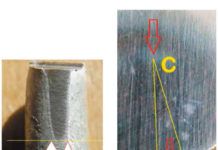
There are no industry standards for how thick a galvanized coating should be on an anchor chain or mooring chain, and manufacturers don't publish this information. Fortunately, with a bit of sleuthwork, you can determine just how good the galvanized coating is on your chain by carrying out a couple of tests on some sample links you can obtain from your local chandler.

Survey: Mainsail Track Hardware
Its been almost 10 years since Practical Sailor weighed in specifically on mainsail track hardware. (See Practical Sailor, Feb. 1, 2005 online) At the time, we offered a summary of the products designed to manage what we termed the three Ss of mainsail handling-setting, shortening, and striking. In that article, we focused on the gear used with full-battened mainsails, which were becoming increasingly popular among a broad spectrum of sailboat owners then.
UV Protection for Dyneema
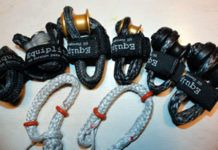
In your recent review of shackles (PS, September 2014), you tossed in a statement about recoating the soft shackles bimonthly with a UV protectant. Why? And what part of the shackle needs treatment? If Dyneema loses its UV resistance that readily, its news to me. Do my Dyneema lifelines need similar treatment?
Top Whipping Twines
The term whipping twine is somewhat misleading, suggesting a single purpose for a product with seemingly endless uses. These are the thin-woven strands that all hand-sewing projects depend upon, and in the process of exploring various stitching projects, weve gone through spools and spools of it.

Higher Loads Call for Careful Installation
Rope clutches are a great innovation that can help sailors better control the lines that lead aft to the cockpit and those that cluster around the mast base. But as with many good things, there is the risk of over-doing the benefit.

Break and Break Again
All lines were broken once to determine approximate breaking strength without a stitched eye. A simple chain fall and load cell provided a means of pulling test samples up to 5,000-pound loads. The samples were then sewn or knotted into dog bones 6 to 8 inches long with an eye on each end, and the load was again applied until failure. This allowed the testers to compare breaking strengths with and without a stitched eye or knot. The test was broken into two parts, laboratory and field testing.

Other Stitching Techniques that Work Well
We principally looked at three means of seizing an eye without splicing-basting, round-stitching, and seizing-used alone and in combination. Round stitching is described in the accompanying main article. Here are some of the other stitching patterns we tested.
Getting to the Top
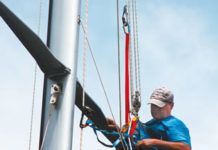
There are times when getting to the top of a mast is a far easier solo proposition than hunting for help. The first time I saw a middle-aged man go it alone, he hoisted a 3:1 block and tackle, rigged with 5/8-inch line, up a jib halyard. At the bottom end of the rig, he attached a bosuns chair. He simply pulled on the haul line, hand over hand, to the elevation he needed, then doubled the haul line through a convenient part of the chair and tied it off. With the 3:1 purchase, he was muscling one-third of his weight.
Chandlery: October 2014
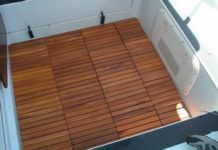
The typical production sailboat comes with a molded fiberglass tub for a cockpit well, complete with an uncleanable nonskid sole. It looks dirty an hour after cleaning and debris grates under foot. Some boat owners install Dri-Deck or something similar, which can be torture to barefeet and makes the cockpit look like a shower stall. A more attractive option is beautiful owner-built teak grating; unfortunately, fabricating one of these requires considerable effort and skill. We found a more practical solution for us non-carpenters: do-it-yourself decking that costs about $7 per square foot and takes about an hour to install. The DIY Patio Deck company sells pre-assembled, snap-together tiles that resemble traditional grating. For our test boat, we chose eight-slat acacia plantation hardwood exterior tiles; many wood types and styles are available.

Why Is This 46 Foot Sailboat So Cheap? Hunter 460 Review
Is the Hunter 460 really one of the best-value cruising sailboats on the used market? In this video, we take a deep, honest look...


Latest Sailboat Review

Irwin Citation 38 Used Boat Review
As the largest of the Citations, the Irwin Citation 38 is probably the best looking, handling the high-sidedness better than her smaller sisters. The boat has three windows set in the sheer stripe on each side, so they are not very noticeable. Like the other Citations it is distinctly modern-looking not pretty, but not ugly either.