



Diesel Fuel System Maintenance Best Practices
Dont look to tank vent filters and fuel additives to solve real fuel-system problems. They are only ancillaries to regular fuel system-management and maintenance, improving reliability even further. Here are some fuel-system management best practices that we recommend.
Keeping Fuel, Water in their Place
The Environmental Protection Agency (EPA) and the American Yacht and Boat Council (AYBC) are requiring devices that prevent foam and splash during fueling and operation from reaching the carbon canister. If sea water did reach the fuel filter, it could destroy filter effectiveness and compromise venting capacity.
Marine Water Heater Test
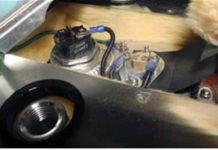
In the December issue PS evaluates four water heaters that are new or have been significantly updated since our last test in 1999. Water heaters are one of those silent heroes that rank high on the list of comforts on a boat. The test field included the Kuuma 11842, an 11-gallon tank; the stainless-steel Quick Nautique BX2012; Raritans 1706; and the 30-liter Compact from Sigmar Marine. Testers considered each heaters efficiency (using AC and engine-driven power), power consumption, construction quality, and ability to keep hot water hot.

Mix of Water, Amps, and Heat Calls for Caution
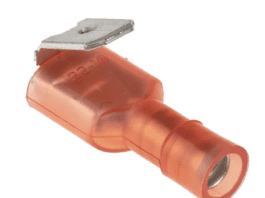
It is surprising to see equipment with no moving parts carry such an array of safety warnings. But any time water and higher-voltage AC electricity are mixed, there are details worth thinking about. The risk of shock can be lessened through a firm commitment to three-conductor wiring that follows the American Boat and Yacht Councils guidelines. This includes maintaining the continuity of the green grounding that links the boiler and metal housing to the boats ground. Strict adherence to high-quality crimp connectors, appropriate wire gauge, and care in keeping the neutral and hot wires consistent with the vessels and docks power supply are paramount.
Installing Water Heaters
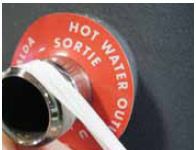
The physical installation of a water heater may seem pretty straightforward, but the devil is indeed in the details. It starts prior to purchase with a search for adequate space thats relatively near the engine and vertically as low as possible. Next is bonding in a well-reinforced surface to mount the water heater onto. The empty tanks are relatively light, but if you add 45 to 88 pounds of water, you can see why a sound support base is important in a rough seaway.

Construction Quality Draws Testers Attention
Our testers began the evaluation with a close inspection of how each unit was assembled and what materials were used in their manufacture. The test field included stainless-steel, aluminum, and mild-steel boilers. When it comes to water tanks in sailboats, stainless-steel is favored over the other two metals, so we naturally asked ourselves why the water tanks in water heaters would be any different? To answer the question, we embarked on a series of bench tests and a long-term corrosion test to see how stainless steel, aluminum, and mild steel water heater tanks handle use in a salt-laden bilge-like environment.
The Fight Against Head Odors Continues
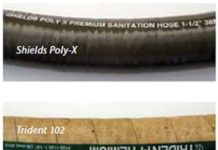
A few years ago, we launched a series of holding tank odor tests, including evaluations of holding-tank vent filters and sanitation hoses. After 30 months of testing, weve reached some solid conclusions on the hoses and vent filters. The sanitation hoses we tested were Trident Marines 101/102 EPDM hose; SeaLands OdorSafe Plus, a PVC and acrylonitrile butadiene rubber hose; Raritan Engineerings butyl rubber Sani/Flex Odor Shield; and Shields Marines Poly-X polyurethane sanitation hose. The four holding-tank vent filters we tested were our homemade system, Dometic SeaLand SaniGard, Big Oranges 5/8-inch filter, and the Vetus No-Smell NSF16.
The Results of our Mini Test Tank Autopsies
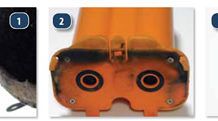
When we wrapped up the testing of the miniature holding tanks after 30 months, we were tempted to just pitch the whole lot in the dumpster after draining their contents, but we thought taking the faux holding tanks apart and examining the components up close might yield some interesting findings. (The things we do in the name of product testing-yuck!) Heres a breakdown of testers observations.
Tender Tows: What A Drag
How much does towing the tender slow me down? Also, long or short painter? Outboard down, up, or on the rail? Obviously, there are an infinite number of combinations of sea state, speed, dinghy type, and so on to consider, but I know how you guys love your dynamometers and strain gauges. The towability of tenders should be another aspect to your ratings.

Updating Onboard Electronics with N2K
A sailboat is no place for unnecessary complexity, which was the direction PS contributor Dan Corcoran was headed on his Beneteau 393, when it came to how data was passed between various marine electronics. The worst offender was a spaghetti network of point-to-point wiring that utilized the familiar National Marine Electronics Association (NMEA) 0183 standard. A few years ago, he embarked on a gradual replacement of NMEA 0183 wiring and components with the new standard, NMEA 2000. Here he offers his account of the upgrade and answers the oft-asked refit question: Was it worth it?

Small Boat, Big Keel Why This 27 Footer Works
What makes a small sailboat truly seaworthy? In this video, we take a deep dive into the Pacific Seacraft Orion 27, a rugged, long-keel...



Latest Sailboat Review
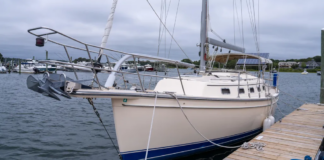
Island Packet Estero Used Boat Review
Florida-based Island Packet targets a relatively narrow niche, so the toughest competitors to its new boats are often older Island Packets. Introduced in 2010, the 36-foot, shoal-draft Estero is the company’s latest attempt to introduce a distinctive model that doesn’t stray too far from the company’s proven formula for success: moderate displacement, full-keel cruisers designed to be lived on, sailed far and in comfort, and endure the bumps, scrapes, and storms that cruising boats inevitably encounter. After sailing the Estero on Florida’s Sarasota Bay and inspecting its interior, construction, and systems, Practical Sailor testers noted that the shoal-water cruiser will appeal strongest to Island Packet fans who’ve been waiting for a shoal-draft, easy-to-sail boat that compares to the IP37 in terms of interior space. These strengths will be most apparent on intracoastal or riverine adventures like the Great Loop.