








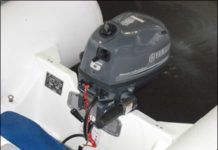
Yamaha Updates F-series Outboards with New F4 and F6
Yamaha recently updated two of its portable outboard engines, the F-series four-horsepower outboard and 6-horsepower engine. We reviewed the original F4 and F6 in 2003. Both updated designs use an 8.5-cubic-inch engine block and both weigh 60 pounds, which marks a weight loss for the F6 but an increase for the F4. Both also have improved stowage capacity and demonstrated solid performance. The report compares the new outboards to the 55-pound Suzuki DF4, the top contender in Practical Sailors 2003 Outboard Engine test.
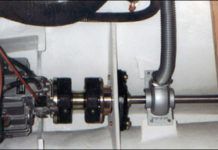
Fast Flow Pump: The Name Says It All
Originally designed for pumping operations on land, the Fast Flow engine-driven pump has a tremendous pumping capacity, with the ability to move nearly 5,000 gallons of water per hour (at 800 rpm). Thats nearly five times the amount of the average electric bilge pump. The Fast Flow Pump comes in a variety of sizes, but a close look at installation and fittings is necessary to determine if the pump will fit on a particular boat.

Antifoulants for Propulsion Systems
In our search for the Holy Grail of prop paints, Practical Sailor testers delved into specialized multi-part coating systems. In the spring of this year, we had Matrix Engineering Concepts Mussel Buster Prop Coating applied to the propeller of our Union 36 test boat. Prior to that, the prop had been the test platform for Oceanmaxs Propspeed, which we featured in the November 2006 issue. In this report, we take a look at the newer product, Mussel Buster, and its application, and will weigh its pros and cons against other prop coatings, including Propspeed, Interlux Trilux Prop & Drive, and Pettits Alumacoat SR.
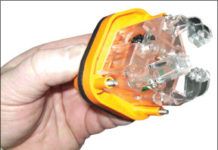
SmartPlug: Safer Power
According to multiple reports, most AC electrical fires occur at the boats shorepower inlet. To address this and other shortcomings of the standard twist-type boatside connection, SmartPlug Systems developed a new AC shorepower system that the company hopes will become the new marine standard. Loose and corroded connections are most often the culprits when overheating occurs. Corrosion typically results when moisture gets in at the plug-inlet connection, while arcing-which in turn leads to pitting, scorching, and heat build-up-is partially due to the shape and small contact area of the connector pins.

Galley Lighting
When we last dropped in on the realm of interior lighting (Practical Sailor January 2009), we looked at light emitting diode (LED) replacements for incandescent bulbs in a traditional bulkhead-mounted reading light. The test revealed some significant advances in LED technology, and those advances continue today at a lightning pace. Responding to the call for energy efficiency, LED makers are packing more and more luminosity output into smaller and smaller packages. As our reading light test showed, LED technology has developed to a point where finding LED "bulbs" that can provide enough illumination for reading is no longer an issue. Results from that comparison prompted PS to consider whether another key light on our boat-the galley light-could soon go the way of the incandescent reading light. Unlike reading lights, a galley light needs to cast a very wide beam angle to illuminate a large area, something LEDs alone are not very good at.
Details Distinguish the Best Wi-Fi Antenna for a Sailboat
Practical Sailor looked at three Wi-Fi antennas suggested by readers: the Bad Boy Xtreme from Bitstorm, Rogue Waves Wave Wi-Fi from GeoSat Solutions, and The Wirie, developed by cruising couple Mark Kilty and Liesbet Collaert. All three are marketed specifically to boaters, and they represent the two principal types of devices that users will find: USB-type units that plug into computer or laptop USB ports and Power over Ethernet (PoE) bridges that network via your computers Ethernet port to provide a pathway to the Internet.
Marine Inverter-Chargers Test Part 2
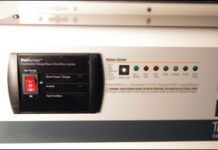
The Practical Sailor February 2010 issue launched our test of marine inverter-chargers with a look at the inverter capabilities of units from six manufacturers. This report compares the battery charger functions of the inverter-chargers from Charles Industries, Magnum Energy, Mastervolt, ProMariner, Tripp Lite, and Xantrex. Our recommendations differ based on an owners needs. One unit is excellent for sailboat owners with larger AGM or gel-cell batteries who plan to expand their systems down the road, while another is better suited for those who have no expansion plans, offering a combination of lower price, features, and sophistication.

New Clear, No-rust Propane Tanks
Unlike aluminum or steel propane tanks, clear composite tanks allow users to see how much fuel remains, a nice feature in an LPG tank.Following our year-long evaluation of Ragasco’s 9-kilogram one-piece blow-molded tank, Practical Sailor tested the American-made Lite Cylinder, a two-piece composite tank. The two tanks have nearly identical dimensions, and may be a challenge to fit in a standard propane locker designed for metal tanks. In fire tests, composite tanks melt rather than “explode” like metal tanks, giving them a slight edge in safety, and the non-metal tanks resist rusting, a common problem of aluminum LPG tanks.
Portable Sailing Tools for Tracking and Tuning Boat Speed
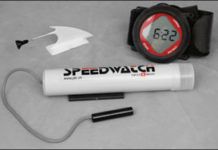
Practical Sailor recently spent a week experimenting with three handheld products geared toward performance sailors. These portable tools are for tracking and improving sailboat speed. Unlike conventional portable GPS units, which have relatively small displays and deliver a wide range of navigational data, these products display large digits that can be read from a distance, and the view options are limited to those that relate exclusively to speed and racing performance. Practical Sailor tested the Speedwatch and two GPS units, Velocitek SC-1 and SpeedPuck. These instruments make good training tools for young sailors and will give all around-the-buoy sailors the ability to quickly quantify performances.
Which is the Best Marine Inverter-charger for Your Boat?
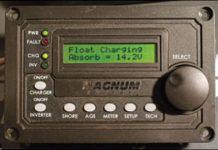
To decide which marine inverter-charger best meets your onboard power demands, first consider how it will used, how and where it will be mounted and what is required to fit with your electrical system. After testing multiple marine inverter-chargers, Practical Sailor offers this report on the units’ inverter capabilities and a follow-up review will report on the units’ charger functions. There are two classes of marine DC inverters: true sine wave (TSW) and modified sine wave (MSW). Each uses a different method to produce AC voltage. Practical Sailor evaluated modified sine wave units from Charles Industries, Magnum Energy, ProMariner, and Tripp Lite, and true sine wave units from Magnum, Mastervolt, ProMariner, and Xantrex.

This “Bulletproof” Cruiser Has a Serious Weak Spot Caliber 40 LRC...
If you’re shopping for a serious cruising sailboat, the Caliber 40 LRC is often described as “bulletproof.” Heavy displacement, huge tankage, conservative construction, and...


Latest Sailboat Review

Union 36 Used Boat Review
While not the best boat for light-air sailing, the Union 36 is a good sailboat for the bluewater cruiser. It wont get you there fast, but it will get you there comfortably and in one piece. The boats teak decks and lavish use of interior wood is attractive but requires much upkeep and maintenance. A product of the Taiwan-U.S. boatbuilding industry, the Union 36 is a heavy-displacement, full-keel, cutter-rigged double-ender designed for ocean sailing. The Union 36 is nearly identical to several other boats built during the same period: the Hans Christian 36, Mariner Polaris 36, and the EO36. According to well-known naval architect Bob Perry, the Union 36 and its cousins are all based on the design of a 34-footer that Perry was commissioned to create back in the early 70s.