







A Trio of Sailboat Lighting Options
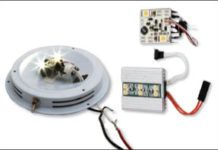
One of the fastest moving targets in boating equipment is LED lighting. While researching products for a larger test, we stumbled across three products that struck us as potential stocking-stuffers worthy of mention this month. The Lightship Solar Light, manufactured in China and introduced by Simply Brilliant in the fall of 2006, weighs only 5.5 ounces and sells for $15. Its powered by the sun, but stores that energy in a rechargeable, nickle-metal hydride (NiMH) battery. The battery, circuitry, 2x2-inch photovoltaic panel, and three LEDs (two white, one red) that produce the light are all mounted to a polycarbonate plate that fits snugly inside a housing of the same material, with a silicone O-ring to keep out moisture. That housing has three legs fitted with small suction cups, enabling the Lightship to stick easily to the underside of a hatch or inside of a portlight. Wed like to see the product modified for easier mounting in more locations.
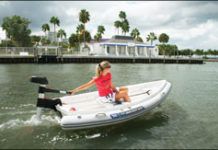
The future of marine propulsion? Practical Sailor sea-trials the portable Torqeedo Travel 801L electric...
Three things attracted us to the long-shaft Torqeedo: It is a light motor; it is a portable motor; and it is an electric motor. The dream of being able to easily tuck the daysailers engine in the cuddy cabin, or tool around silently in our dinghy, is alluring. And the Torqeedos detachable, rechargeable battery makes that possible. Unfortunately, two of the features that we find so attractive are also potential trouble spots.
Practical Sailor Tests Spray-On Protection for Electronics and Electrical Systems
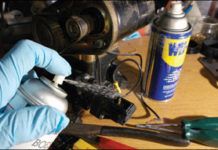
Seawater and electricity love each other with a fatal attraction, and when they break barriers to get to each other, we suffer from the destruction left in their wakes. Enter aerosol corrosion inhibitors. If you spray sensitive electrical circuitry-including printed circuit boards-with the aerosol rust inhibitors we tested, theyll prevent corrosion from interrupting circuits and water from creating circuits where they arent wanted. Our test lineup included Boeshield T-9, Corrosion Block, CorrosionPro Lube, CorrosionX, CRC Heavy Duty Corrosion Inhibitor, CRC QD, LPS 1, Strikehold, TC-11, WD-40. The TC-11 was our top pick.
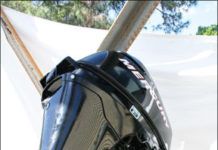
Practical Sailor Tests Manual and Electric Outboard Engine Brackets
We used a four-stroke Honda BFP 9.9 horsepower outboard (92 pounds) and a Mercury ME 9.9 (84 pounds) four-stroke to test eight engine brackets that can be used on sailboats. Testers figured the 9.9 engines to be the middle road between the commonly used 5 horsepower and 25 horsepower. Five manufacturers responded-Fulton, Garelick, Marine Tech (Panther), JR Marine, and Garhauer-with eight different brackets, four manual and four electric, all rated for four-stroke 9.9 engines. The main test criteria were ruggedness, quality of materials and workmanship, ease of assembly and mounting bracket on a boat, clarity of instructions, ease of mounting an engine on the bracket, ease of operation, and price. For the purpose of comparison, brackets can be divided into three categories: fixed or stationary outboard mounts, retractable manual lift engine mounts, and electric trim and lift/tilt mounts.Choosing the mounting bracket thats best for a certain sailboat will depend on the horsepower and weight of the outboard to be used, the length of its shaft, and where it is to be mounted.Among testers top picks were the Garelick pump-action 71092 for best manual engine bracket and the pricey Garelick 71095 for the best electric bracket. For the budget-minded sailors, we recommend the inexpensive Fulton MB1820 or Panther 40.

Oil and Fuel Filters
One Practical Sailor contributor, the manager of a custom boatbuilding and repair/refit yard, had this reply: "Not all filters are created equally: There are differences from filter to filter. We see no problem using after-market filters whose reputations are proven: brand names such as Fram (makes filters for Honda, Chrysler, and others), NAPA, Wix (Wix actually manufactures NAPAs Silver and Gold series filters), Fleetguard (owned by Cummins Filtration), and Baldwin to name a few.
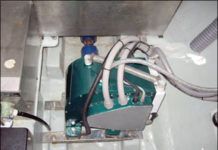
Propulsion of Tomorrow
There is a lot of dispute about the benefits of diesel-electric propulsion over traditional diesel, and comparable numbers are hard to come by. Could you arrange a test? Diesel-electric benefits in charging house batteries and powering the fridge are obvious, but propulsion is less so. What I would like to see is a chart of the kinetic energy of each system in the X-axis, and in the Y-axis, consumed fuel. That ratio should be the value that counts. Of course, a range of appropriate propellers would also have to be tested.

9.9-horsepower Outboard Engines Put to the Test
Todays 9.9-horsepower four strokes pack just the right amountof punch for a portable dinghy engine. The downside, as you may have guessed, is their hefty weight. The three Practical Sailor tested range in weight from 82 to 92 pounds. All are two-cylinder, water-cooled engines that take about a quart of oil, and all are pull-start models, with chokes that need to be used only when the engine is cold. All come with a standard 3.1-gallon plastic fuel tank, a fuel hose, and an aluminum propeller. In terms of propulsion, none of these portable outboard engines has it all. So after evaluating how easy each was to operate, transport, store, and maintain, we based our recommendations on weighing each engines pluses and minuses.

Portable Marine Refrigeration Test
One of the advantages of a compressor-driven portable refrigerator is that it can also serve as a freezer. And compared to thermo-electric coolers, they require fewer amps to do the job. Cruising boats need to be energy efficient, so amp consumption with a 12-volt power supply was one of the key factors Practical Sailor looked at in this test. As in any marine refrigeration test, insulation is a key factor in efficiency, so our comparison also tried to single out the best insulated units. Ultimately, the linear compressor system used in the Engel and Norcold refrigerator/freezers proved to be more efficient.
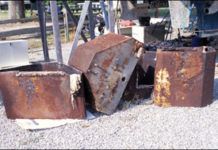
Diesel Fuel Tank Replacement
If given a free hand at design, material selection, fabrication and installation, what would Practical Sailor ideal replacement diesel fuel tank look like? The ideal diesel fuel tank installation should possess, above all else, access. A boat fuel tank that is completely and permanently buried beneath or behind fiberglass, timber, insulation or joinerwork is a tank cannot be inspected for corrosion, chafe, structural damage or leaks. Fuel tank baffles, inspection ports, and properly insulated fittings (in the case of a metal tank) are essential. Diesel tank contamination is inevitable, so any tank design for a cruising sailboat must take that into consideration.
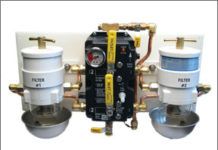
Chandlery: Filter BOSS
For people concerned about losing fuel flow to their sailboat auxilliary engine while underway due to a clogged fuel filter, the FilterBOSS looks like a promising solution. The FilterBOSS can be ordered as a stand-alone unit ready to be plumbed into your existing fuel system ($950), or as part of a pre-mounted system containing your choice of two Racor filters (various models available). The unit we received for review was the 500FG Dual Filter Package, which includes a FilterBOSS with wiring harness and two Racor 500FG filters mounted and connected with rigid tubing on a pre-drilled, composite panel ($1,565). It features Type 1 copper tubing (.035-inch wall thickness), Bi-Lok CA360 grade brass fittings, heavy-duty valves (with Viton seals), and a Con-X weather-tight cannon plug for the wiring harness. The system also allows a convenient way to polish your fuel and rid it of debris that may clog your fuel system

This “Bulletproof” Cruiser Has a Serious Weak Spot Caliber 40 LRC...
If you’re shopping for a serious cruising sailboat, the Caliber 40 LRC is often described as “bulletproof.” Heavy displacement, huge tankage, conservative construction, and...


Latest Sailboat Review

Union 36 Used Boat Review
While not the best boat for light-air sailing, the Union 36 is a good sailboat for the bluewater cruiser. It wont get you there fast, but it will get you there comfortably and in one piece. The boats teak decks and lavish use of interior wood is attractive but requires much upkeep and maintenance. A product of the Taiwan-U.S. boatbuilding industry, the Union 36 is a heavy-displacement, full-keel, cutter-rigged double-ender designed for ocean sailing. The Union 36 is nearly identical to several other boats built during the same period: the Hans Christian 36, Mariner Polaris 36, and the EO36. According to well-known naval architect Bob Perry, the Union 36 and its cousins are all based on the design of a 34-footer that Perry was commissioned to create back in the early 70s.