




Practical Sailor

  • Subscribe
  • Free Waypoints e-letter
  • Customer Service


Forgot Your Password?

  • Home
  • Sailboat Reviews

    Articles

    Boat Review: Marshall 22 Catboat

    The Pros and Cons of a Plumb Bow

    Boat Test: The Last Sabre 34 Mark II

    The San Juan 24

    Used Boat Review: Gulfstar 36

    Seawind 950: Some Assembly Required

    Sailboat Reviews

    Unbiased, detailed reports on dinghies, daysailers, racer-cruisers, cruising sailboats, and multihulls. Insights into boat construction and design. Solid advice on buying a sailboat.

    Sailboat Reviews - Index

  • Marine Electronics

    Articles

    Field Testing Kannad, McMurdo, and Mobilarm MOB Beacons

    Best Mid-priced Marine Stereos

    Garmin BlueCharts Mobile Sea Trail

    Where Credit Is Due: April 2013

    DeLorme inReach vs. Iridium Extreme

    Marine Electronics

    Extensive tests of GPS chartplotters, fishfinders, VHF radios, radar, AIS, navigation software, and handheld gadgets. Professional guidance on installing and operating high-tech sailing gear.

  • Sails, Rigging & Deck Gear

    Articles

    Anchor Tests: Bending More Shanks

    Mainsheet Tackle Bench Test

    Shockles Snubber Test

    Summer Sailing Gear

    Mailport: June 2013

    Sails, Rigging & Deck Gear

    Independent tests of halyards, sheets, furlers, anchors, snatch blocks, shackles, ropes, winches, vangs, cleats, booms, masts, and standing rigging. Expert guidance on choosing a mainsail, jib, or spinnaker.

  • Systems & Propulsion

    Articles

    Fuel-vent Filter Test Resources

    The Fine Art of Sensing the Wind

    DC Watermakers Head-to-head Test

    Stainless-steel Hose Clamps

    Propane-powered Propulsion

    Systems & Propulsion

    Comprehensive comparisons of pumps, batteries, solar panels, wind generators, inverter-chargers, watermakers, propellers, toilets, engines, and other marine systems. Tips on ship-shape installations.

  • Boat Maintenance

    Articles

    Mailport: May 2013

    Dehumidifier Field Tests

    Anti-Mildew Weapons

    Mailport: June 2013

    Where Credit Is Due: May 2013

    Boat Maintenance

    Bottom paints, topside paints, varnishes, waxes, protectants, cleaners, metal polishes. If it comes in a bottle or can, PS has tested it. Proven methods to protecting your floating investment.

  • Belowdecks & Amenities

    Articles

    Dehumidifier Field Tests

    Bends and Breaks: Anchor Shank Strength

    Portable Marine Toilets for Small Boats

    Portable Chairs for Sitting Under Sail

    Belowdecks & Amenities

    Our top picks in galley stoves, cookware, cabin lights, refrigeration, and entertainment systems can help turn your cruising boat into a home. Creative solutions to the challenges of living aboard.

  • Personal Gear & Apparel

    Articles

    Mailport: April 2013

    Kids’ Life Jackets for Active Sailors

    Summer Sailing Gear

    Gift Ideas for the Sailing Family

    Curing the Hardened Sole

    Personal Gear & Apparel

    Thorough test reports on binoculars, boat shoes, foul weather gear, hand-bearing compasses, sailing knives, flashlights, headlamps, sunglasses boots, and anything else that belongs in a skipper's seabag.

  • Safety & Seamanship

    Articles

    Crew Learns Along the Way

    Kids’ Life Jackets for Active Sailors

    Practical Tips for Survival at Sea

    Mailport: June 2013

    The Science of Safety

    Safety & Seamanship

    Our testers evaluate life jackets, flares, life rafts, harnesses, man-overboard strobes, medical kits, seasickness aids, and emergency devices. Tips on marine safety gear, boat-handling, and emergency procedures.

  • Mailport & PS Advisor

    Articles

    Mailport: March 2013

    Anti-Mildew Weapons

    Mailport: June 2013

    Indoor Sailboat Refinishing

    Where Credit is Due: March 2013

    Mailport & PS Advisor

    Insightful letters from sophisticated sailors. Do-it-yourself projects and reader feedback on a wide range of boats, marine manufacturers, and sailing products.

  • Inside Practical
    Sailor Blog

Features

September 8, 2011

Story Tools

  • Share |
  • E-Mail to a friend
  • E-Mail to the editor
  • Post a Reader comment
  • Printer Friendly

A Do-It-Yourself Winter Cover Frame

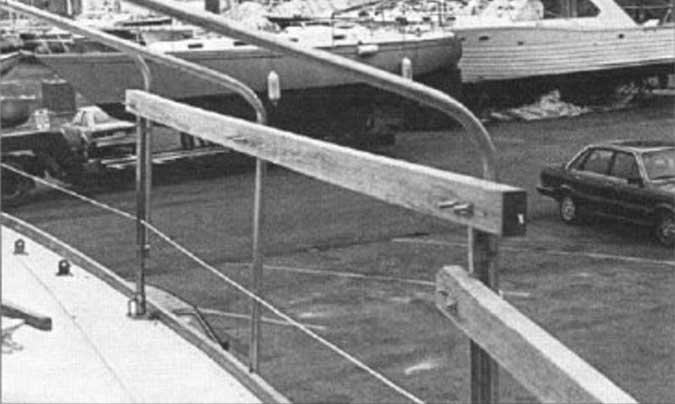
Above: The fully assembled conduit frame ready for covering took about four hours to construct the first time can be disassembled in about an hour and reassembled in two. Originally, the frame was built with additional pieces of conduit running fore and aft under the arches on each side The longitudinal proved unnecessary and were eliminated.

Why is it that folks who tuck their dogs into fancy hand-knit sweaters seem to be the same ones who leave their boats unprotected through northern winters? Snow, ice, air pollution, and sunlight, combined with alternating periods of freezing and thawing, can age a boat must faster in the winter months than in the more moderate climate of summer.

Why is it that folks who tuck their dogs into fancy hand-knit sweaters seem to be the same ones who leave their boats unprotected through northern winters? Snow, ice, air pollution, and sunlight, combined with alternating periods of freezing and thawing, can age a boat must faster in the winter months than in the more moderate climate of summer.

Perhaps the reason why many fiberglass boats are left uncovered is that their owners remember the problems of building a wooden frame over their wooden boats of years gone by. A complicated framework of 2x4 trusses and furring strips is as expensive and time-consuming to build as it is difficult to store for the summer.

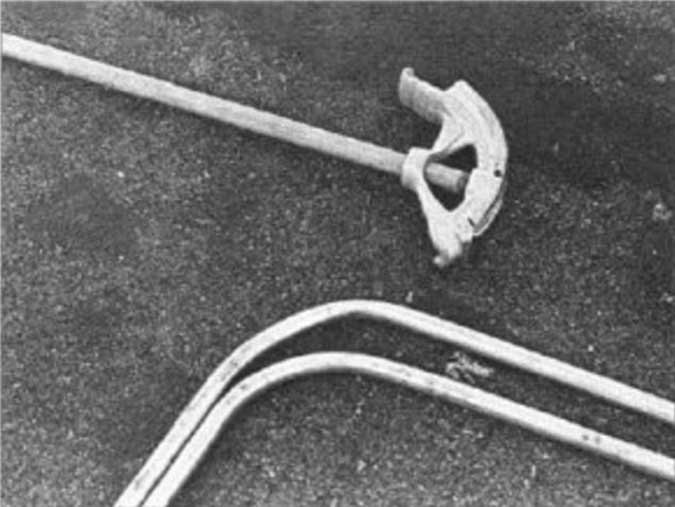
There is an alternative to the wooden frame, however, and to the poor practice of using the mast for a ridgepole. A durable, lightweight and inexpensive framework of thin-walled steel electrical conduit can be easily assembled in less than a day. Best of all, it is reusable, easy to store, and can be built with only a hacksaw (or tubing cutter), a screwdriver, a tubing bender, and a wrench.

Conduit, also known as EMT (electrical-mechanical tubing), is readily available from building and home centers as well as electrical supply outlets. The frame for a 30- to 35-foot boat will take about twenty 10-foot lengths of 3/4-inch l conduit (about 7/8 inch OD),1 a 20- to 25-footer might require ten or twelve lengths of 1/2-inch conduit. In addition, you will need a few conduit connectors, a couple dozen hose clamps or gizmos called Kover Klamps, and a roll of duct tape. The total cost for the frame materials for a 30-footer runs about $100.

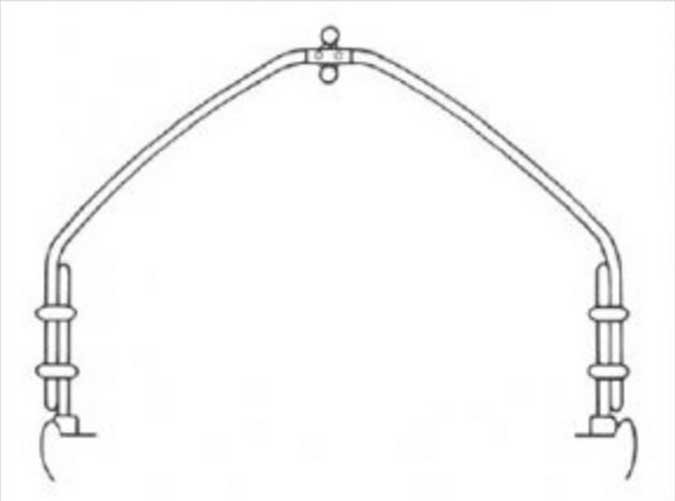
Two curved risers, attached to the bow pulpit and stern rail, support a fore-and-aft ridgepole made of straight lengths of tubing. The ridgepole is supported along its length by a series of arches, made from two lengths of tubing connected at the top. The arches attach to the lifeline stanchions, giving the frame a great deal rigidity. When laying out the arches, try to allow enough headroom to permit passage fore and aft on deck with the frame and cover in place. If the mast is left stepped (not recommended), run the ridgepole off-center to one side of the mast.

The photo above should help you to determine the proper dimensions and proportions for your boat. If you boat is larger than about 35 feet, or if anticipate a great deal of snow, you may want to add additional uprights between the deck and the ridgepole.

Plastic Tarpaulins

At one time, a custom-fitted canvas boat cover was a hallmark of the well found yacht. With the widespread growth of yachting came cheaper alternatives such as covers made from short ends of awning material or old sails. Next it was clear polyethylene-fragile, degradable in sunlight, and rarely tough enough to last through an entire winter.

Today, the best answer is one of the readily available covers of polyethylene reinforced with polypropylene. There are dozens of these covers on the market, some good and some not so good. Typically such covers run from about 6 or 7 cents up to 15 or 20 cents per square foot. In a somewhat higher price range, Griffolyn makes some rugged and well-finished tarps ranging in price from 10 to 40 cents per square foot, depending on the size and type. Price is not always a reliable guide to quality, but tarps marketed specifically as boat covers are generally better than the typical department-store and maiN order variety. The cheapest tarps will probably last a full season if well protected; the better ones should last for several years. If you are purchasing one of the better tarps through the mail, it would be wise to ask for a sample swatch before ordering.

The secret to a long life for a plastic cover is to stretch it tightly over the frame and around the hull. Polyethylene tarps can't stand much flapping and flogging and will quickly succumb to fatigue and abrasion. This may mean an occasional trip to a boatyard to routinely check the lashings. Also make sure that the cover is protected from sharp points and rough surfaces. Scrap carpeting or old towels taped to protrusions will help. Conduit is smooth enough not to need padding; it is the connectors, bolt heads and other sharp corners that do the damage.

When a cover begins showing signs of wear (thin spots where light shines through, for instance) it can be preserved with strips of good quality duct tape. Duct tape will stick well to a plastic cover-at least for one season-if it is rubbed on well.

Some companies have begun to market ventilators to be installed in their covers. In our experience, we find that a polyethylene cover gives plenty of ventilation without the work and cost of installing vents. Most plastic has pinhole-sized "vents" (or it will have after a few months use). And, of course, there is no need to ventilate the cover if you leave the boat underneath buttoned up tight as a drum.
Read More on These Topics
  • Boat Maintenance

Comments (5)

Another option: Our 30' sailboat winters moored at our Chesapeake Bay house, mostly covered with a 20' long tarp over the lowered boom (since 2009). The heavy white tarp (best we found on eBay)costs <$60, lasts 2 yrs., accepts the needed grommets and, @ 8.5 ft. wide, also works as a sun shade with bamboo poles rolled each end. At each tarp corner, nylon straps with bulky figure-8 knots distribute the pull of the taunt tie-downs on the grommets, plus ~24" of the strap is glued (or sewed) to underside of tarp (in straight line of the pull). The cut-out of the tent ahead of the mast depends upon the cabin/ deck shape; ours had to allow sunlight to the 2 solar vents. John Reeves Mathews, Va.

Posted by: John R | November 13, 2012 2:10 PM    Report this comment

There are several issues with the type of cover described here: 1) the plastic tarp will rub the topsides and mar the finish, no matter how tight you make it the small movements induced by wind will take their toll over the winter season. 2) any sags in the tarp will create a pocket that will grow with rain, snow and ice accumulating. These will become quite heavy and potentially destructive very quickly so the cover must be checked weekly and any pockets dumped out. 3) grommets in plastic tarps should not contact the hull, again they will mar. Many grommets aren't strong enough and might pull out. Make sure you use heavy duty tarps. Cheap ones won't stand up to even one season of fierce winter winds.

In the end, a well constructed fitted cover made of TopGun or heavy sunbrella or other suitable canvas is a good investment if you plan to own your boat more than 5 years. Been there, didn't want to spend the money for one, but now glad I did.

Posted by: LDH | November 4, 2012 5:18 AM    Report this comment

I built a pvc frame for my 22' sailboat. Easy/Inexpensive/worked great!

Posted by: Neil K | October 3, 2012 10:24 AM    Report this comment

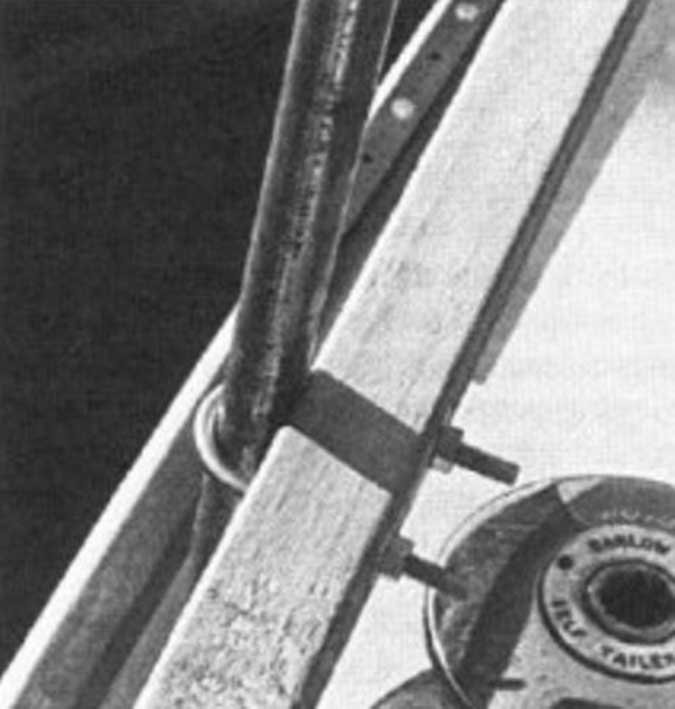
It occurs to me that you could also eliminate the inflexibility and some u-bolts, as well as the bulk of the 2X3's, by utilizing 4 way conduit connectors to allow for horizontal runs of conduit between the stations.

This also allows the plastic to rest directly against more conduit surface, instead of leaving an (admittedly), small gap because the 2X3's are bolted inboard of the stations.

Lastly, using conduit for the horizontal runs would allow you to bend it to follow the shape of the boat.

Posted by: JOHN H | September 9, 2011 7:02 PM    Report this comment

Is there some reason metal conduit is used instead of schedule 40? The plastic conduit would not rquire bending

Posted by: KENT K | September 9, 2011 6:54 AM    Report this comment


Add your comments ...

New to Practical Sailor? Register for Free!

Already Registered? Log in

Forgot your password? Click Here.

Advanced Search

Current Issue

Cover Image

June 2013

  • Mainsheet Tackle Bench Test
  • Kids’ Life Jackets for Active Sailors
  • Dehumidifier Field Tests
  • Shockles Snubber Test
  • Summer Sailing Gear

Subscribe Today

Back Issue Archive

Resources

  • Practical Sailor Dinghy Survey Results
  • DIY Boatyard Survey
  • Sailboat Reviews - Index
  • DIY Projects
  • Bookstore
  • Issue Archives
  • Other Resources
  • Customer Service
  • About Us
  • Home
  • Subscribe
  • Give a Gift
  • Renew
  • Products
  • Customer Service
  • Privacy Policy
  • About Us
  • FAQs
  • Contact Us
Practical Sailor

© 2013 Belvoir Media Group, LLC. All rights reserved.