







The Ego Trap of Riding the Storm Out
The truth is, many of the practices followed by some of the most widely roaming sailors would be heresy to publish widely, and there is a good reason for this. Some of these practices are inherently risky, and these are good people who don’t want to risk someone misunderstanding their advice, or applying it to situations where it isn’t valid.
Buyers Beware of Post-Storm Bargains
If you are in the market for a used boat and live where winter storage is the norm, now is probably one of the best times to bargain in North America. The owner is looking at another year of storage bills for a boat he no longer wants, and he knows that trying to sell a boat thats buttoned down for the winter is like trying to sell a house thats under a circus tent. However, if you are anywhere near the pathway of last years Hurricane Matthew, that bargain boat might well turn out to be your worst nightmare.
The Great Dinghy Debate
Dinghies are the Rodney Dangerfields of cruising. They get no respect, or at least not as much as they deserve. The little boat that will see nearly as many sea miles as the mother ship is often an afterthought.

Choosing a Sailmaker
If you are planning to add a new mainsail or genoa during the Northern hemisphere winter, now is the most likely time to be able to negotiate a good price. While the migration to high-volume lofts abroad has smoothed the peaks and valleys of sail prices, there are still seasonal bargains to be had. Generally, the lull occurs October through December. By the time spring rolls around and the sailmakers find themselves swimming…
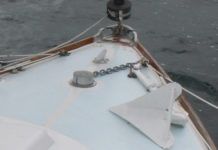
Plug that Chain-pipe
I was always amazed at how much water could seep through the chain-pipe and into Toscas anchor locker when a sea was up, or we were punching into a headsea-although punching would hardly describe the ungainly motion of a gaff-rigged ketch to weather. Wallowing? Submarining? Regardless, the chain-pipe was like a water main in those conditions …
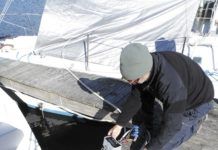
Overheating in Docklines and Rodes
With hurricane season hitting full stride, many of us are going over our rope inventory, making sure we have more than enough lines to secure the boat. Chafe gear fights external friction on our lines, but how do we combat internal heat build-up? Dock lines are particularly susceptible to overheating. If the boat is exposed to short-period chop from the side, the frequency can be high and the force can exceed the 10:1 safe working limit, and even with rain or spray to cool the rope there may be significant weakening due to internal friction.
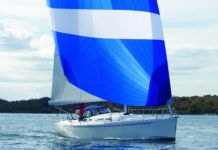
Shaping the Cruising Spinnaker
In designing an asymmetrical cruising spinnaker, most sailmakers begin with the boats fore-triangle rig dimensions (I and J), and combine those with information about the intended use of the sail (tight reaching, reaching, or running) and information regarding where the sail will be used.
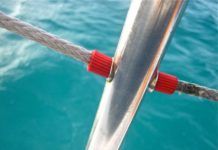
Check Chafe Before Switching to Fiber Lifelines
Fiber lifelines exhibit two kinds of chafe. There is visible chafe that occurs when lifelines are used as handholds (a bad habit), or where sails and sheets bear on them. More troublesome is the chafe that occurs in the stanchion holes. Clearly, if youre considering switching to a fiber lifeline, youll want to closely inspect any possible chafe points, and deburr and polish (with 600 grit sandpaper) any places where the line makes contact with stanchions.

Don’t Kill That New AGM Battery
By now, many sailors have enjoyed their first long weekend and the boat this year, and noticed that their new absorbed glass mat (AGM) battery isn't holding a charge like it did during the last cruise. There are many things that can lead to reduced battery capacity in an AGM battery, but most often the cause is due to poor maintenance and charging regimen. Here are some tips on making sure you get maximum life out of your AGM battery.
Antifouling Paint Prices Follow Copper Surge
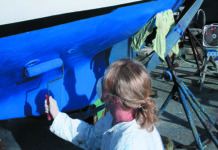
The antifouling coating industry is dominated by copper-based paint, so as copper prices reach their highest levels in recent history, I was curious to...

This “Bulletproof” Cruiser Has a Serious Weak Spot Caliber 40 LRC...
If you’re shopping for a serious cruising sailboat, the Caliber 40 LRC is often described as “bulletproof.” Heavy displacement, huge tankage, conservative construction, and...


Latest Sailboat Review

Union 36 Used Boat Review
While not the best boat for light-air sailing, the Union 36 is a good sailboat for the bluewater cruiser. It wont get you there fast, but it will get you there comfortably and in one piece. The boats teak decks and lavish use of interior wood is attractive but requires much upkeep and maintenance. A product of the Taiwan-U.S. boatbuilding industry, the Union 36 is a heavy-displacement, full-keel, cutter-rigged double-ender designed for ocean sailing. The Union 36 is nearly identical to several other boats built during the same period: the Hans Christian 36, Mariner Polaris 36, and the EO36. According to well-known naval architect Bob Perry, the Union 36 and its cousins are all based on the design of a 34-footer that Perry was commissioned to create back in the early 70s.