










Windy Ways: Practical Sailor Whips Up 12-Volt Cabin Fan Test
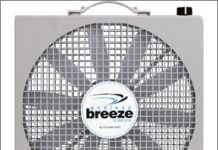
Getting air flow inside a sailboats cabin can be critical to everyones comfort onboard. Practical Sailor tested 11 different 12-volt fans from seven Caframo, Fan-Tastic Vent, Hella, HotWire, MarinePro, SeaBowld, and West Marine. We measured current draw and wind and noise output, and considered price. All of those we tested run on 12-volt DC power and are sized to accommodate the small spaces of a sailboats cabin. Your choice of fan will be determined by your intended use, the space you have available, and your budget. Although its pricey, Caframos Kona was among our Recommended picks. Also recommend were the Hella Turbo, the Port Fan from HotWire, the Fan-Tastic Vent Endless Breeze, and the Caframo Sirocco. The Sea Bowld oscillating fan is rated the Practical Sailor Budget Buy. The top performers in this test will move on to Round 2, where we will test their durability.
A New Tiller Tool
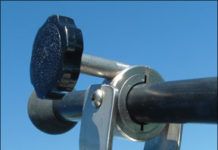
After some experimenting with design and materials, the Steer-iT was born. The Steer-iT looks like a tillerpilot without the motor. In fact, it connects to the boat (stainless steel pin slipping into bronze socket) and tiller (socket snapping onto a male pin on tiller) using the same size fittings as standard tillerpilots. The key element is the tensioner, a steel donut with an adjustment knob threaded across a slit at the top. The donut pivots vertically on a yoke, and since the yoke also rotates horizontally in its female socket, it functions as a universal joint. The steering arm is a slippery, UV-resistant acetal plastic rod that slides through the yoke. One of three holes can be used to fit the rod over the male pin on the tiller. A twist of the knob on the tensioner adjusts the amount of friction that keeps the tiller in place. We found it easy to dial in enough friction so that the skipper can still make minor course corrections without loosening the knob.
New Twist on Furlers: New Generation of Roller-Furling Systems For Light-Air-Sails Skip the Fixed...
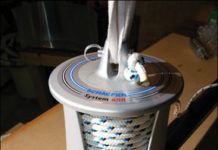
Roller furling has pushed headsail piston-hanking headsails to the brink of extinction. But it also results in a significant loss in light-air efficiency. Meanwhile, genoas, drifters and reachers have become orphans without a stay on which to hank. A new generation of light-air roller-furling sails aims to resolve these issues. They require no fixed stay and, on a properly equipped boat, they can be set, furled, doused, and dropped with relative ease. Practical Sailor reviews seven roller-furling systems for light-air sails, including models from Bamar, CDI, Colligo, Facnor, Harken, Karver and Schaefer.
Marine Holding-Tank Sensors: How do you Know When the Black Water Level is at...
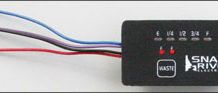
Knowing how full your holding tank is can mean more than simple peace-of-mind. Whether setting out for a Sunday sail or taking off for a week-long cruise, no one wants to discover an empty water tank or full black water tank, after you¹ve already cast off the dock lines. Practical Sailor tested five external tank sensors with displays: Raritan Tank Monitor, Scad Solo Profile Tank Monitor, SensaTank Marine 100, Snake River Acu-Gage Smart Mini, and Snake River Acu-Gage Three-Tank. We compared the accuracy of all five gauges, along with ease of installation, display dimensions, tech support, and price.

Taming the Main: Sail-Handling Systems for Bigger Mainsails
More often than not, boat buyers these days are looking for bigger boats with mainsails to match—and the larger the mainsail, the bigger the chore of flaking it. That’s where sail-flaking aids like lazy jacks, cover/lazy jack combos, and the innovative Dutchman systems come into play in the battle to tame the main. Practical Sailor’s close comparison of these options provides valuable insight into what is the best sail-flaking device for you and your boat. Find out what you need to take the gymnastics out of mainsail- handling. Mainsails up to about 250 to 300 square feet are easy enough to handle that flaking aids are optional rather than essential. However, if you have a boat with a 300- to 500-square-foot mainsail, take a look at what PS testers have to say about the Dutchman, lazy jacks (E-Z Jax, Harken jacks, etc.) and StackPack-type of systems (Mack Sails, Schaefer, and Doyle Sails, etc.).
Practical Sailor Gets Liftin’ and Rollin’ with Trailer Jacks
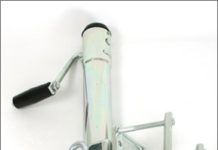
Anyone who’s ever owned a trailer sailer knows that one of the most frustrating aspects or trailering a boat can be getting the coupler to meet the trailer hitch. One trailer accessory that can make this effort easier is the trailer jack. Our favorite is the stow-away trailer jack with castering wheel. We recently tested seven: the Road Warrior Mighty Wheel and Big Wheel from SeaSense; the 6800 Dual Wheel and the Swivel Series (6850 and 6851) from Dutton Lainson, and the Swing-away XP15L and dual wheel XPD15L from Fulton. We found jacks with independent wheels like the Dutton-Lainson 6851 and those with two wheels to be the best trailer jacks.
Practical Sailor Gets Liftin and Rollin with Trailer Jacks
Anyone who’s ever owned a trailer sailer knows that one of the most frustrating aspects or trailering a boat can be getting the coupler to meet the trailer hitch. One trailer accessory that can make this effort easier is the trailer jack. Our favorite is the stow-away trailer jack with castering wheel. We recently tested seven: the Road Warrior Mighty Wheel and Big Wheel from SeaSense; the 6800 Dual Wheel and the Swivel Series (6850 and 6851) from Dutton Lainson, and the Swing-away XP15L and dual wheel XPD15L from Fulton. We found jacks with independent wheels like the Dutton-Lainson 6851 and those with two wheels to be the best trailer jacks.

Three New Anchors Throw Their Weight Into the Practical Sailor Anchor Chronicles
Practical Sailor adds three anchors to our test lineup: the Quickline Ultra and two updated versions of the XYZ Extreme anchor, the original of which we reviewed in the April 2006 issue. The three anchors were attached to rode and tested in shallow, muddy water along the Florida coastline. The anchors were rated for how well they set and how well they fared under load. Sustained holding power was recorded for all three anchors. Price, weight, warranty, and stowability were also considered in the final ratings. The shiny stainless-steel anchors were easy on the eye, but weighing the pros and cons of stainless anchors versus galvanized anchors left testers more inclined to purchase a galvanized anchor. Galvanized steel is more likely to show corrosion and so has a good warning system for metal failure.
Anchoring Rights Revisited
I don't know David Dumas, the owner of a lovely Kadey Krogen trawler named Kinship, but I like his style. Fighting against draconian anchoring restrictions on Marco Island, Fla., Dumas recently had his day in court, and the world is a saner place because of it. Dumas, his pro bono lawyer Donald Day, and local boating activists deserve credit for their perseverance. Thanks is also due to the National Marine Manufacturing Association (www.nmma.org), the Seven Seas Cruising Association (www.ssca.org), and members of BoatU.S. (www.boatus.org) whose lobbying efforts last year resulted in a new Florida law that clarifies anchoring rights in the state. Dumas anchored his boat in Marco Islands Smokehouse Bay last January with the intention of toppling a Marco Island ordinance that restricted boats from anchoring within 300 feet of a seawall for more than 12 hours. Similar ordinances, with equally shaky legal footing, are in place in many communities across the nation.

Riding Sails to Tame Those Anchor-Dancing Boats
Practical Sailor recently evaluated a radically new designed riding sail, the FinDelta Anchoring Sail from Banner Bay Marine, which uses three panels instead of the traditional single panel. According to Banner Bay, as the boat tries to swing, the sails forward fin generates a thrust vector to one side only, gently realigning the boat. By comparison, a traditional, single-panel anchoring sail still allows some degree of sailing at anchor as the sail backs and fills from one side to the other, often resulting in flogging. The FinDeltas design also reduces one of the most common complaints of traditional riding sail users: noise. The FinDelta doesn't require attachment to the backstay-an excellent conduit to transmit the vibration from flogging anchor sail-and so noise is greatly reduced. While the single-panel riding sail has served sailors well for centuries, this new design intrigued our testers, and a head-to head-comparison between it and the traditional Sailrite riding sail was launched.

Why Is This 46 Foot Sailboat So Cheap? Hunter 460 Review
Is the Hunter 460 really one of the best-value cruising sailboats on the used market? In this video, we take a deep, honest look...


Latest Sailboat Review

Irwin Citation 38 Used Boat Review
As the largest of the Citations, the Irwin Citation 38 is probably the best looking, handling the high-sidedness better than her smaller sisters. The boat has three windows set in the sheer stripe on each side, so they are not very noticeable. Like the other Citations it is distinctly modern-looking not pretty, but not ugly either.