







Pump Out Attention Extends to the Head
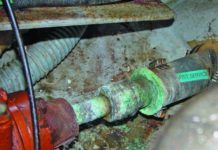
Although head maintenance is low on everyones fun task list, working on functioning head that has been flushed clean (flush with lots of clean water, soak in vinegar for 15 minutes, and then flush that through with more water) head is much more pleasant than working on a broken, clogged head.

Caring for Seacocks
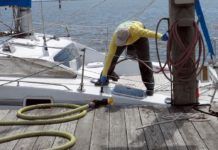
Considering the excitement a failed seacock can generate, the lack of attention they typically receive is almost criminal. Tucked away in the dim recesses of your bilge, seacocks typically don't get a second thought with regards to preventative maintenance or inspections - until they fail to operate or even break off in your hand during operation (it happens, Ive seen it, and it isn't pretty).
Folding vs. Feathering Props
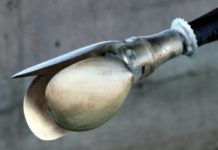
For the past 40 years we've sailed an average of 10,000 miles annually between Australia, Alaska, Antarctica and Spitsbergen motoring or motorsailing between 400 and 600 hours, depending on the area - more hours in high latitudes of Antarctica and the Arctic, fewer in the tropical trade winds.
Test Compares Insulation Below Waterline
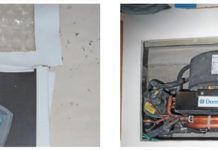
First, we set up an R-value test rig, exposing sample materials to a temperature difference and measuring the difference in heat flow (see adjacent photo). The main thing to take away from this is that small areas of very poor insulation-windows or non-cored laminate-will benefit best from insulation.
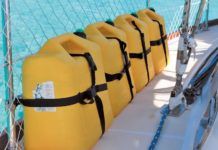
Jerry Can Storage Tips
Jerry cans are a fact of life when cruising on small to mid-size cruisers. When fitting out our 37-foot cruiser for an extended trip from Lake Ontario to the Bahamas we supplemented our diesel tankage with four jerry cans for diesel and three gas cans to power the dinghy and run the water maker/generator.
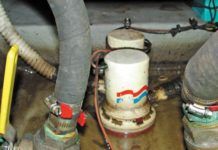
The Worry-free Bilge Pump
Due the lack of maintenance they receive from the average sailor, I often refer to bilge pumps as the Rodney Dangerfield of boat equipment, meaning they just don't get no respect. Its a funny, but also troubling statement, particularly as bilge pumps are often the first and only line of defense against sinking.

Bilge Pump Basics to Keep Your Boat Afloat
Our research into bilge pumps and associated equipment stretches back several decades with the most recent bilge pump tests taking place in 2010 (See PS September 2010, and October 2010 online). When selecting a pump, keep in mind that sailboats rarely meet the ideal flow rate.

How to Measure Boat Humidity: Psychrometric Charts Do It Right
Insulation is a greater energy-saving expedient; if our heater or air conditioner is undersized, fixing drafts, shading or insulating windows, and insulating non-cored laminate are all ways to reduce the thermal load. For boaters, however, that is only half of the equation.

Blue Seas New Smart Charger
Keeping batteries fully charged is a science that cruisers have to master sooner or later. If todays high-capacity AGM batteries arent managed properly, valuable amp hours in can permanently trickle away through sulfation, as we saw in our test of AGM batteries (See Fighting Sulfation in AGMs, PS May 2015). Good battery management means complete re-charging that matches the charging profile of your battery, and this means an accurate sensing of battery voltage. As we saw in our recent report on battery monitors (see Best Battery Monitor Test Update, PS October 2017) a good monitor will also keep track of temperature, as this can be a limiting factor in charge acceptance rate.

Tohatsus Propane Engine Ups the Ante
Just as we were wrapping up our small outboard test, Tohatsu introduced a 5 horsepower LPG motor into the mix. The new model competes squarely with the propane motors from Lehr that have been on the market since 2012 (see New Options in Small Outboards, PS January 2016.)

This “Bulletproof” Cruiser Has a Serious Weak Spot Caliber 40 LRC...
If you’re shopping for a serious cruising sailboat, the Caliber 40 LRC is often described as “bulletproof.” Heavy displacement, huge tankage, conservative construction, and...


Latest Sailboat Review

Union 36 Used Boat Review
While not the best boat for light-air sailing, the Union 36 is a good sailboat for the bluewater cruiser. It wont get you there fast, but it will get you there comfortably and in one piece. The boats teak decks and lavish use of interior wood is attractive but requires much upkeep and maintenance. A product of the Taiwan-U.S. boatbuilding industry, the Union 36 is a heavy-displacement, full-keel, cutter-rigged double-ender designed for ocean sailing. The Union 36 is nearly identical to several other boats built during the same period: the Hans Christian 36, Mariner Polaris 36, and the EO36. According to well-known naval architect Bob Perry, the Union 36 and its cousins are all based on the design of a 34-footer that Perry was commissioned to create back in the early 70s.