

Tef-Gel vs. Lanocote
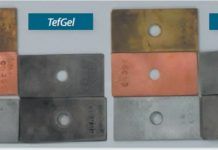
In this update of our review of greases (see PS February 2017) we compare Lanocote and Tef-Gel, greases that are used to prevent metal corrosion. Tef-Gel, from Ultra Safety Systems, is often prescribed to prevent stainless-steel fasteners from seizing in aluminum. Lanocote, made by Forespar, is commonly applied to prevent seizing in turnbuckles and other components that need lubrication.
Budget Priced Winch Grease
While we respect that winch manufacturers have put a lot of effort into selecting appropriate lubrication products for their equipment, in the enormous world of lubricants we know there are non-marine brands that can do the job just as well. In the wake of our recent winch grease test featuring products from Andersen, Harken, and Lewmar (see PS October 2016 online), we decided to look at budget options.
A New Spin on Dependable Crimps and Splices
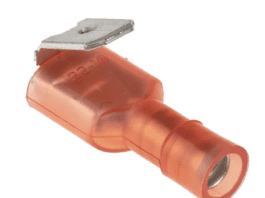
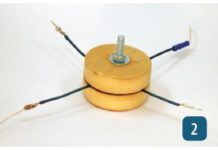
Our test focused primarily on the small-wire connections tensile strength, with and without solder, but we also looked at their durability under tough environmental conditions. We tested the pull-out strength without solder and the pull-out strength of soldered connections at 400 degrees by heating the connections in an oven to simulate overheating conditions. We tested fatigue by spinning a 6-inch length of splice wire at 650 RPM in a simple device that we called the wire-fatigue whirligig. Finally, testers soaked all samples for four months in salt water to accelerate corrosion, and then, we repeated the fatigue test.
Making a Do-it-Yourself Jerry Can Drip Catcher
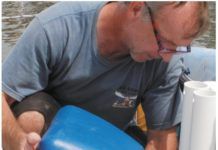
The previous owner of our test boat swore by using a funnel. Of course, the funnel was too small to catch nozzle leaks, reduced the flow, required holding a heavy can on a rocking deck for three minutes while the CARB can dribbled along, hoping the wind or rocking didnt move the funnel. (Sure, the flow is faster with non-CARB cans, but you had to reduce the flow for the funnel anyway.)
Monitoring Your Marine Battery Bank
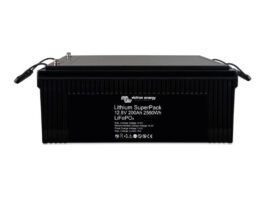
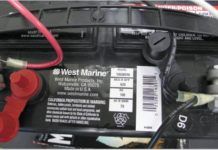
Two recent tests graphically demonstrated the importance of monitoring state of charge in a boats batteries. hese tests demonstrated that a sealed batterys capacity will be reduced over time, if its never brought back up to a full state of charge. But just how accurate are the monitors we use to gauge our batteries states of charge?

Tips for Preventing Head Clogs
If youve ever had to deal with a drain clog, you know it is no easy task to get rid of. Below, PS gives 7 tips to help prevent clogs.
Testing Marine Battery Monitors
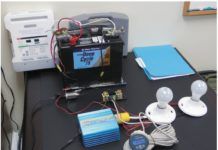
Our test gear comprised a ProMariner ProNautic 12-40P battery charger; West Marine-branded, flooded-cell, deep-cycle battery with a 75-amp hour rating; and two 120-volt, 70-watt incandescent light bulbs powered through a Heart 140-watt DC to AC inverter. This setup created a 12-amp DC load on the battery. We confirmed voltage and current draw using a Fluke Model 867B graphical meter and a Blue Sea Systems Model 8110-amp clamp/multimeter.

Best Marine Toilet Papers
When testers dismantled Practical Sailors test holding tanks-the site of years of experiments with holding-tank chemicals, sanitation hoses, and vent filters-we hoped that it was the last hands-on contact wed have with marine sanitation systems for a long time. And then a friend came to us seeking advice on curing his regularly clogged head. He had checked the obvious culprits-scale buildup in the hoses, blocked vent, etc.-and found everything in proper order.
Mailport: Water Lift Muffler, Drogues, Hunter 30, and More!
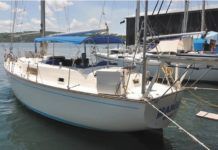
After corrosion destroyed the water-lift muffler aboard his 1972 Irwin 37 (above) and he could not find a replacement, subscriber Gene Millard fabricated his own.
Calypso Wind Reader
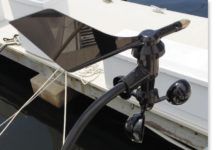
Wireless wind sensors offer many advantages for the sailor. In recent years, weve tested Raymarines Tacktick, the Nexus Gwind, and the Sailtimer. (See PS March 2014, Wind Sensor Testing online, as well as the followup articles in the May 2014 and August 2014 issues.) All worked well, but some were certainly better than others. Features we rated included durability, battery life, accuracy, ease of use, and ease of installation. One interesting new entry into this field is the Calypso Cups 4.0 system, which combines a Davis Instruments wind sensor with a user-friendly smartphone app.
Lithium Batteries on Sailboats: The 3 Mistakes Everyone Makes
Lithium batteries are one of the most popular sailboat upgrades today—but they’re also one of the most misunderstood. In this Practical Sailor Saturday episode,...



Latest Sailboat Review
Island Packet Estero Used Boat Review
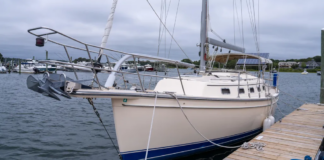
Florida-based Island Packet targets a relatively narrow niche, so the toughest competitors to its new boats are often older Island Packets. Introduced in 2010, the 36-foot, shoal-draft Estero is the company’s latest attempt to introduce a distinctive model that doesn’t stray too far from the company’s proven formula for success: moderate displacement, full-keel cruisers designed to be lived on, sailed far and in comfort, and endure the bumps, scrapes, and storms that cruising boats inevitably encounter. After sailing the Estero on Florida’s Sarasota Bay and inspecting its interior, construction, and systems, Practical Sailor testers noted that the shoal-water cruiser will appeal strongest to Island Packet fans who’ve been waiting for a shoal-draft, easy-to-sail boat that compares to the IP37 in terms of interior space. These strengths will be most apparent on intracoastal or riverine adventures like the Great Loop.