



12 Ways to Extend Your AGM Batterys Life
12 Ways to Extend Your AGM Batterys Life
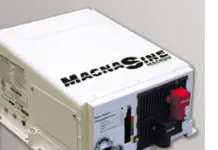
Heart Replacement
Sixteen years ago, contributing writers Joe and Lee Minick equipped their Mason 43, Southern Cross, with a Heart Interface Freedom 20 charger/inverter and a Link 2000R from Cruising Equipment, both made by companies based in Valley Forge, Penn. When both of these units were ruined during a knockdown (see PS, April 2013 online), they were forced to look for a replacement.
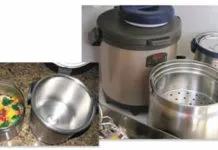
Taking the Other Way Home
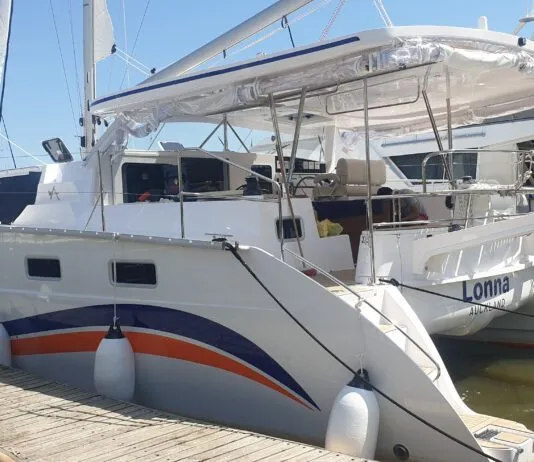
Our 38-foot catamaran, Josepheline, was built by Lightwave Yachts near Brisbane, Australia. Josepheline draws 3 feet, 6 inches and has a 22-foot beam. It is a fairly conventional design: mini fin keels, two forward queen berths under the bridgedeck, a double berth aft to starboard, and a decent sized shower and head located aft in the port hull. Shes stood the test of time-and distance. Weve cruised about 35,000 nautical miles aboard Josepheline.
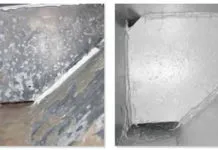
Painting Water Tanks
When it comes to onboard water tanks, we prefer stainless, fiberglass, and even roto-molded tanks (in that order) to aluminum ones. Aluminum tanks tend to pit and corrode over time, often needing to be replaced. The insides of the two 60-gallon aluminum water tanks in our 30-year-old Valiant 40 were more like a nasty moonscape than a drinking source. Their surfaces were pitted and rusted from what looked like a reaction to long-time use of chlorine.
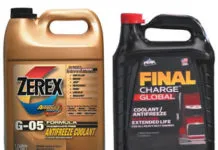
Engine Coolant Replacement
In your recent article on engine coolants (see PS October 2014 online), you wrote about replacement intervals for coolants, and Im looking for clarification. You indicated that the following heavy-duty coolants for diesels were coolants, not antifreeze: Zerex GO5, Peak Final Charge NOAT, and Detroit Diesel Power Cool Plus. You also suggested that I replace the coolant every 1,000 hours, . . . (and for little used engines) changing the coolant every five years is a more practical approach.
Will Your Tanks Be Clean Next Spring?
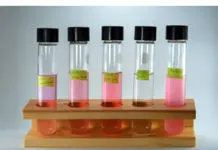
When contributor Drew Frye commissioned his familys PDQ 32 catamaran six years ago, his daughter asked, What are these pink lumps in the sink, Dad? The toilet bowl was even more spectacular, a science project in a dozen hues of pink, green, yellow, and black. The boat had been winterized for some time, down in south Chesapeake Bay, where winters are mild and many boaters and don't take freezing seriously.

Testers Check Growth in the Lab and on the Boat
When testing a chemicals toxicity and its ability to biodegrade, a common procedure is to dilute each target chemical at various ratios of interest, and then to inoculate each with an acclimated microbiological seed. For our test, the seed was developed by filling a five-gallon bucket with several gallons of water and a weak mixture (two percent total glycol content) of all of the winterizing agents to be tested.
Coolants that Fight Corrosion
Salt and water conspire to reduce our boats, our pride and joys, to pitted and unreliable money pits. Weve investigated corrosion of wiring (see PS July 2010 online), gasoline (see PS August 2012 online), diesel (see PS August 2013 online), and winterizing fluids (see PS September 2014 online), uncovering additives and practices that dramatically reduce deterioration and increase reliability. Engine cooling systems have similar vulnerabilities, and fortunately for us, the automotive engine manufacturers have invested millions in finding those solutions. However, the marketing materials don't always make the differences clear, and its hard to know which product is the best for your engine.

ASTM D1384 Serves as Model for Testers
Samples were tested for corrosion protection following the ASTM D1384 Corrosion in Glassware method (www.astm.org). Samples were diluted to 33-percent glycol, dosed with ASTM synthetic corrosive water (similar to 2-percent seawater), continuously aerated, and heated to 190 degrees for two weeks. As a laboratory control, a reference coolant (ASTM D 3585) was also exposed to provide a baseline.
PSs Top Picks for Winterizing
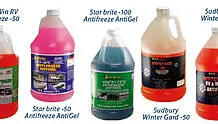
Protecting marine water systems from freeze damage is a deceptively simple goal. The terminology and various product claims can be confusing, and what seems like a good common-sense decision can lead to trouble. We tend to think that all water systems are the same; that boats as well as RVs can be protected by the same pink antifreeze without any further thought. However, many of the problems we associate with age, or normal wear and tear-stiff impellers, cracked pipes, ruined joker valves, and foul-tasting tap water-can often be attributed to errors during winterization.

O’Day 40 – A Budget Cruiser for the Bahamas
The O’Day 40 (1986) is one of those cruising sailboats that somehow slipped through the cracks of sailing history. Built during the final years...



Latest Sailboat Review
Island Packet Estero Used Boat Review
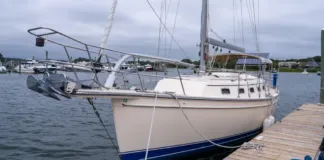
Florida-based Island Packet targets a relatively narrow niche, so the toughest competitors to its new boats are often older Island Packets. Introduced in 2010, the 36-foot, shoal-draft Estero is the company’s latest attempt to introduce a distinctive model that doesn’t stray too far from the company’s proven formula for success: moderate displacement, full-keel cruisers designed to be lived on, sailed far and in comfort, and endure the bumps, scrapes, and storms that cruising boats inevitably encounter. After sailing the Estero on Florida’s Sarasota Bay and inspecting its interior, construction, and systems, Practical Sailor testers noted that the shoal-water cruiser will appeal strongest to Island Packet fans who’ve been waiting for a shoal-draft, easy-to-sail boat that compares to the IP37 in terms of interior space. These strengths will be most apparent on intracoastal or riverine adventures like the Great Loop.