

Installing Hoses Highlights Their Differences
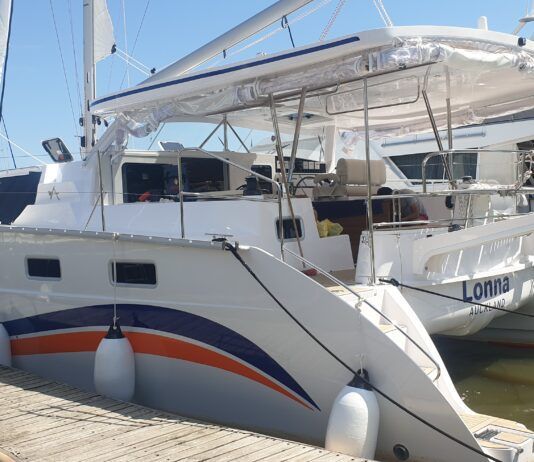
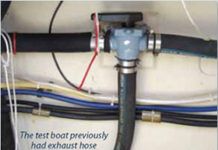
While model holding-tank testing allows side-by-side comparisons, there’s nothing like on-the-boat testing to sort out practical differences. Our test boat, a PDQ 32, had been plumbed with a mix of low-end vinyl sanitation hose and water exhaust hose; the rubber hose was permeated, cracked, and discolored, and the sanitation hose was permeated to the point of having a thin film of sticky goo that had condensed on the external surface. A textbook case of time showing the weaknesses of poor material selection.

Worthwhile Advice from Hose Manufacturers
Before starting most tests, we like to interview the participating manufacturers. Below is a rundown of some advice we gleaned from the waste hose manufacturers.
PS Bench Tests BilgeKleen Filter
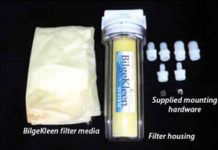
There are two primary reasons why U.S. boat owners are required by law to display the familiar “Discharge of Oil Prohibited” placards aboard. For one, it serves as a reminder that we all must do our part to help protect the environment. Secondly, it helps enforcement officials because those carrying the placard can’t plead ignorance of the Federal Water Pollution Control Act.
Holding Tank Test Followup
Practical Sailor recently tested an updated version of the SeaLand 20 HTS-VRT holding tank reviewed in our November 2011 test, which found the Trionic SP-2020 super premium holding tank to be the Best Choice. For this test followup, SeaLand sent us a tank with the inlet and outlet fittings firmly installed and sealed with pipe sealant, as the maker recommends. (Aftermarket tanks are typically shipped with fittings separate.) The re-test found the revised SeaLand to be leak free, but the Trionic is less expensive and showed less deflection.
Finding Good Hose Clamps
In the December 2011 article, “Maintaining Stainless Steel,” you mention that there are hose-clamp makers that get the stainless-steel combination right, but never shared who those manufacturers might be. I’d love to know who’s your pick!
Holding Tanks: Getting the Stink Out
The quality of onboard living suffers when each flush of the head becomes public knowledge within minutes, and a boat that smells bad won’t be a part of your family for long. Practical Sailor tested three vent filters for holding tanks, from makers Big Orange, Vetus, and Dometic, and tested one homemade vent filter. When sanitary wastes are allowed to biodegrade in a closed tank, particularly with poor mixing and inadequate oxygen, anaerobic bacteria dominate. These bacteria particles can make a boat unpleasant or unlivable unless they are eliminated or contained. Carbon filters are one solution to the odor problem; they are simple, dependable and absorb a wide variety of odors.
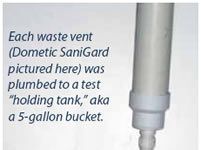
Test Setup Simulates Onboard Sewage System
To create a real-world test, we assembled a series of miniature holding tanks containing sanitary waste generously supplied by a 20-pound, 5-foot pet iguana named Ziggy. This was supplemented with other sanitary waste as needed. Seawater flush was used because saltwater is known to contribute to odor.
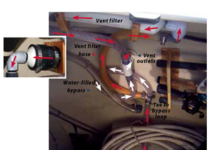
Avoid Plugging with Proper Vent Installation
The effectiveness of activated carbon comes both from surface activity (a result of activation by partial combustion of coal or woody products) and the vast pore structure formed during this partial combustion. Anything that clogs the pores will dramatically reduce carbon life, potentially ruining it within minutes.
On a Side Note: Holding Tanks
Although none of the test tanks or the test boat’s holding tank accumulated solids sufficient to restrict pump-out, we observed significant differences. While vent filters did not increase tank solids beyond what is normal in a poorly ventilated and un-treated tank, some of the subject tanks did better than others.
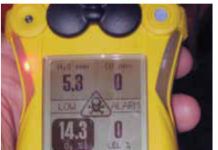
Ziggy the Iguana Puts Odor Control to the Test
For a real-world test, we created a series of small but real-world holding tanks containing real sanitary waste. The sanitary waste was supplied by a 20-pound iguana. Ziggy already poops in a tray of water and we know this mixture to be plenty foul. This was supplemented with additional sanitary waste during the start-up period each spring. Seawater flush was used, as the odor problems associated with seawater are known to be more severe, the result of bacteria-reducing sulfate into more odorous sulfide chemicals. Tank tests were supplemented with field testing aboard a test boat on the Chesapeake Bay.

O’Day 40 – A Budget Cruiser for the Bahamas
The O’Day 40 (1986) is one of those cruising sailboats that somehow slipped through the cracks of sailing history. Built during the final years...



Latest Sailboat Review
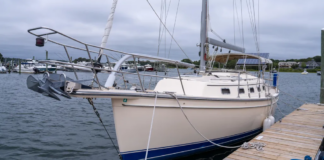
Island Packet Estero Used Boat Review
Florida-based Island Packet targets a relatively narrow niche, so the toughest competitors to its new boats are often older Island Packets. Introduced in 2010, the 36-foot, shoal-draft Estero is the company’s latest attempt to introduce a distinctive model that doesn’t stray too far from the company’s proven formula for success: moderate displacement, full-keel cruisers designed to be lived on, sailed far and in comfort, and endure the bumps, scrapes, and storms that cruising boats inevitably encounter. After sailing the Estero on Florida’s Sarasota Bay and inspecting its interior, construction, and systems, Practical Sailor testers noted that the shoal-water cruiser will appeal strongest to Island Packet fans who’ve been waiting for a shoal-draft, easy-to-sail boat that compares to the IP37 in terms of interior space. These strengths will be most apparent on intracoastal or riverine adventures like the Great Loop.