



Adding or Replacing… Tanks
Tankage is a subject about which there are probably more opinions than there are hard and fast rules. Materials that are generally accepted as suitable for keeping water out of the hull are often considered unsuitable for keeping it in. The differences are not limited to various types of metal and plastic tanks and various types of plastic and metal boats. Much of the controversy centers around the practice of building tanks integral with the hull.
Adding or Replacing Tanks
Tankage is a subject about which there are probably more opinions than there are hard and fast rules. Materials that are generally accepted as suitable for keeping water out of the hull are often considered unsuitable for keeping it in. The differences are not limited to various types of metal and plastic tanks and various types of plastic and metal boats. Much of the controversy centers around the practice of building tanks integral with the hull.
Install a Water Saver: A Galley Foot Pump
Modern boatbuilders, in their desire to make boats as appealing and comfortable as possible, have made it inherently difficult to conserve water. Plumbing fixtures work just the same as those at home. The demand pressure water pump is quick to maintain pressure and oh so quiet, almost as good as city water. Of course theres hot water aboard, even though we have to sacrifice a quart of cold down the drain before we feel the warmth. The obvious solution to better onboard water management is a manual pump, either hand or foot operated. I recognized this face a whileago, but felt that manual water pumps were for day sailors, not for bona fide cruising sailboats. Pressure water is something you graduate to after paying your dues messing with plastic water jugs and on-deck sun showers. I for one certainly didnt want to regress-even though it wouls be nice for once to have cruising agendas planned around something other than the size of the water tank.
Where Credit is Due: July 2011
Letters to Practical Sailor, June 2011. This month's letters cover subjects such as: Whale Pumps, Rigging and More!
Solar-powered Bilge Pumps Bail Out Small Boats
Practical Sailor tested two small solar-powered bilge pumps: the Easy Bailer (500 gallons per hour) and the SeaJoule Solar Bilge Pump (360 gallons per hour). Each self-contained unit has a small re-chargeable 12-volt battery, a fused low-capacity electric pump, and a pump switch, all housed in a plastic box with a 3/4-inch discharge hose and a remote solar panel. Testers evaluated each product’s performance and its components' quality of construction, features, how easily the unit could be maintained, and how well the electrical bits were wired and protected.
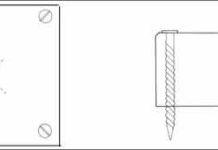
Design for: Through-Deck Fittings for Coaxial Cable
Sealing the holes in decks where Loran and VHF antenna cables penetrate is a fairly common problem on modern boats. If there were only the cable to be considered, a hole of the appropriate size plus a dab of sealant would do an adequate if tacky looking job. But these cables inevitably include sizable end connectors which require holes much larger than those required for the cable itself. Solutions include removal and reinstallation of the connector each time the cable is removed during storage or servicing, and any number of commercially available through-deck fittings or plugs. None of these solutions is simpler or better than the wood fitting shown here. It is attractive and can be made in a few minutes for a few cents.
Winterizing the Engine: Maintenance that Is Truly Preventive
Winterizing an inboard engine installation means a lot more than filling the cooling system with antifreeze and stuffing a rag in the exhaust outlet. It means taking care of the exhaust system, the fuel system, the engine controls, and other components of the drive train, such as the shaft and prop. If you want to do these things yourself — none of them is difficult, only time consuming — plan on a long day of work, or perhaps a leisurely weekend. It's work that will pay off, however, both in improved understanding of your boat's propulsion system, and in money saved. At $25 per hour, the simple projects described here will save you about $200. Few special tools are required, and the only skill necessary is a modicum of common sense.

Quick-dissolve Toilet Paper Test
Just when you thought Practical Sailor had covered all marine head topics, we found another subject our readers are interested in: toilet paper. We followed up our reviews of marine toilets (PS, March 2011) with a look at some of the toilet tissues available for use in marine toilets and on-board sanitation systems. Practical Sailor evaluated 10 TPs from seven manufacturers: Coleman, Dometic, Kimberly Clark (Scott Paper), Thetford, West Marine, Camco, and Charmin. The test centered on well and how quickly the different toilet paper brands dissolved in water. TP that doesn't readily break down can eventually clog marine toilets, holding tanks, and the rest of the sanitation setup. The toilet tissues also were evaluated on tear strength, weight, softness, sheets per roll, and price per square foot.
Improve Your Catalina 30: Upgrading the World’s Most Popular 30-Footer
The Catalina 30 is a remarkable success story. We suspect that more Catalina 30s have been built than any other boat of that size anywhere in the world. While the basic boat has remained unchanged since it was introduced in 1975, there have been dozens, perhaps even hundreds, of minor developments in the boat in the course of a production run that is approaching 4,000 hulls. The advantage of a boat in production for so long is a high degree of product refinement over the years. The challenge for the owner of an early version of the boat is to upgrade his boat to the standards of models currently in production.
Electric Pumps for Freshwater Systems
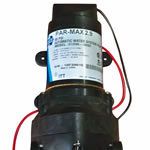
The trend toward “smart” freshwater pumps has expanded into the realm of “intelligent” pumps. Today, sailboat water pumps monitor and respond to variations in freshwater systems and even identify problems and alert users. Practical Sailor tested 11 electric water pumps for boats from five manufacturers: Shurflo; Jabsco / ITT; Johnson Pumps; Whale Pumps; and Groco. We looked at pump performance, amp-usage, ease of installation, durability, features, and cost.
Lithium Batteries on Sailboats: The 3 Mistakes Everyone Makes
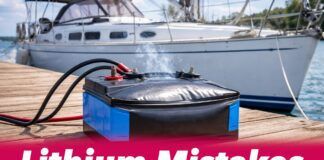
Lithium batteries are one of the most popular sailboat upgrades today—but they’re also one of the most misunderstood. In this Practical Sailor Saturday episode,...



Latest Sailboat Review
Island Packet Estero Used Boat Review
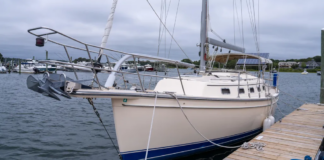
Florida-based Island Packet targets a relatively narrow niche, so the toughest competitors to its new boats are often older Island Packets. Introduced in 2010, the 36-foot, shoal-draft Estero is the company’s latest attempt to introduce a distinctive model that doesn’t stray too far from the company’s proven formula for success: moderate displacement, full-keel cruisers designed to be lived on, sailed far and in comfort, and endure the bumps, scrapes, and storms that cruising boats inevitably encounter. After sailing the Estero on Florida’s Sarasota Bay and inspecting its interior, construction, and systems, Practical Sailor testers noted that the shoal-water cruiser will appeal strongest to Island Packet fans who’ve been waiting for a shoal-draft, easy-to-sail boat that compares to the IP37 in terms of interior space. These strengths will be most apparent on intracoastal or riverine adventures like the Great Loop.